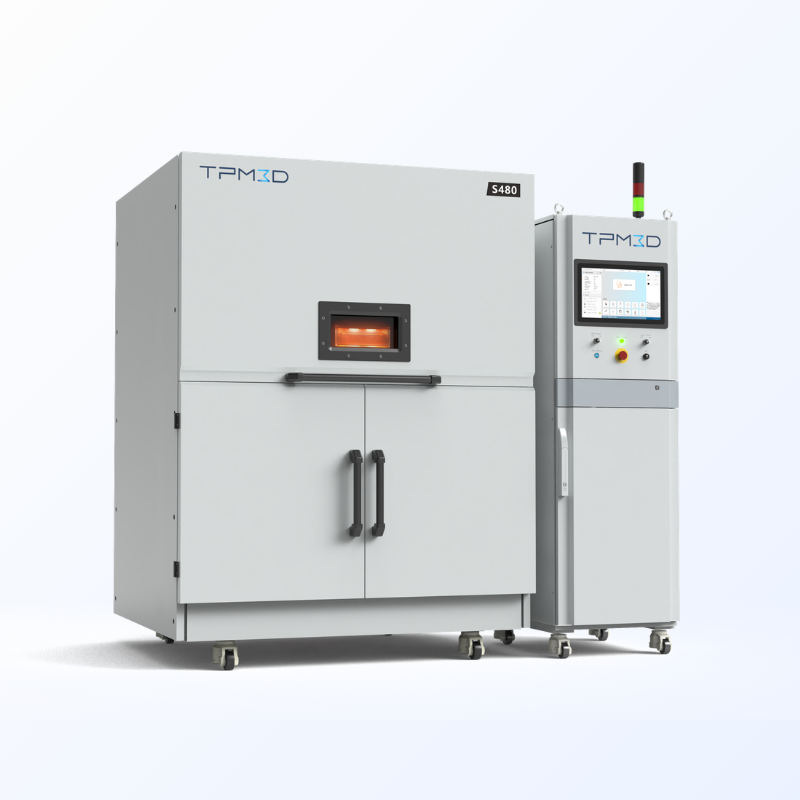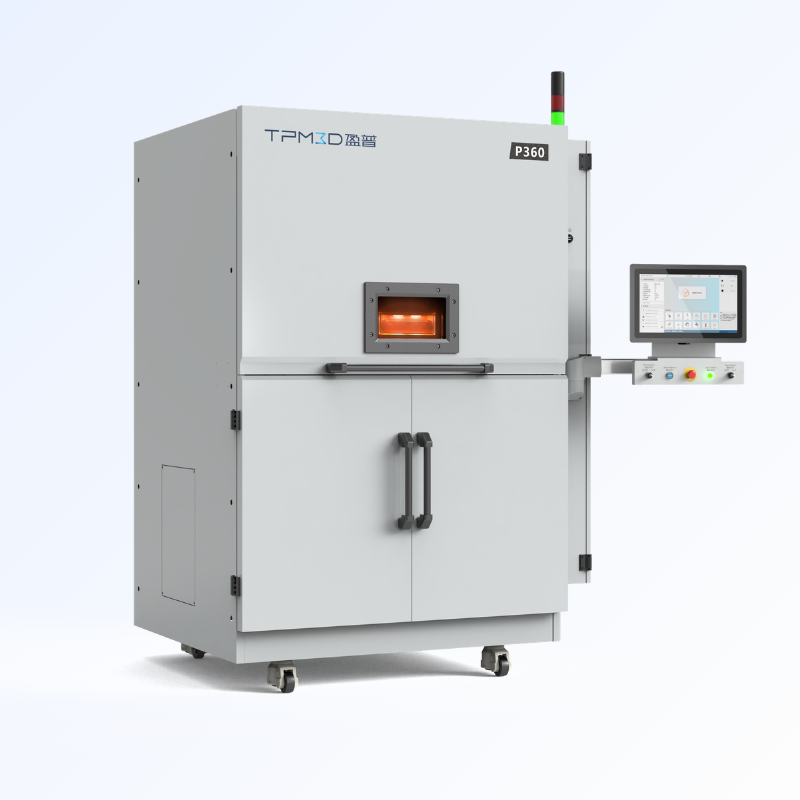
TPM3D, a manufacturer of industrial selective laser sintering (SLS) 3D printing solutions, announced the successful integration of its S480 SLS 3D printer at Cirp GmbH, a German additive manufacturing service provider based in Stuttgart.
The collaboration enables Cirp to further expand its polymer additive manufacturing capabilities for automotive applications, supporting the production of functional components that require high dimensional accuracy, consistent quality, and efficient small-series manufacturing.
By combining Cirp’s extensive application expertise with TPM3D’s industrial SLS technology, the partnership demonstrates how additive manufacturing continues to evolve from prototyping toward reliable production for automotive and industrial applications.
Supporting Automotive Manufacturing in Stuttgart’s Industrial Ecosystem
Located in Stuttgart, Germany, one of the world’s most recognized automotive manufacturing regions, Cirp has been providing additive manufacturing services to industrial customers for more than three decades.
Founded in 1994, Cirp specializes in polymer additive manufacturing and offers a comprehensive range of production technologies, including selective laser sintering (SLS), stereolithography (SLA), fused deposition modeling (FDM), and PolyJet.
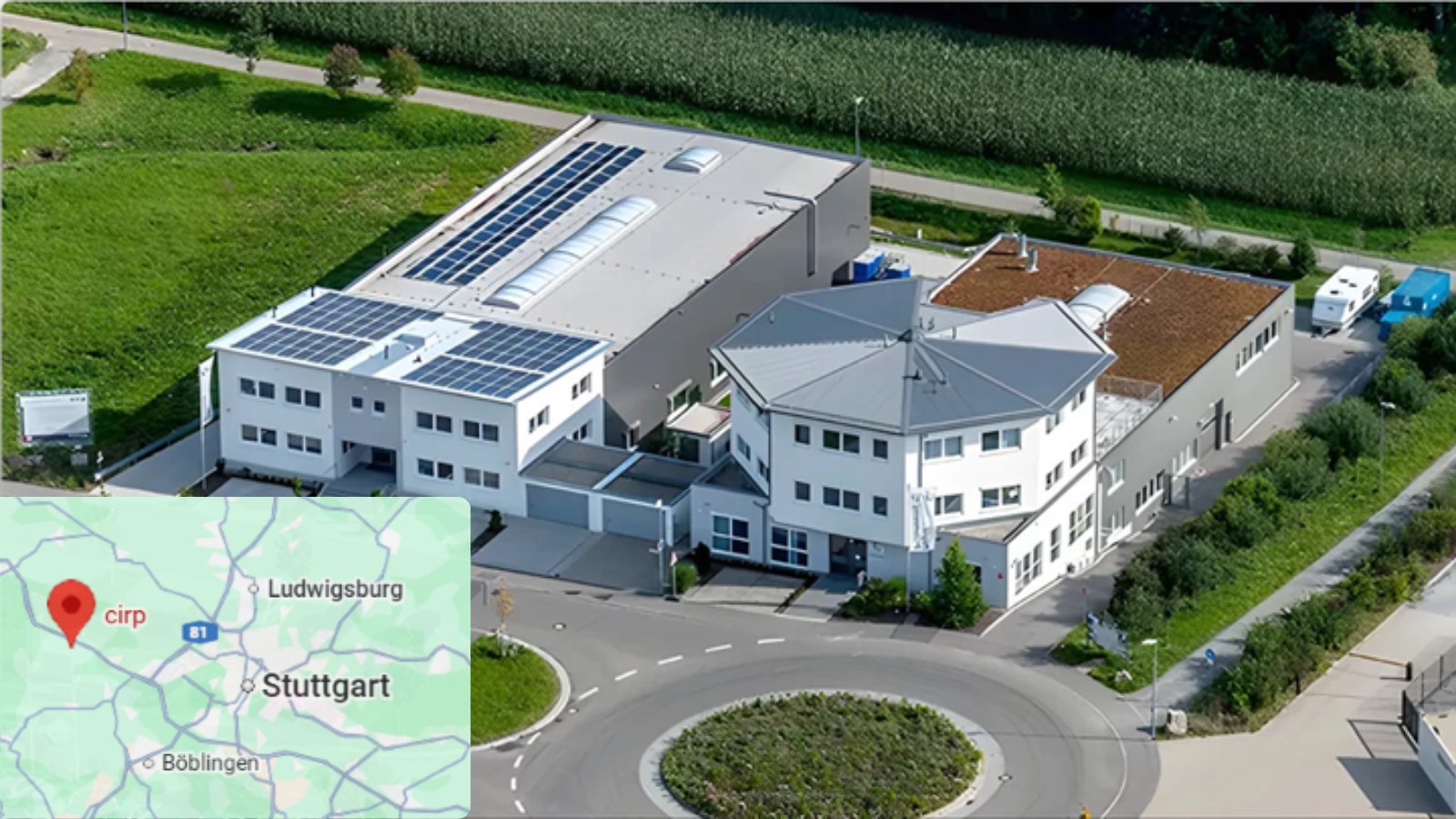
Beyond 3D printing, the company provides complementary manufacturing services including vacuum casting, injection molding, CNC machining, finishing, and quality inspection, allowing customers to move from early prototypes to functional small-series production.
With its location in the Stuttgart automotive cluster, Cirp supports customers across automotive, mechanical engineering, medical technology, and industrial sectors. Typical applications include functional prototypes, customized components, interior parts, sealing components, and low-volume production parts.
Meeting the Growing Demand for Flexible Automotive Production
Automotive manufacturers and suppliers are increasingly using additive manufacturing for applications beyond prototyping, including functional testing, customized components, and small-batch production.
This shift creates new requirements for additive manufacturing service providers:
- Higher production throughput
- Consistent part quality
- Efficient material utilization
- Compatibility with engineering polymers
- Competitive production costs
With growing demand for flexible polymer part production, Cirp evaluated solutions that could further enhance its SLS production capabilities and support future automotive applications.
After a comprehensive evaluation of equipment performance, production capability, material compatibility, and operational efficiency, Cirp selected TPM3D’s S480 industrial SLS 3D printer.
TPM3D S480 Increases SLS Production Capacity
The TPM3D S480 was integrated into Cirp’s production workflow to support higher-volume small-batch manufacturing.
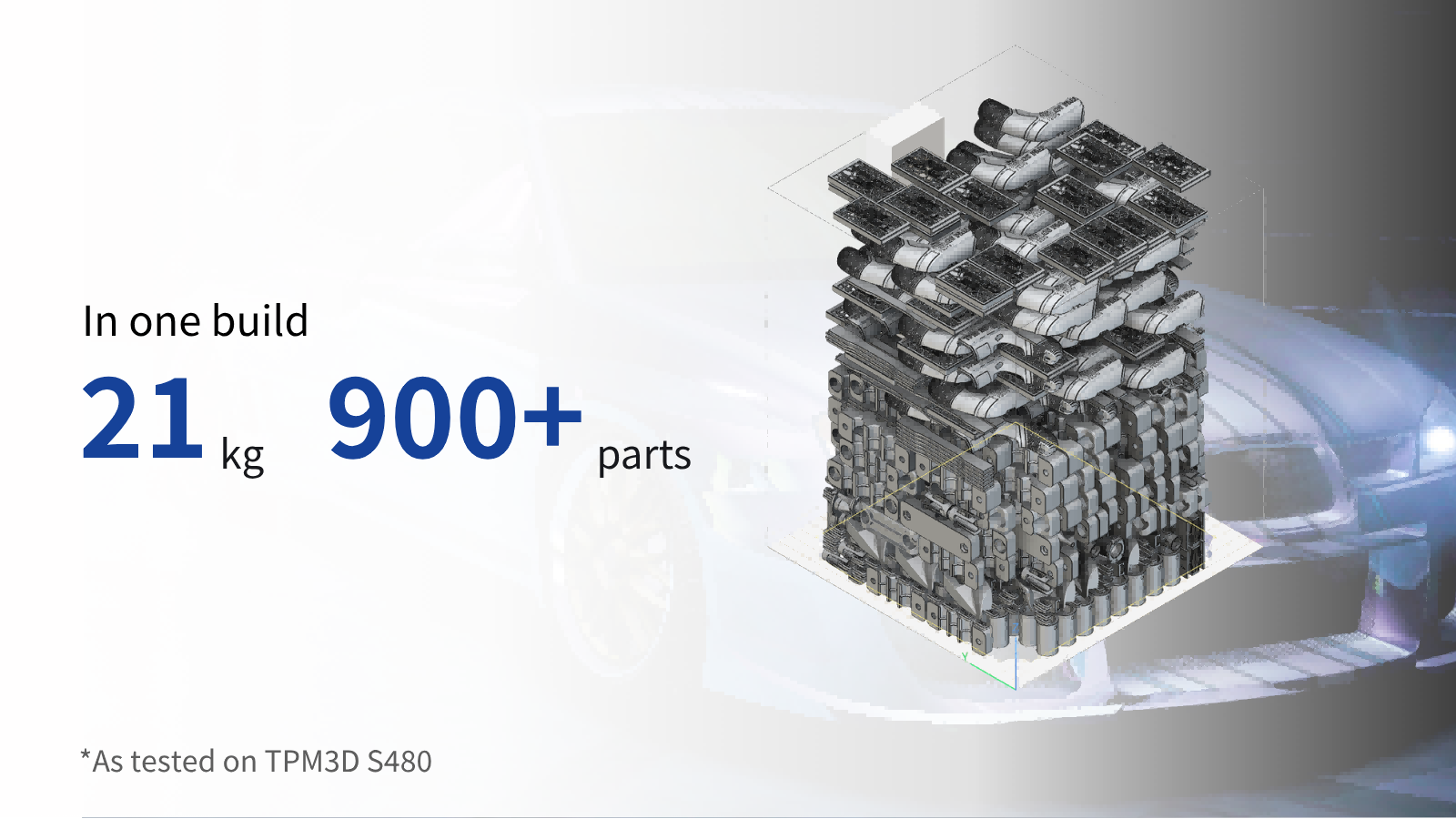
With a build volume of 480 × 480 × 600 mm, the S480 provides a large production area for efficient nesting of multiple automotive components in a single build cycle.
Depending on part geometry and packing strategy, a single build can produce approximately 18–20 kg of finished polymer parts, making the system suitable for applications requiring a combination of part variety and production efficiency.
For PA11 applications commonly used in automotive and industrial components, the S480 features precise temperature control and intelligent powder recoating technology to support stable processing and consistent dimensional accuracy.
The system’s integrated nitrogen generation capability helps maintain a controlled printing environment, while its 100W CO₂ laser system enables reliable processing of a broad range of polymer powders.
Producing Functional Automotive Components with Consistent Quality
Following installation, Cirp has used the TPM3D S480 to manufacture various automotive-related components, including:
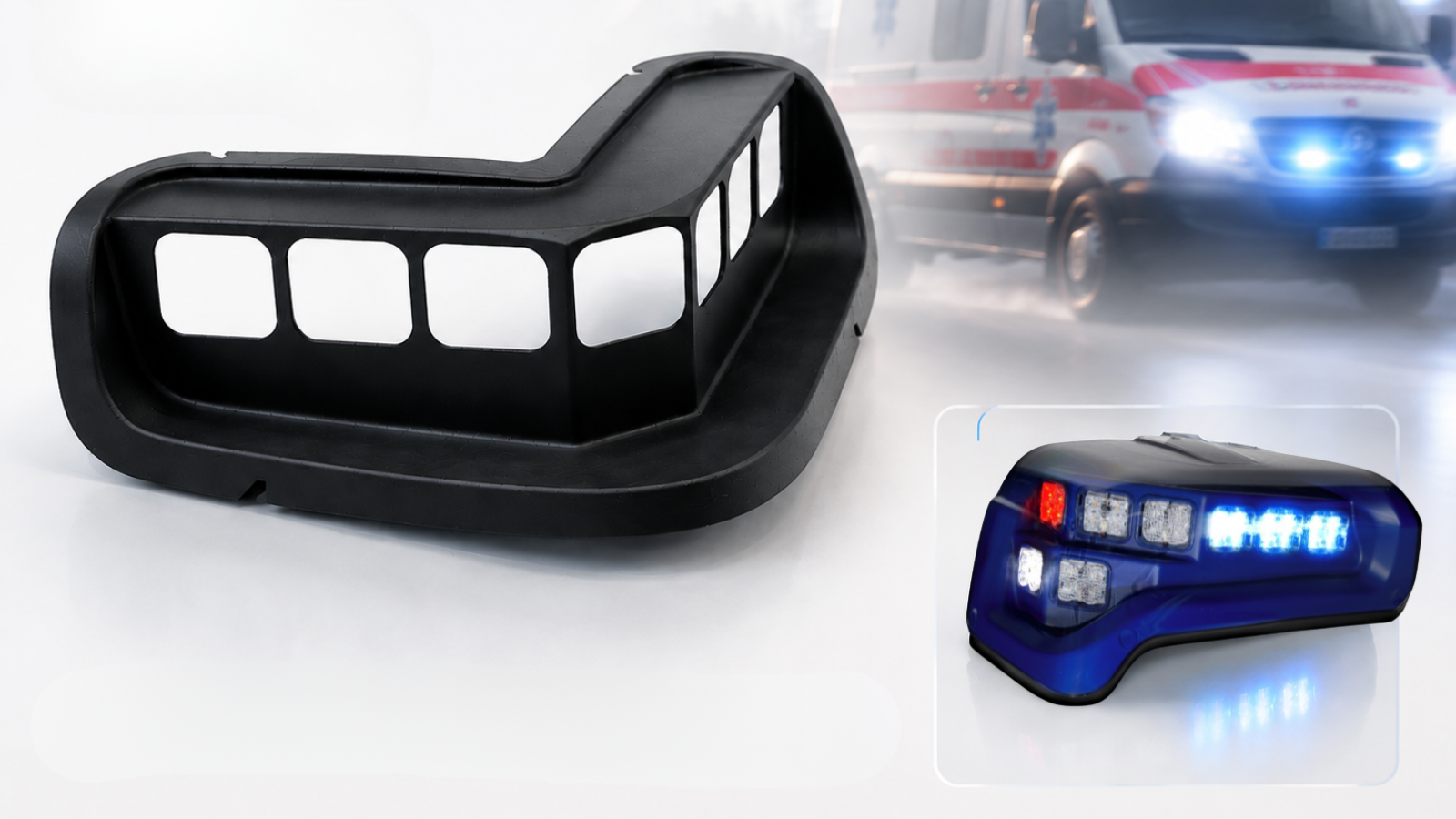
- Emergency vehicle warning light housings
- Fuel system sealing components
- Customized vehicle lighting parts
- Functional polymer components
During production, the system’s digital monitoring capabilities help maintain stable printing conditions by tracking key parameters such as laser performance, environmental conditions, and powder spreading status.
The resulting components achieve the surface quality, dimensional consistency, and mechanical performance required for industrial applications.
For Cirp, the S480 provides additional flexibility in responding to customer requirements for customized and low-volume automotive production.
Streamlining Powder Management for Industrial SLS Production
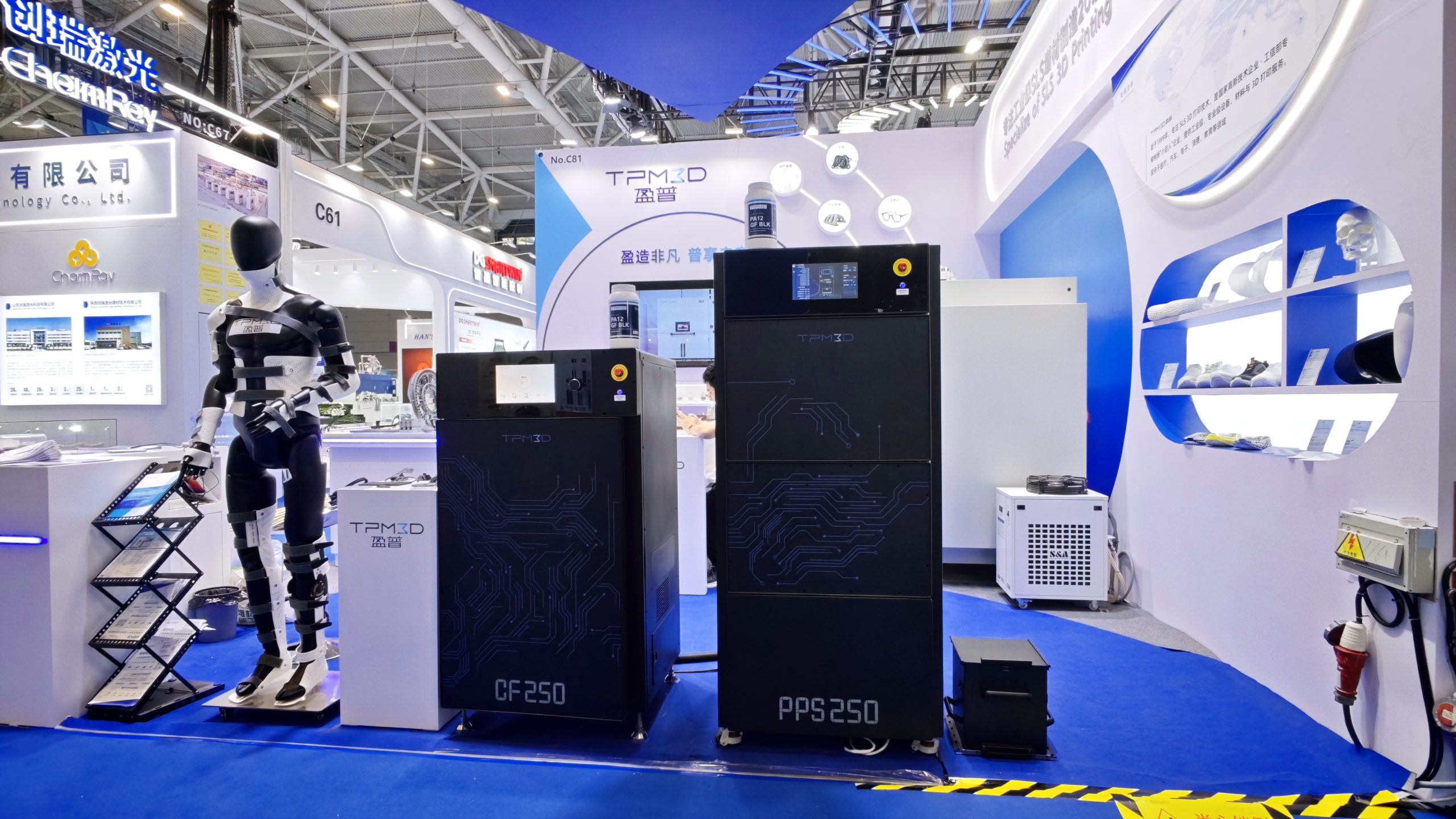
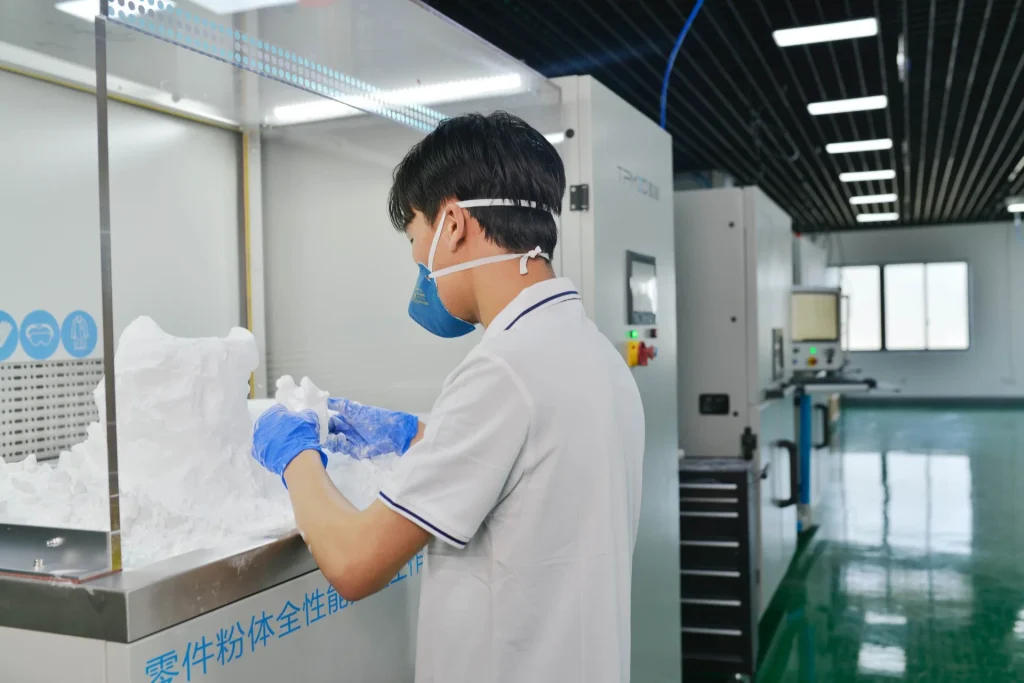
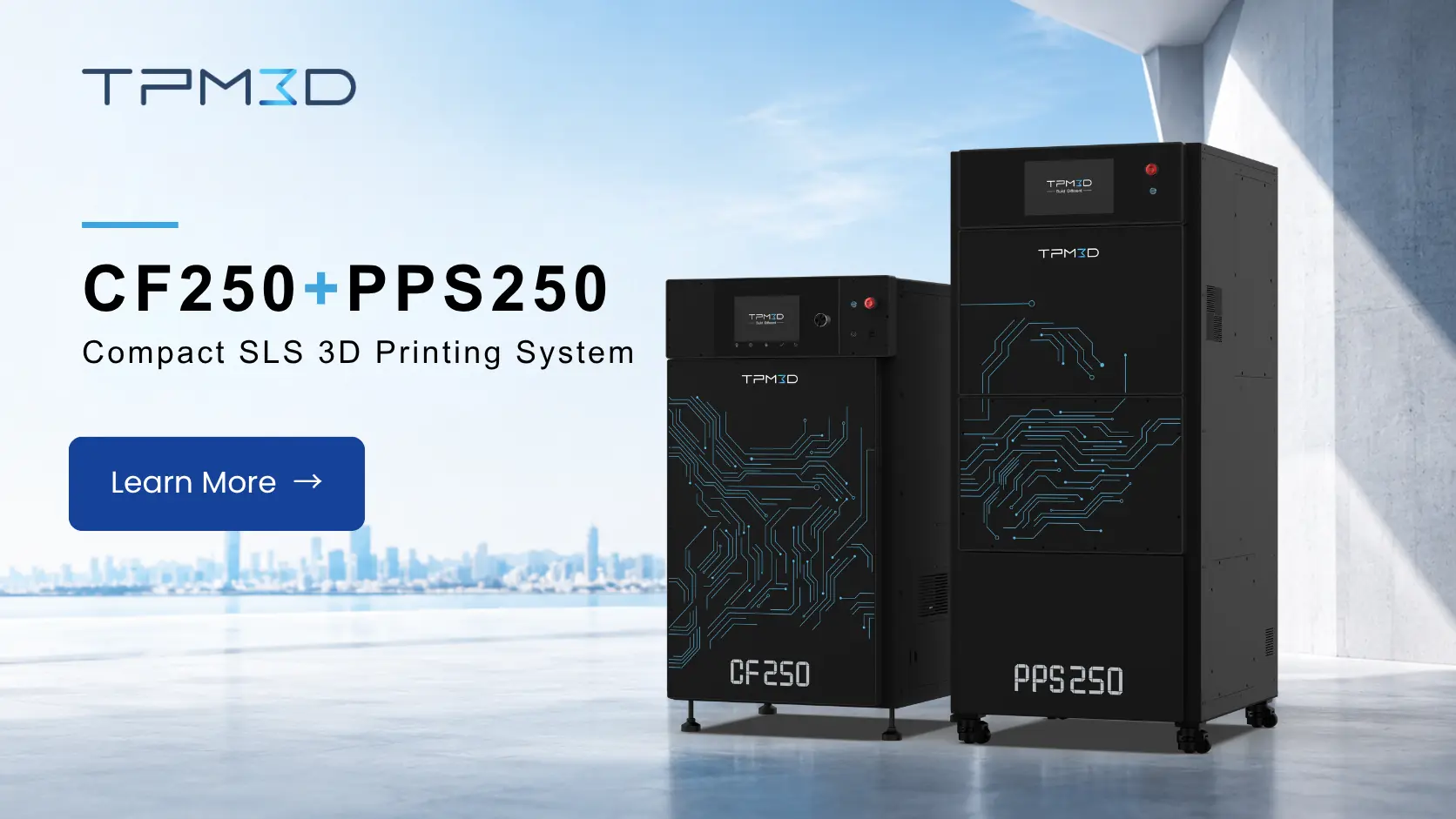
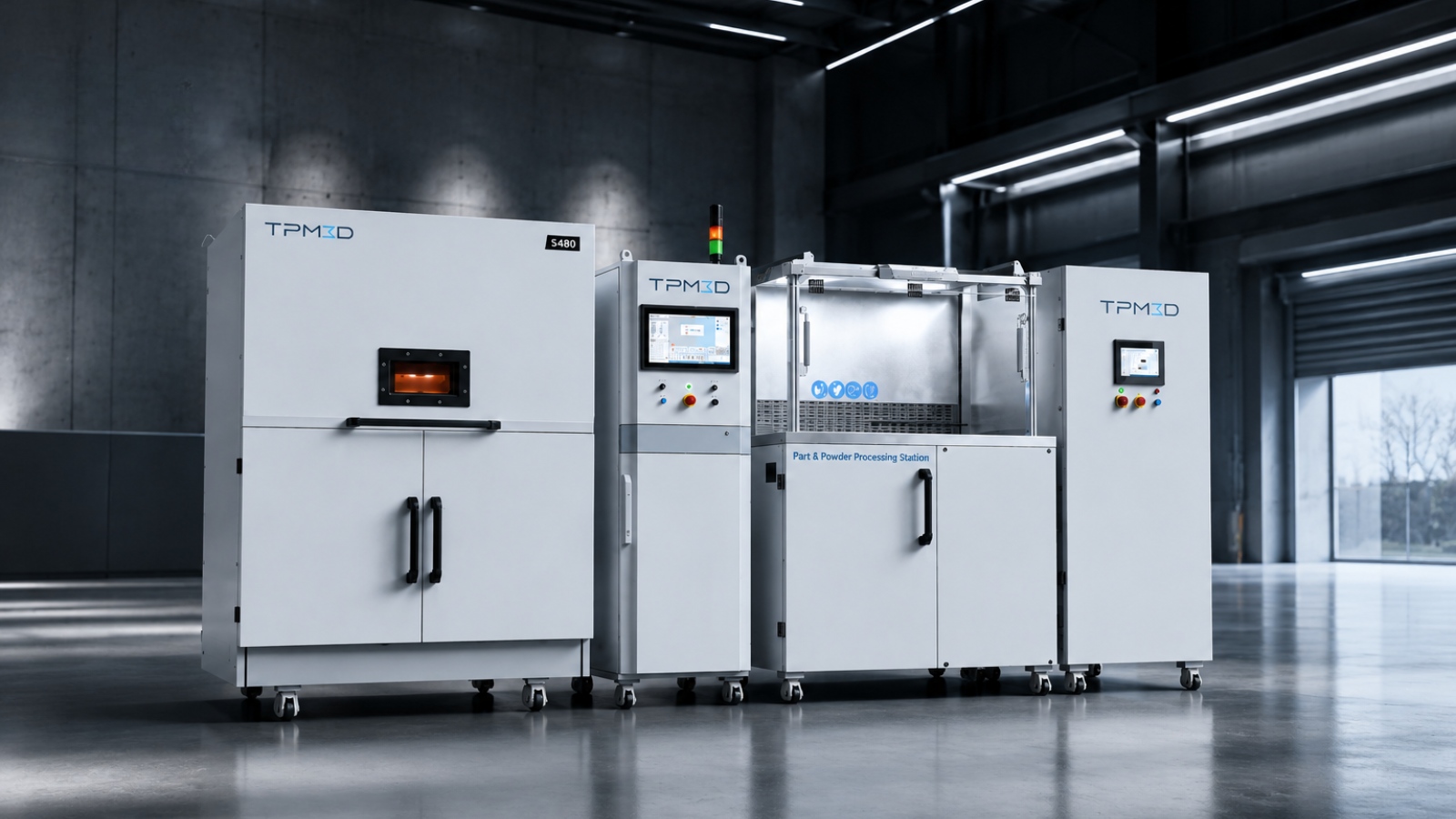
To further improve workflow efficiency, Cirp also utilizes TPM3D’s PPS powder processing station alongside the S480.
The integrated powder management solution combines multiple processes into one workflow, including:
- Powder cooling
- Powder cleaning
- Powder sieving
- Fresh powder addition
- New and recycled powder mixing
- Automated powder supply
Efficient powder handling is a critical factor in industrial SLS production, as it directly influences material utilization, labor requirements, and production consistency.
By integrating automated powder management, Cirp can optimize its production workflow and improve the overall efficiency of SLS manufacturing.
Supporting Sustainable Polymer Additive Manufacturing
The ability to process engineering polymers such as PA11 also supports Cirp’s efforts to provide more sustainable additive manufacturing options.
As manufacturers increasingly focus on lightweight designs, resource efficiency, and localized production, polymer SLS technology offers advantages for applications where traditional tooling-based manufacturing may not be economically suitable.
The combination of production flexibility and material efficiency makes industrial SLS an increasingly important technology for automotive suppliers and manufacturers.
Building a Long-Term Partnership for Industrial Additive Manufacturing
Cirp’s successful implementation of the TPM3D S480 highlights the growing adoption of industrial SLS solutions in European manufacturing environments.
With decades of additive manufacturing experience, Cirp brings extensive application knowledge and customer insight, while TPM3D provides industrial SLS equipment, material solutions, and technical support.
The collaboration represents a shared commitment to advancing polymer additive manufacturing for automotive and industrial applications.
Looking ahead, TPM3D will continue developing industrial SLS technologies and production solutions to support manufacturers and service providers worldwide, helping enable more efficient, flexible, and sustainable manufacturing processes.
Read more:
- How Sichuan Yinshidai Expanded Its Rapid Prototyping Business with TPM3D SLS Technology
- TPM3D Partners with Rapi3D to Build Flexible SLS Manufacturing Platform for Rapid Prototyping
- Rapid Prototyping with SLS 3D Printing — The Complete Guide
- SLS 3D Printing Quality: Accuracy, Surface Finish, and Feature Detail in Real Parts