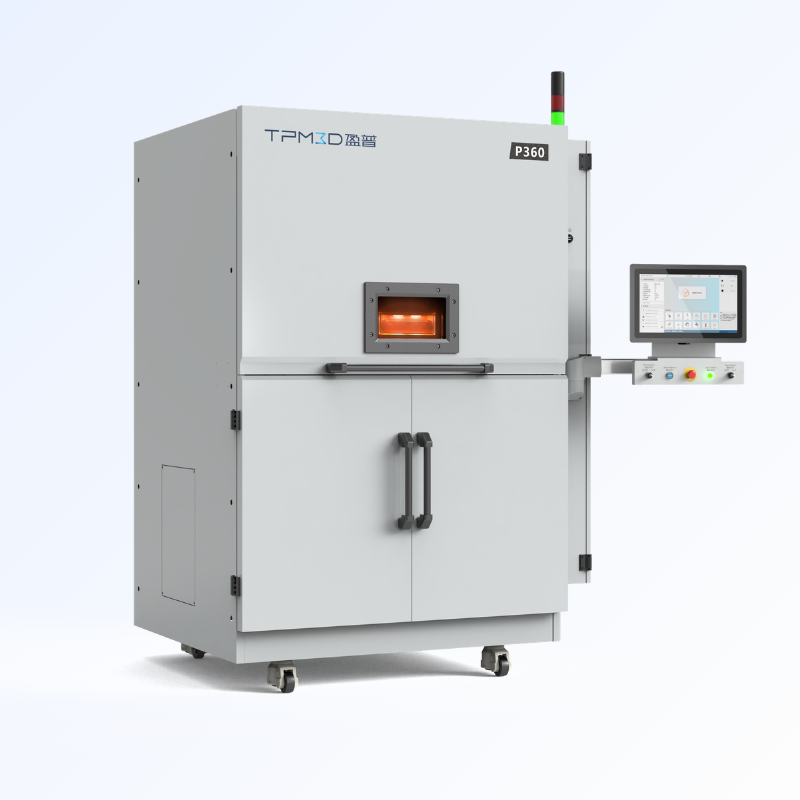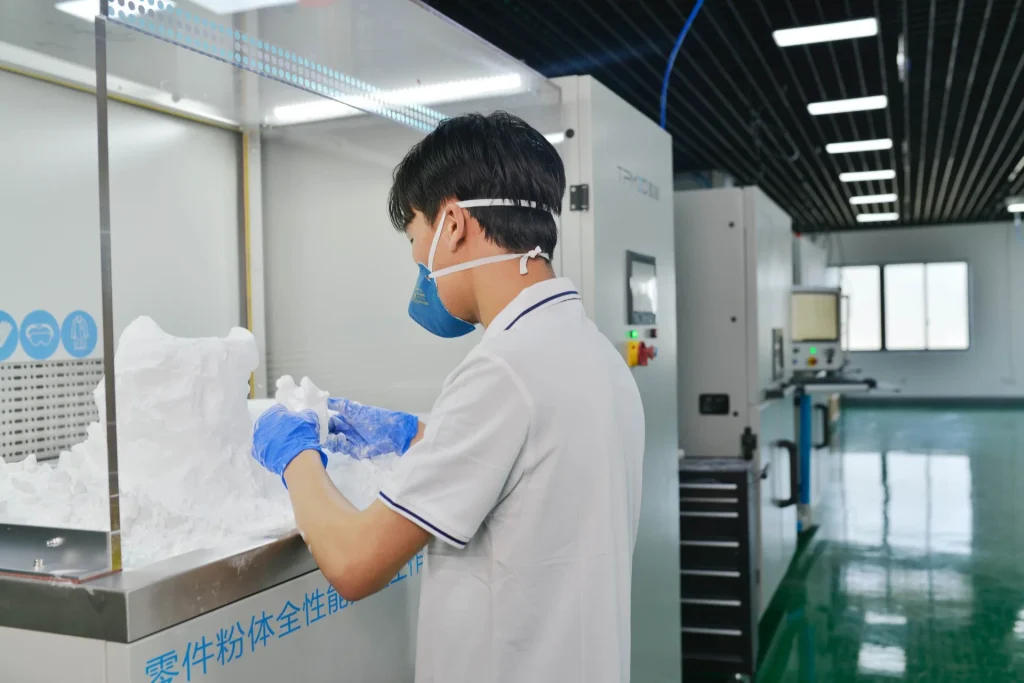
As additive manufacturing continues to expand in healthcare, material performance has become a critical factor in the development of orthotic and rehabilitation devices. TPM3D’s Precimid1190 copolyamide powder has been developed to address the growing demand for lightweight, durable, and patient-friendly medical products manufactured through selective laser sintering (SLS).
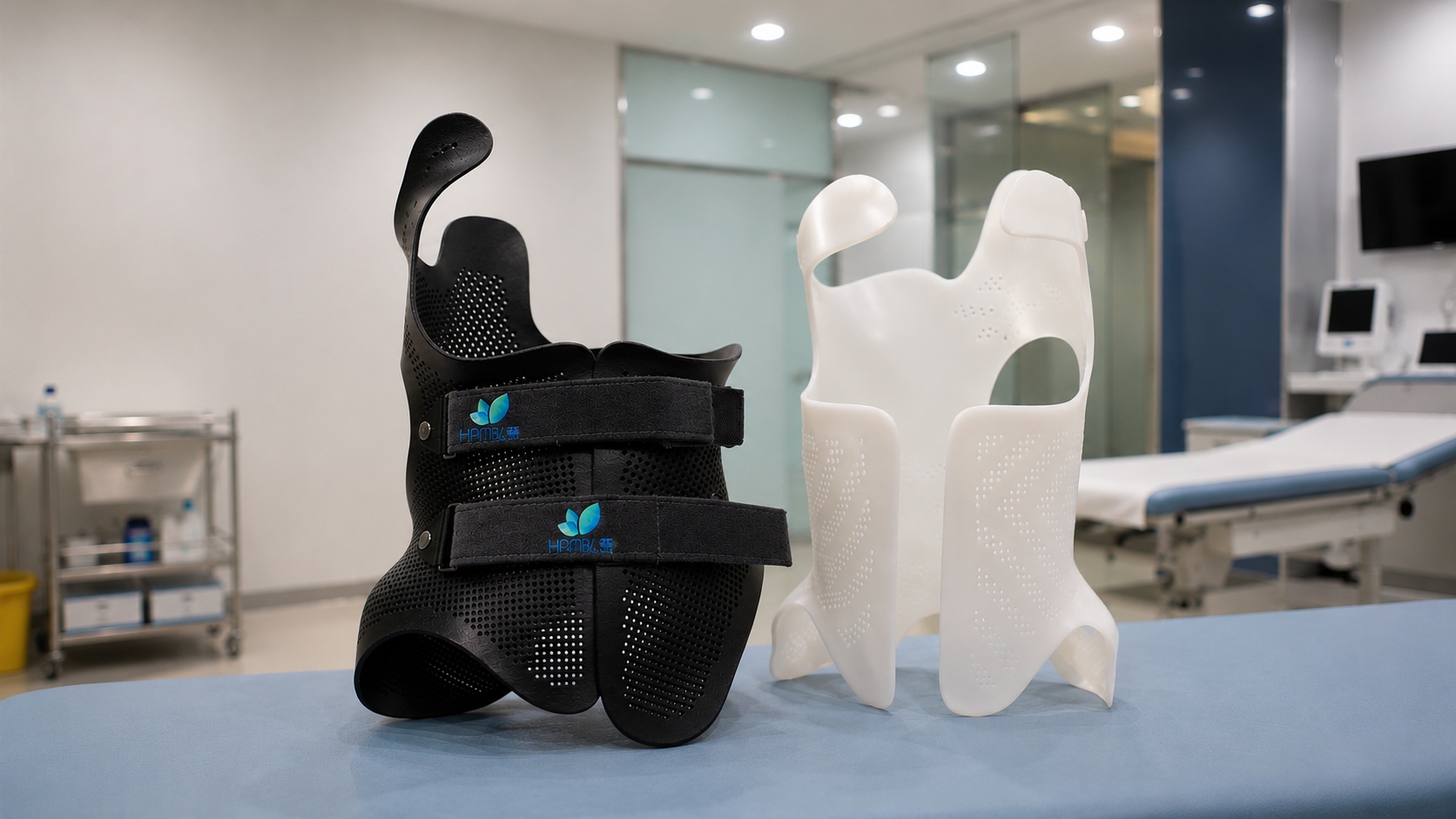
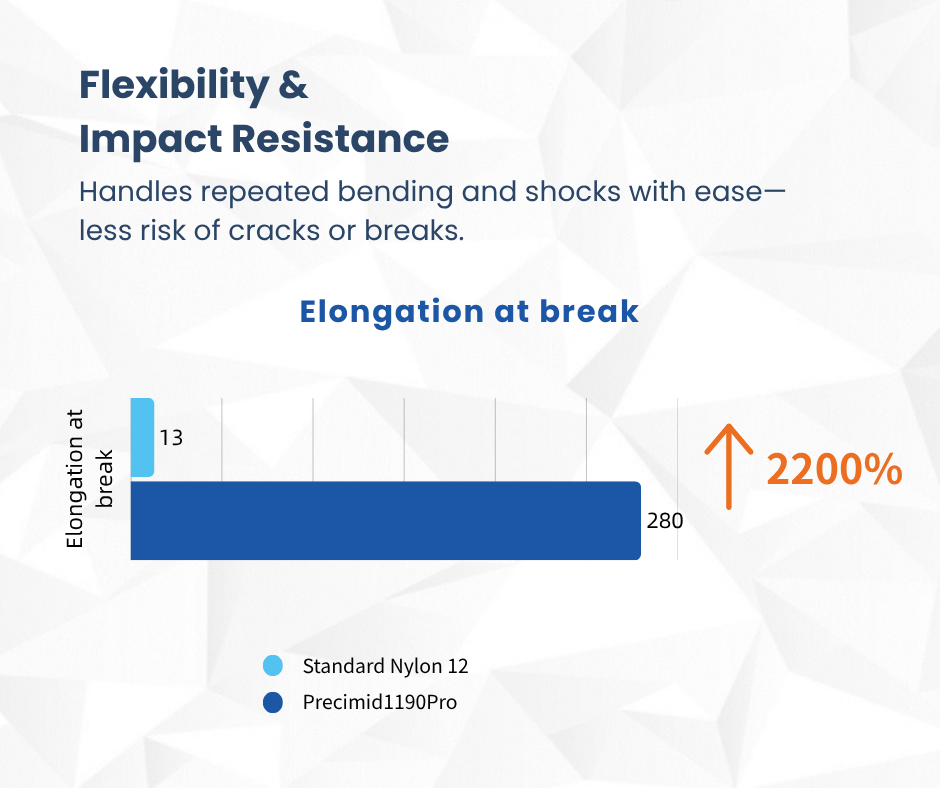
With an elongation at break of 280%, strong impact resistance, and a smooth surface finish after post-processing, the material is being used in applications ranging from scoliosis braces and wrist splints to customized rehabilitation supports.
Designed for Patient Comfort
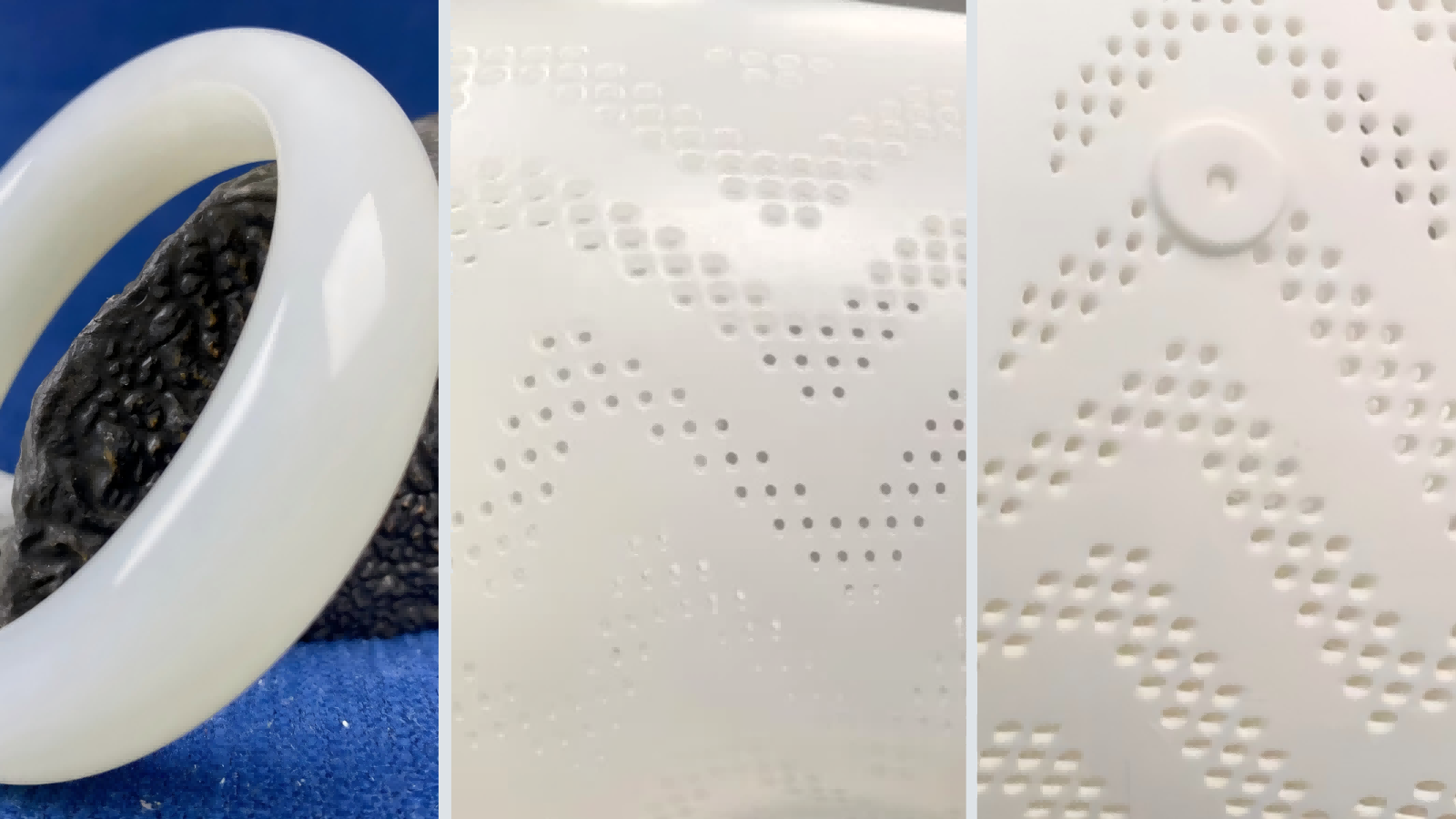
Unlike conventional nylon powders, Precimid1190 is naturally translucent and can achieve a smooth, semi-transparent appearance after vapor smoothing. The post-processing treatment significantly reduces surface roughness, creating a finish that is comfortable for prolonged skin contact.
For orthotic and rehabilitation devices, surface quality is more than an aesthetic consideration. Smooth surfaces help reduce skin irritation, simplify cleaning and disinfection, and improve long-term durability. Combined with lightweight lattice structures enabled by SLS technology, the material supports the production of breathable devices that conform closely to patient anatomy.
Mechanical Properties Focused on Flexibility and Durability
Precimid1190 was developed using a copolyamide formulation designed to balance strength and flexibility. According to TPM3D, key material properties include:
- Tensile strength: 39 MPa
- Elongation at break: 280%
- Flexural modulus: 879 MPa
- Notched Izod impact strength: 39 J/m
- Unnotched impact test: No break
- Heat deflection temperature (0.45 MPa): 104°C
The combination of high elongation and impact resistance enables printed parts to withstand repeated bending and dynamic loading without cracking. This characteristic is particularly relevant for orthotic devices used in daily movement and rehabilitation activities.
| Mechanical properties | Test method | Metric |
| Part Color | Visual | Natural White & Black |
| Density | ASTM D792 | 1.03g/cm³ |
| Elongation at break | ASTM D638 | 280% |
| Flexural strength | ASTM D790 | 36 MPa |
| Flexural modulus | ASTM D790 | 879 MPa |
| Heart Deflection temperature 0.45MPa | ASTM D648 | 104 ℃ |
| Heart Deflection temperature 1.82MPa | ASTM D648 | 45 ℃ |
| Tensile strength | ASTM D638 | 39 MPa |
| Tensile modulus | ASTM D638 | 1,300 MPa |
| IZOD impact strength with notch | ASTM D256 | 39 J/M |
| IZOD impact strength without notch | ASTM D256 | Does Not Break |
Advantages of Copolyamide Over Conventional Nylon Materials
Traditional SLS materials such as PA12 and PA11 offer a strong balance of mechanical properties and dimensional stability. However, medical rehabilitation applications often require additional flexibility, fatigue resistance, and safety under repeated loading conditions.
Compared with standard nylon materials, Precimid1190 offers several advantages:
- Enhanced toughness: Parts remain intact under high-impact and repeated stress conditions.
- Lower processing temperature: The copolyamide structure allows processing at lower temperatures, helping reduce energy consumption and shorten production cycles.
- High powder reusability: Unused powder can be recycled with a refresh rate approaching 100%, improving material utilization and reducing waste.
- High-resolution printing: The material supports the production of complex geometries without support structures, making it suitable for customized patient-specific designs.
The material is also available in multiple color options, including black, while maintaining its mechanical performance.
Applications in Digital Orthotics and Rehabilitation
One of the primary application areas for Precimid1190 is the production of customized orthotic and rehabilitation devices. Examples include:
- Scoliosis braces
- Wrist and hand orthoses
- Rehabilitation supports
- Orthotic insoles
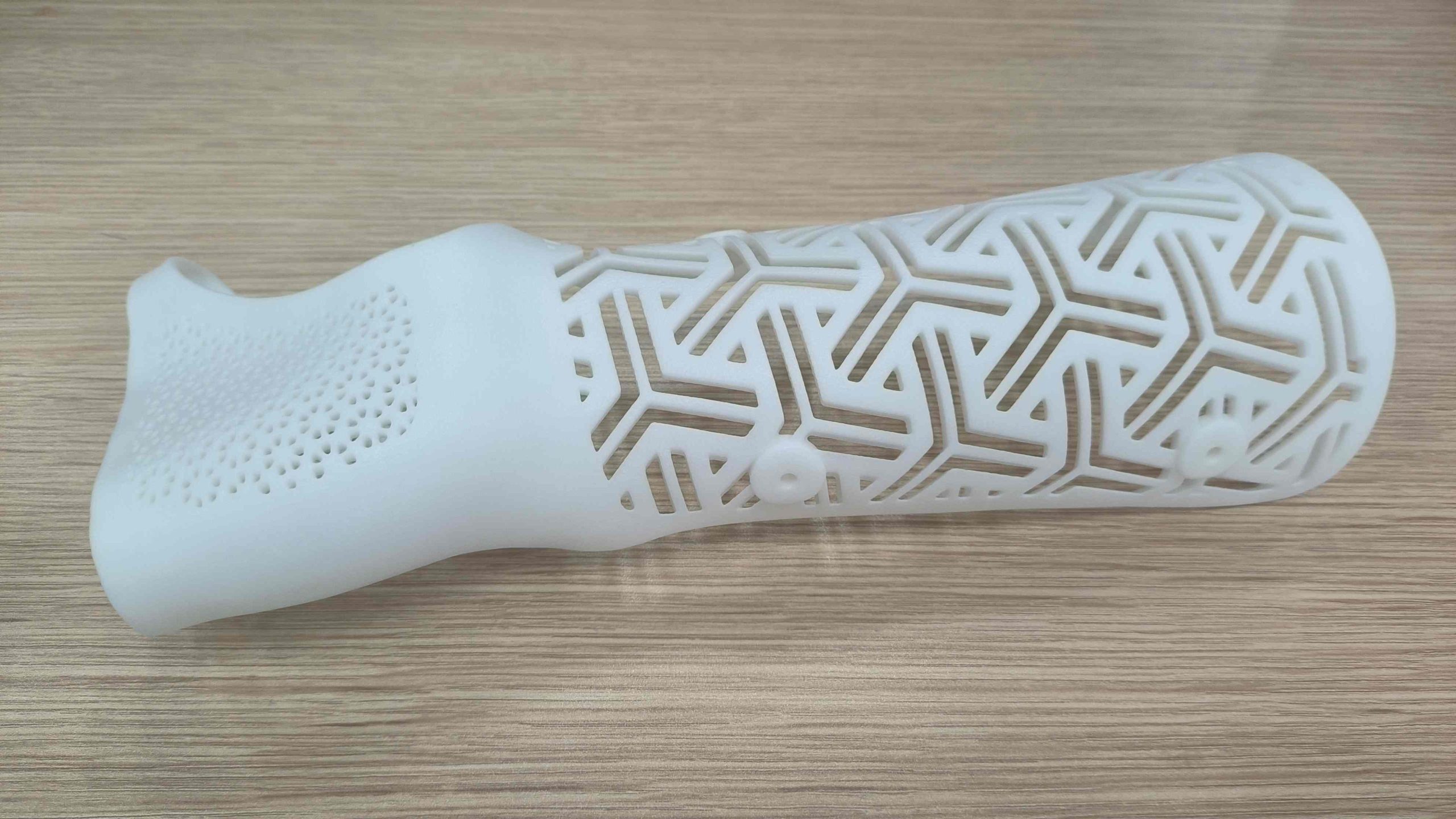
The material’s flexibility and impact resistance can help address some of the limitations associated with traditional plaster-based or rigid plastic orthoses, which are often bulky, poorly ventilated, and uncomfortable during extended wear.
Another consideration in rehabilitation products is fracture behavior under excessive loads. Conventional nylon materials can form sharp fracture surfaces when they fail. Due to its high ductility, Precimid1190 is designed to deform rather than fracture abruptly, reducing the likelihood of sharp fragments that could cause secondary injury.
Thermoforming Capability for Adaptive Treatment
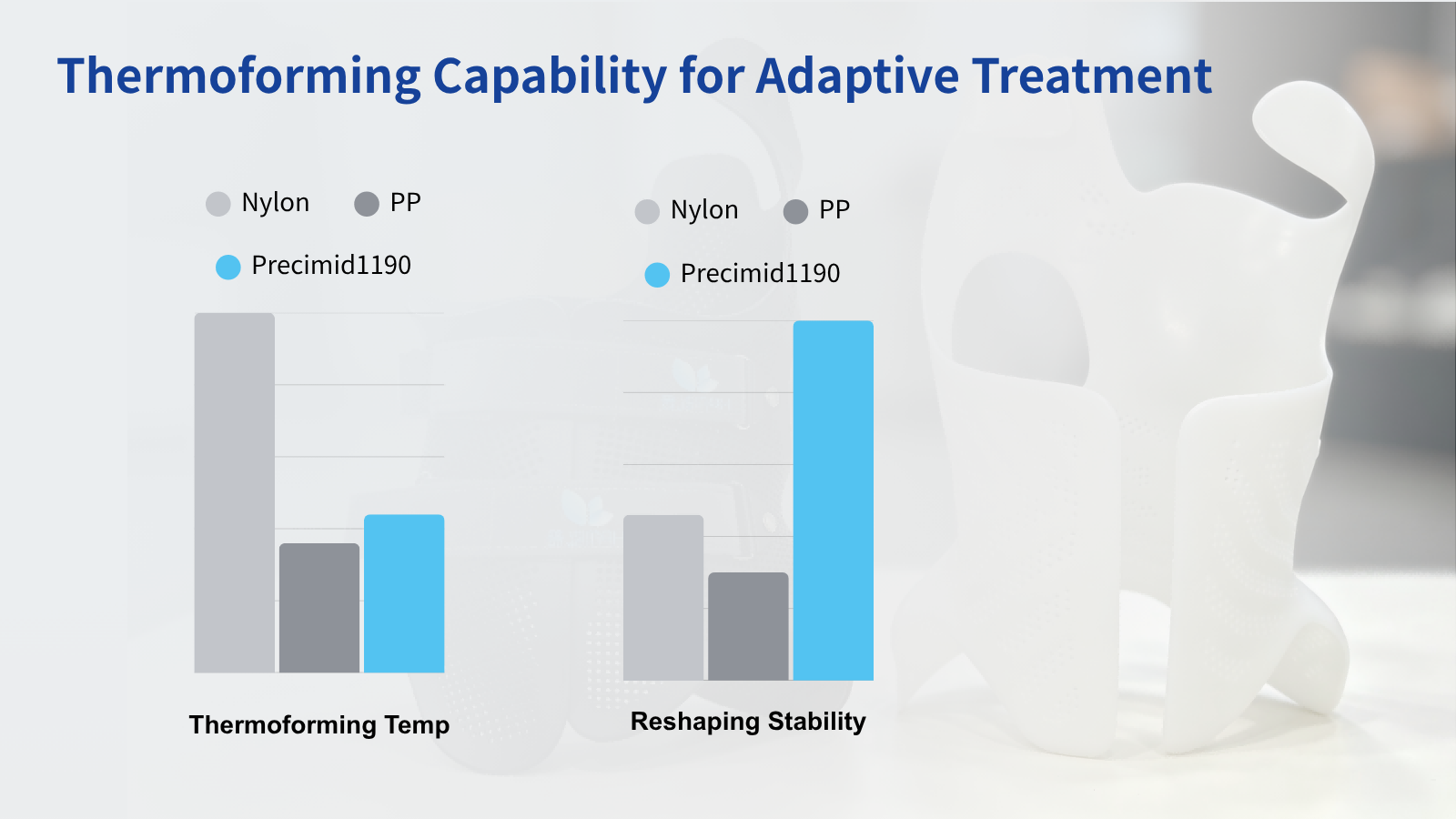
Many rehabilitation devices require adjustment as a patient’s condition changes during treatment. According to TPM3D, Precimid1190 can be reheated and reshaped using relatively low-temperature heat sources, including standard hot-air tools.
This secondary thermoforming capability allows clinicians and technicians to make localized adjustments without manufacturing an entirely new device. In contrast, traditional nylon materials generally require higher temperatures for reshaping, while some alternative thermoplastics may provide less predictable shape retention after adjustment.
Beyond Healthcare Applications
Although developed with medical and rehabilitation applications in mind, Precimid1190 is also suitable for a range of industrial and consumer products that require flexibility and impact resistance.
Potential applications include:
- Customized eyewear frames
- Living hinges and flexible joints
- Functional prototypes
- End-use industrial components
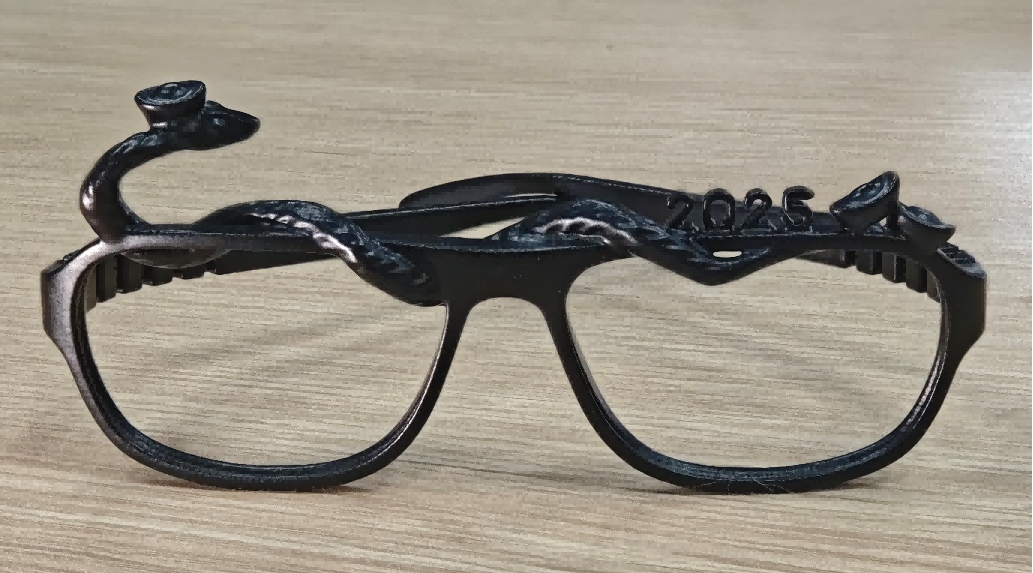
The material’s combination of toughness, printability, and surface quality makes it suitable for products that experience repeated mechanical stress during operation.
Supporting the Shift Toward End-Use Additive Manufacturing
As additive manufacturing moves beyond prototyping and into end-use production, materials capable of delivering both mechanical performance and user comfort are becoming increasingly important.
With its high elongation, strong impact resistance, and suitability for patient-specific designs, Precimid1190 expands the range of applications available for SLS 3D printing, particularly in digital orthotics and rehabilitation technologies where comfort, durability, and customization are critical requirements.