Orthopedic surgery has long relied on the surgeon’s experience to achieve accurate results. But even small deviations during procedures—just a few millimeters—can affect implant alignment, increase wear, and lead to revision surgery.
To address this challenge, TPM3D and AK Medical (HKEX: 01789) are applying Selective Laser Sintering 3D printing to bring precision, repeatability, and efficiency into orthopedic procedures.
From “experience-based” to data-driven execution
Complex procedures such as joint replacement, osteotomy, and tumor reconstruction often hinge on millimeter-level accuracy. Even minor deviations in bone cuts or implant positioning can lead to abnormal limb alignment, accelerated implant wear, and revision surgery.
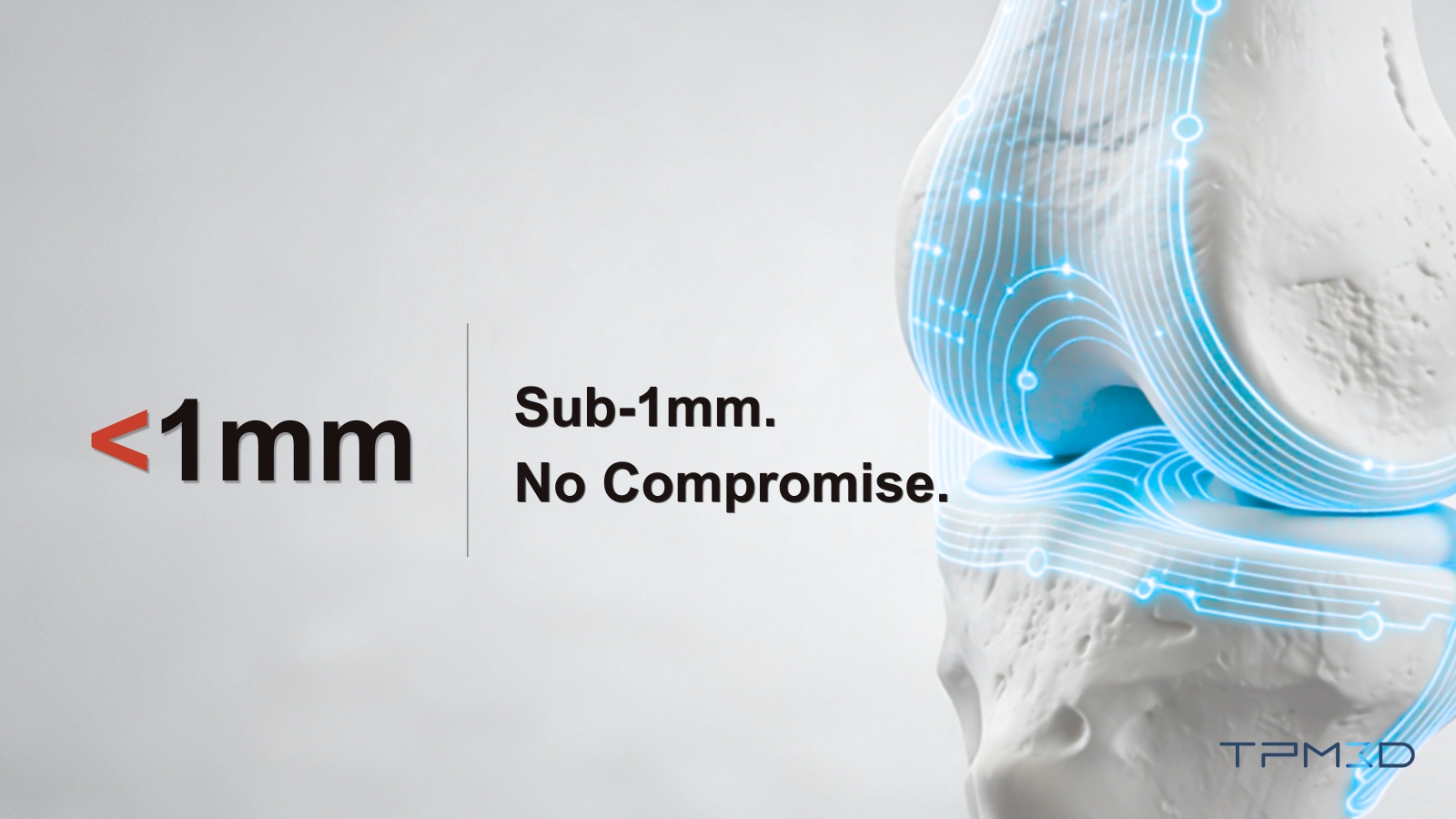
Using patient CT or MRI data, AK Medical designs surgical plans that are directly translated into customized guides. Produced with TPM3D’s SLS technology, these guides fit bone surfaces with sub-millimeter precision and include predefined cutting slots and drilling paths. In the operating room, surgeons follow these guides to execute the plan exactly as designed, effectively turning surgery into a controlled, “by-the-blueprint” process.
The result: reduced reliance on intraoperative judgment, shorter learning curves, and more consistent outcomes across cases.
Shorter surgeries, lower risk
Traditional orthopedic procedures often require repeated intraoperative imaging and adjustments, extending anesthesia time and increasing risks such as blood loss and infection, particularly for elderly patients.
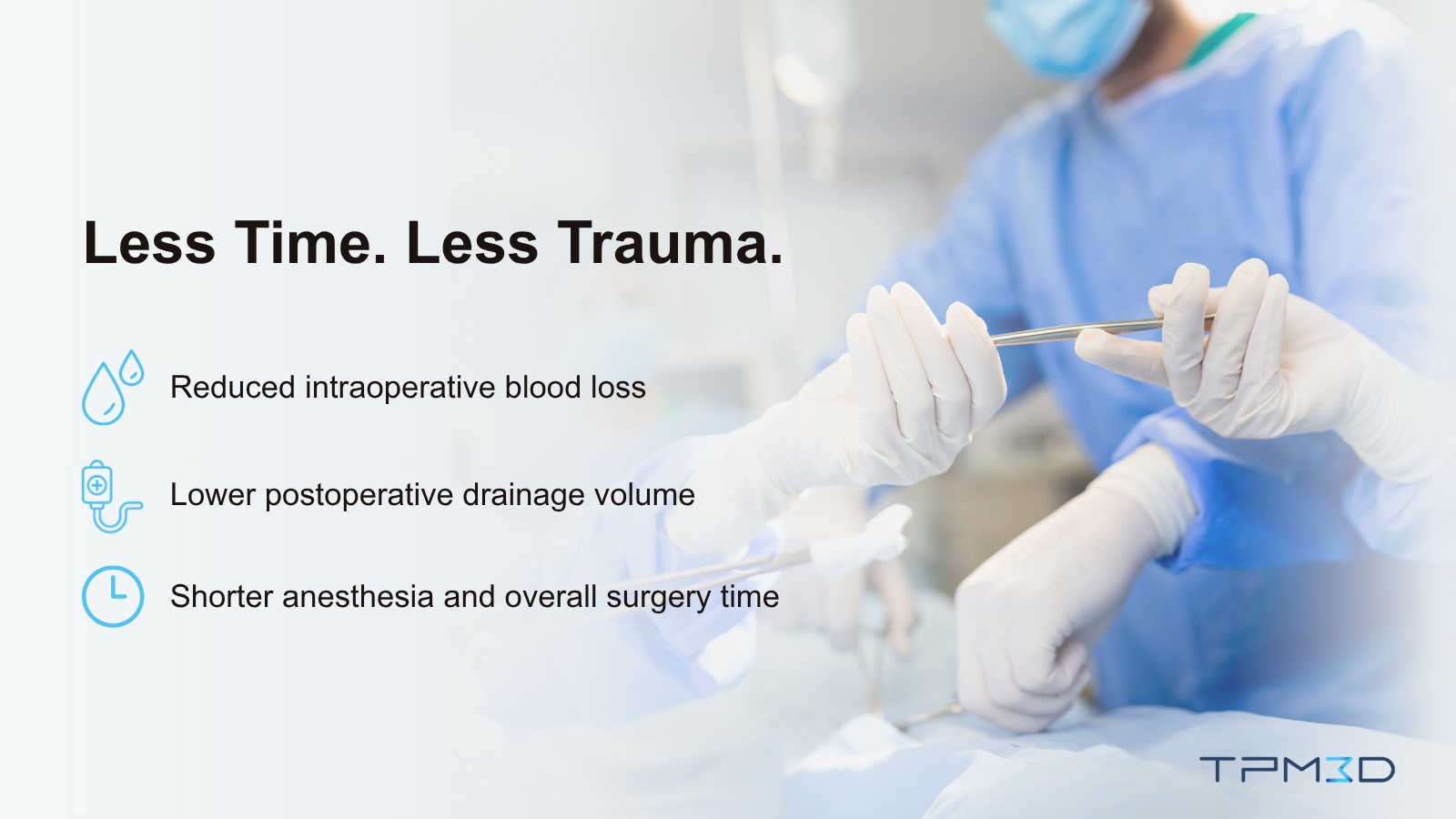
SLS 3D-printed guides streamline positioning, enabling “first-pass accuracy.” Clinical studies show statistically significant reductions in intraoperative blood loss and postoperative drainage (P<0.01), along with shorter operating times when personalized guides are used.
TPM3D’s production capabilities allow delivery within days, supporting fast clinical turnaround. For patients, that translates into less trauma, reduced complication risk, and faster recovery.
Better alignment, longer implant lifespan
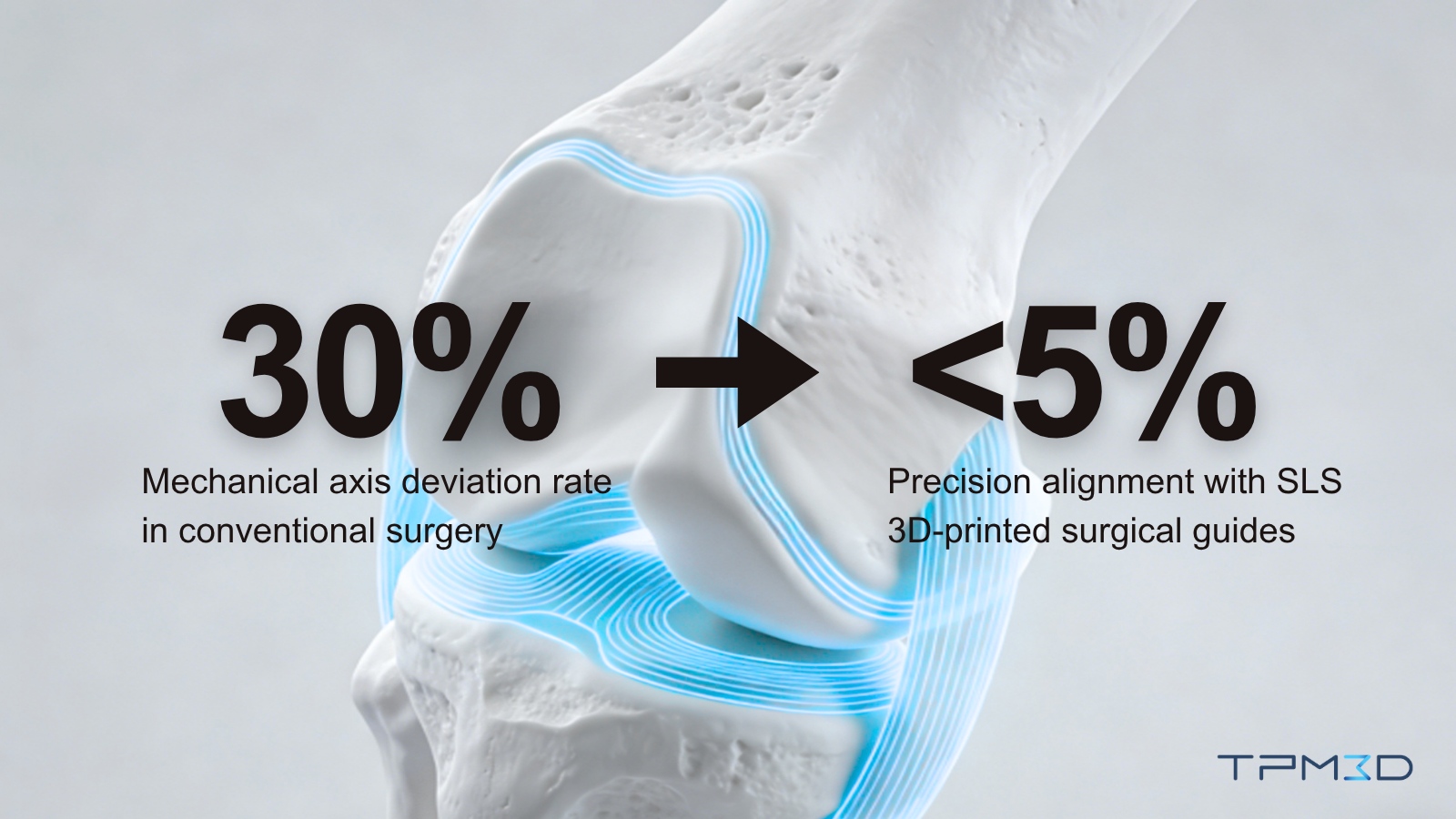
Long-term implant success depends on restoring proper mechanical alignment. In conventional procedures, alignment deviations greater than 3° occur in roughly 30% of cases, often leading to implant loosening or failure over time.
With SLS surgical guides, that rate drops to below 5%. Critical parameters such as acetabular cup orientation and femoral stem anteversion can be controlled within tight clinical tolerances.
For patients, the implication is significant: fewer complications, longer-lasting implants, and a reduced likelihood of revision surgery.
Making complex cases operable
Revision surgeries, deformity corrections, and tumor resections present unique challenges due to altered or missing anatomical landmarks. These cases have traditionally been difficult—or even inoperable—with standard tools.
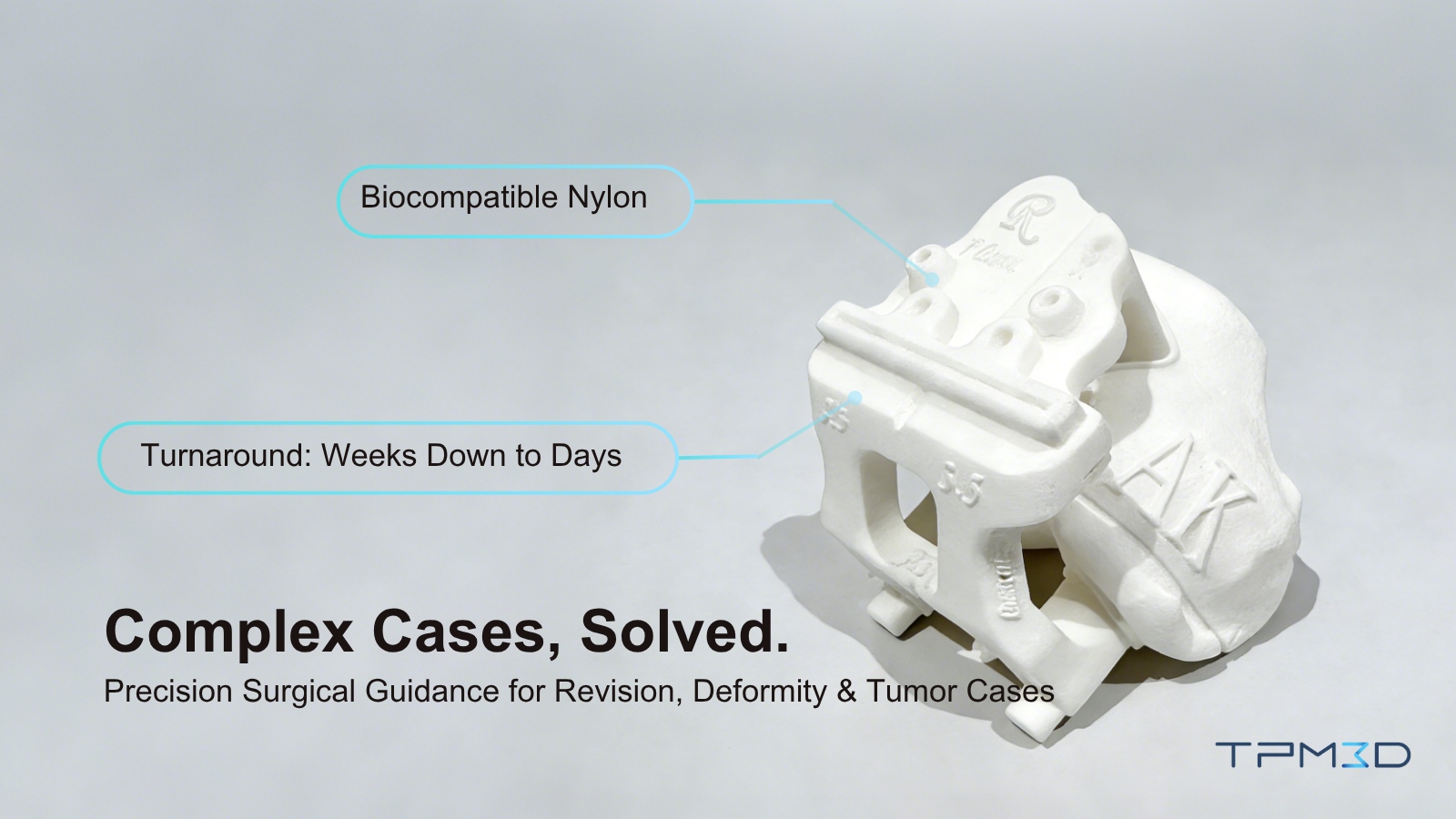
SLS-based guides offer a new pathway. By reconstructing anatomy from imaging data—sometimes using mirrored geometry from the healthy side—custom guides provide reliable reference points where none exist. In tumor surgery, they enable precise definition of resection margins, balancing complete removal with maximum tissue preservation.
Manufactured using biocompatible nylon materials and designed for single use, the guides meet stringent sterilization and safety requirements. Production timelines are reduced from weeks to days, enabling timely intervention for critical patients.
A production system built for medical-grade manufacturing
Scaling surgical guides requires more than accuracy. It demands clean, stable, and efficient production.
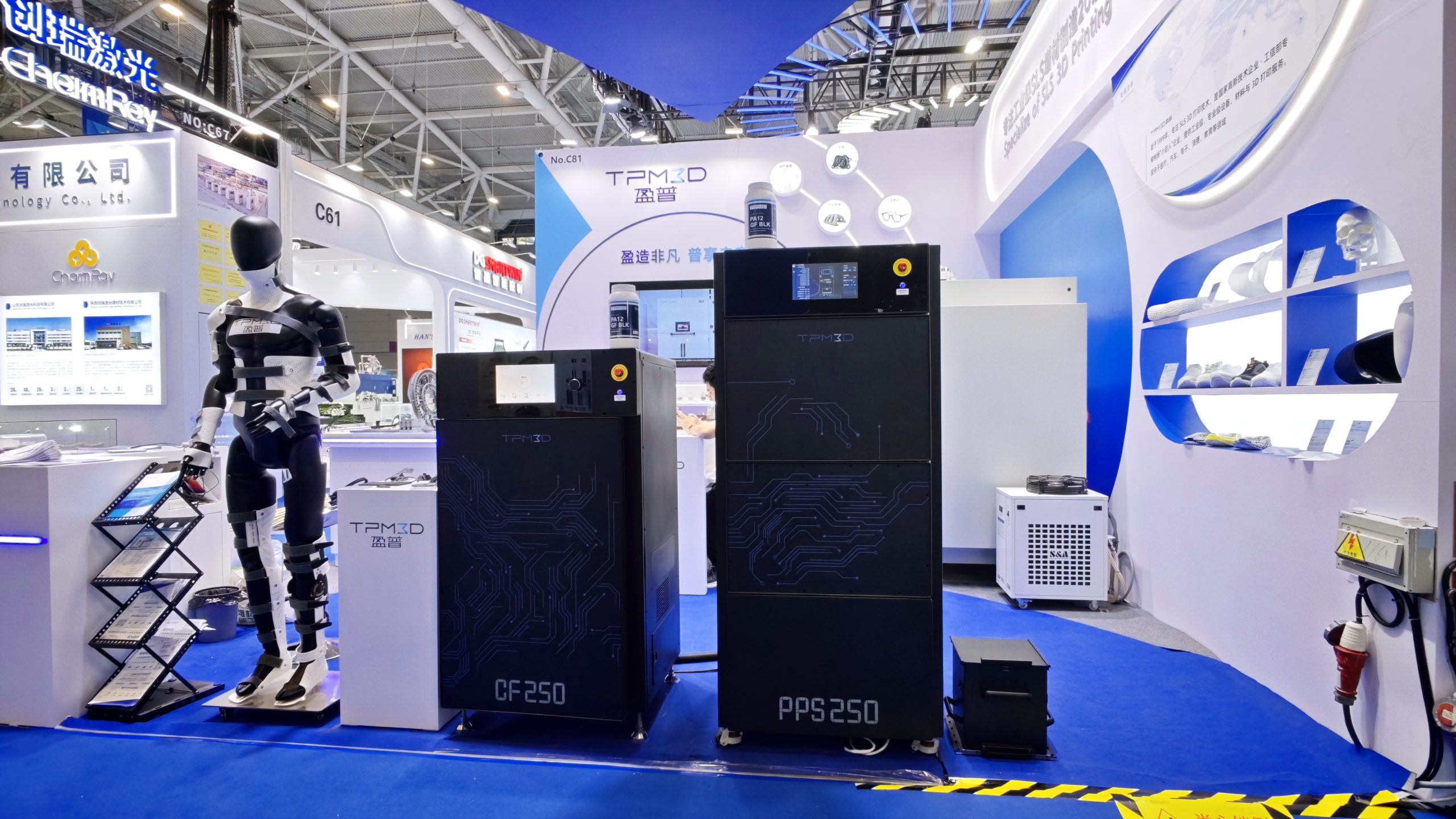
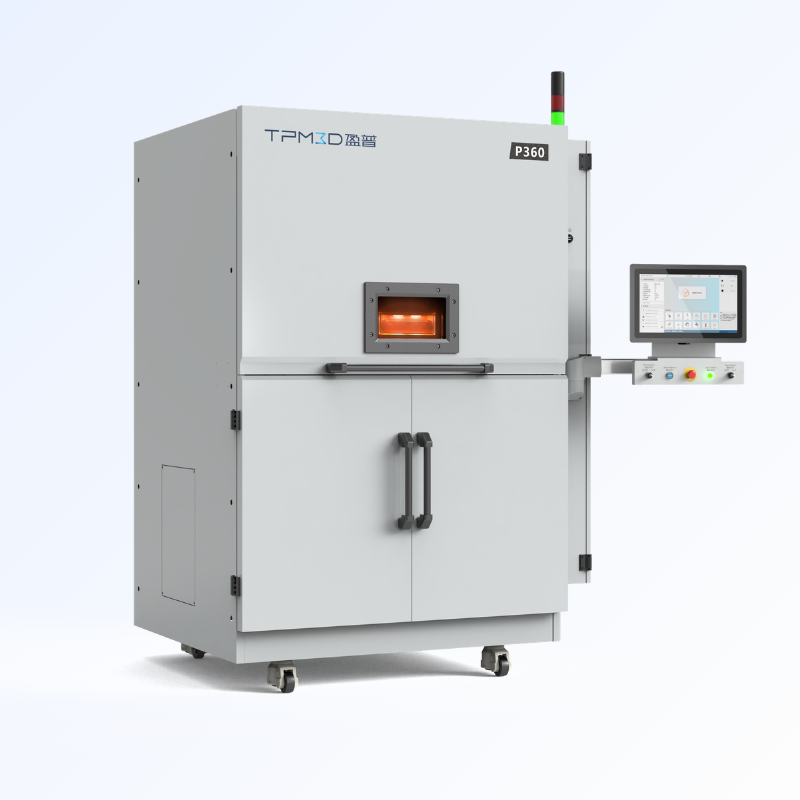
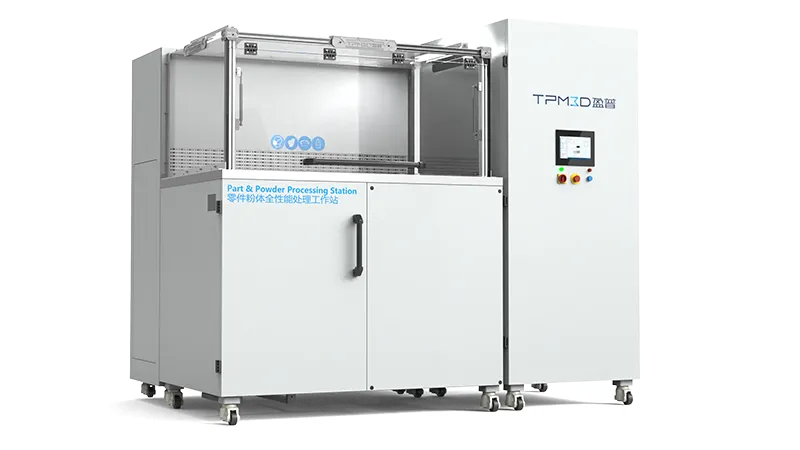
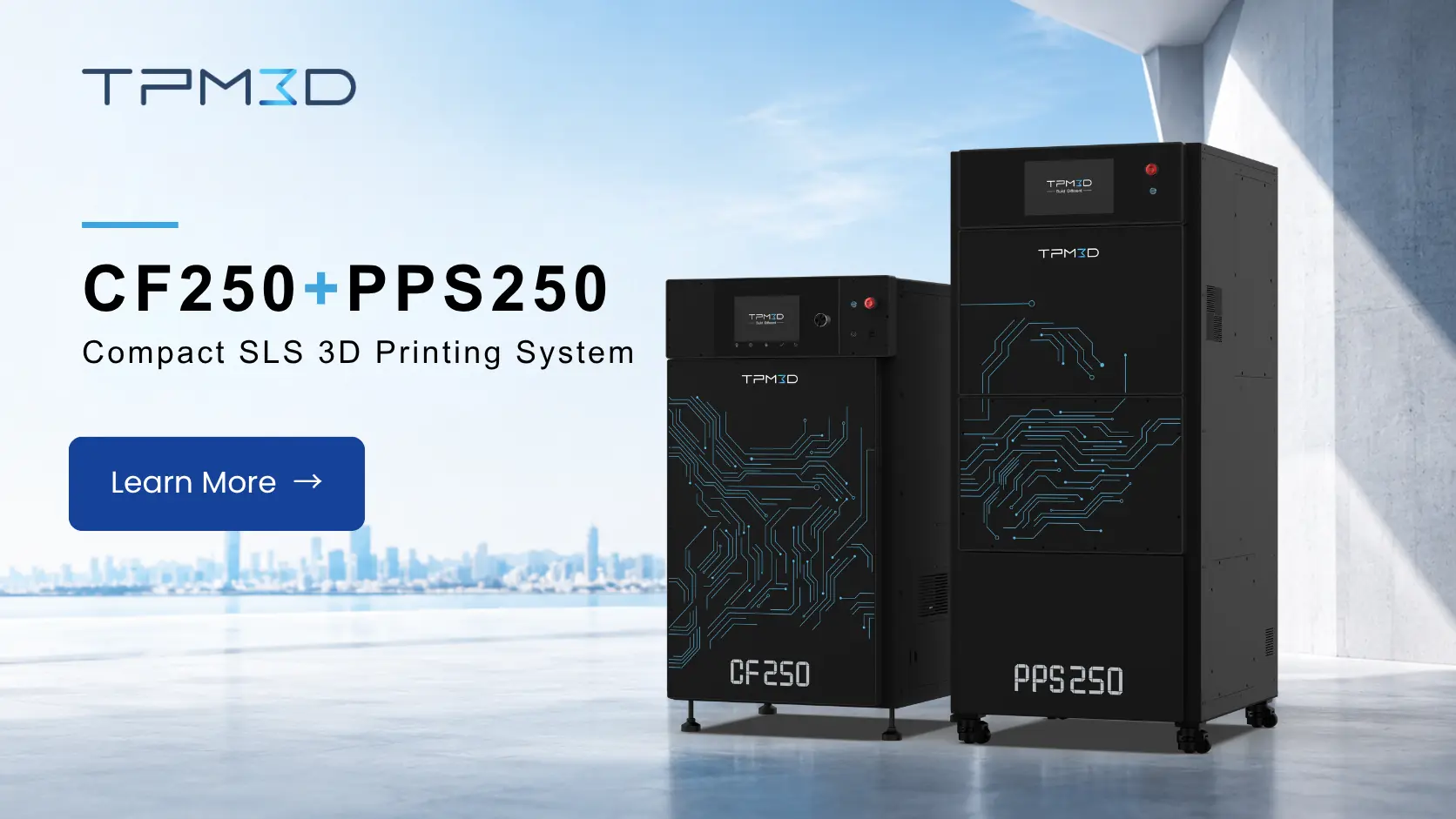
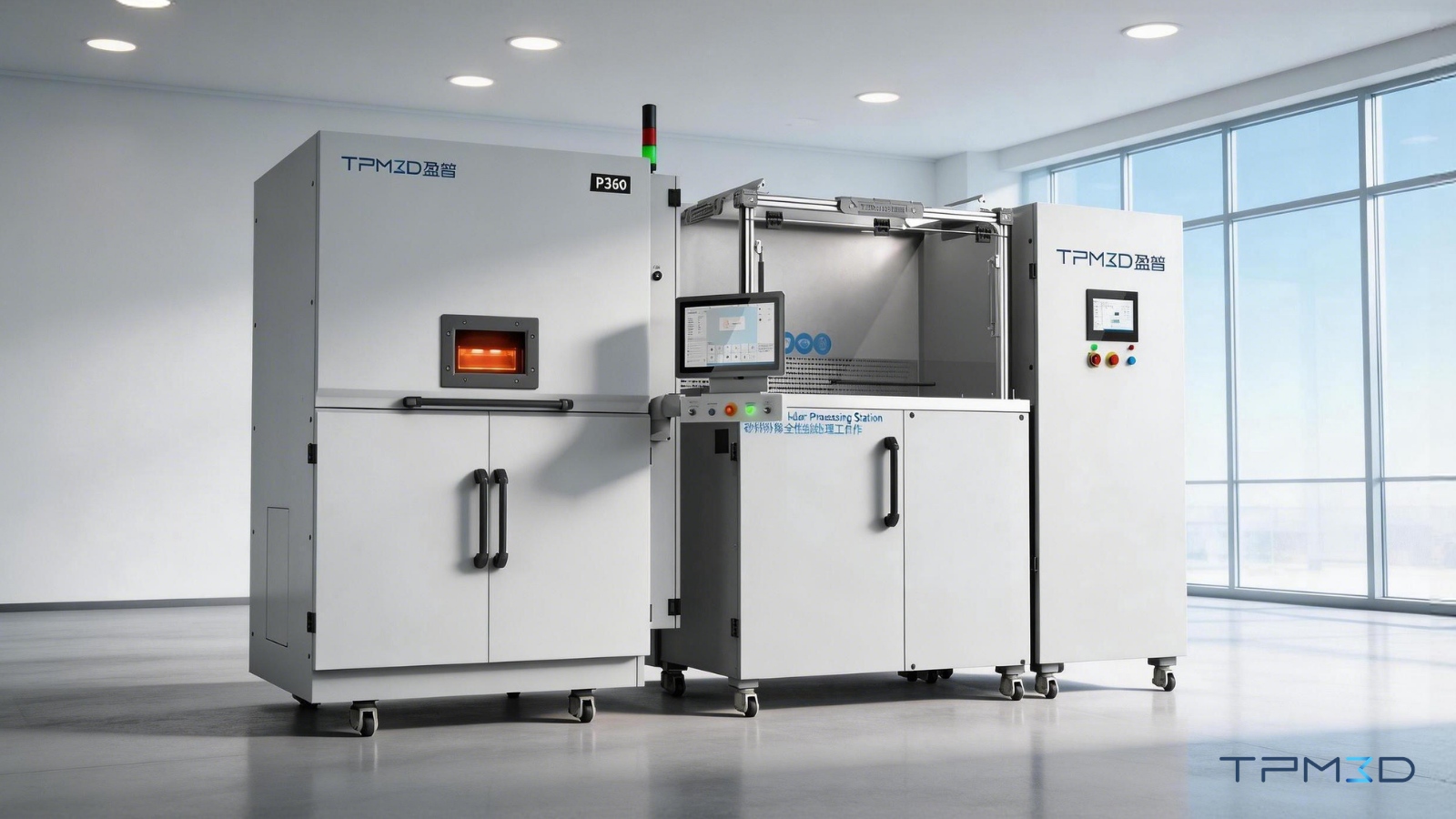
AK Medical has deployed TPM3D’s P360 SLS system alongside the PPS powder processing station as an integrated solution. The P360 offers a compact footprint with a 360 × 360 × 600 mm build volume, supporting batch production of guides and anatomical models.
Features such as an integrated nitrogen generator and active cooling ensure process stability and safety, with CE certification for international compliance.
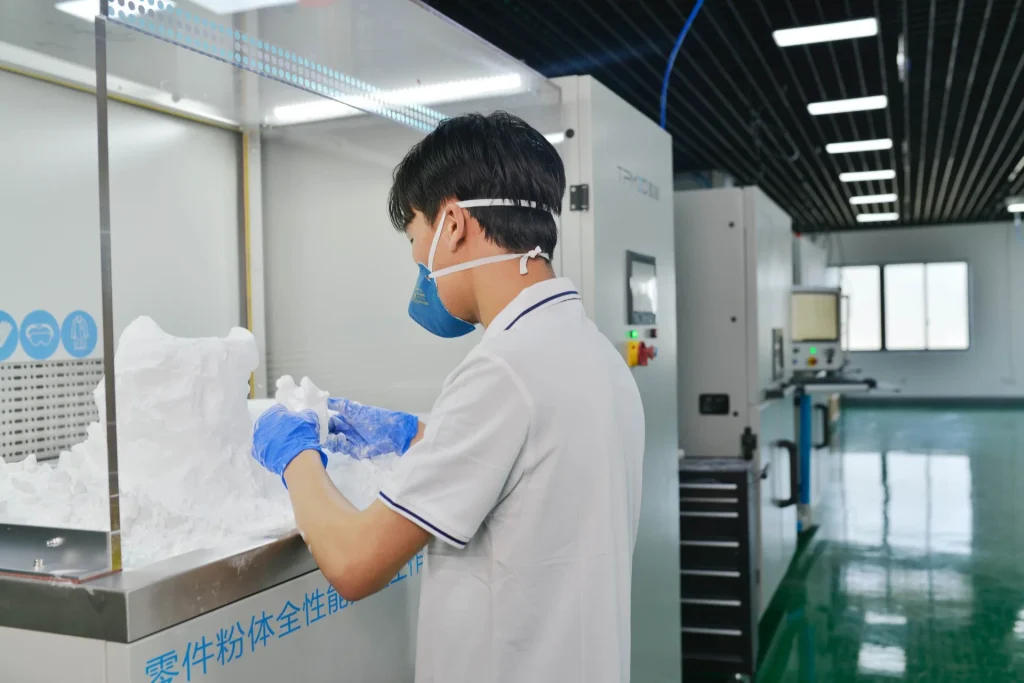
The PPS station addresses post-processing challenges, integrating part cleaning, powder recovery, mixing, and feeding into a closed-loop system. With dust explosion protection certification (Zone 22), it ensures a clean production environment while reducing labor and per-part costs—critical for scaling personalized medical devices.
From concept to clinical routine
The collaboration between TPM3D and AK Medical demonstrates how SLS technology is moving beyond prototyping into standardized clinical use. From preoperative planning to intraoperative execution, and from routine replacements to complex reconstructions, 3D-printed surgical guides are reshaping orthopedic care.
As adoption expands, precision medicine in orthopedics is no longer a niche capability. It is becoming a practical, accessible standard.