For decades, the boundary between prototyping and production was clearly defined by a single manufacturing process: injection molding. It was the undisputed standard for high-volume plastic parts, while 3D printing was largely relegated to the “visual prototype” bin—a tool for checking form, but rarely for verifying function or scaling production.
However, the advent of industrial-grade Selective Laser Sintering (SLS) has fundamentally disrupted this binary. Today, engineers and business owners find themselves at a strategic crossroads. Is it better to invest heavily in permanent steel tooling, or can a digital, mold-less workflow provide the same “professional” results with greater agility?
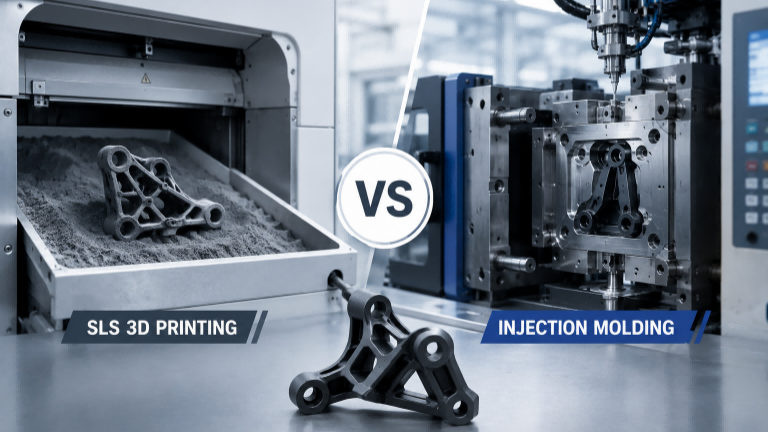
This guide provides an objective, data-driven comparison of 3D printing vs. injection molding, incorporating real-world performance data and addressing the core concerns of modern manufacturers seeking to optimize their supply chains.
Defining the Technologies
Injection Molding: The High-Pressure Standard
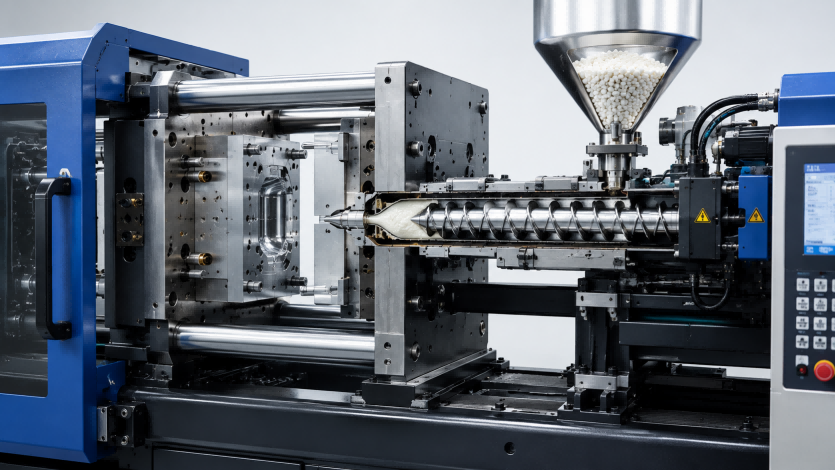
Injection molding (IM) involves melting polymer granules and injecting them under intense pressure into a custom-machined metal mold (the “tooling”). Once the material cools and solidifies, the part is ejected. This process is the global benchmark for producing millions of identical parts with exceptional consistency and smooth surface finishes.
SLS 3D Printing: The Laser-Fused Alternative
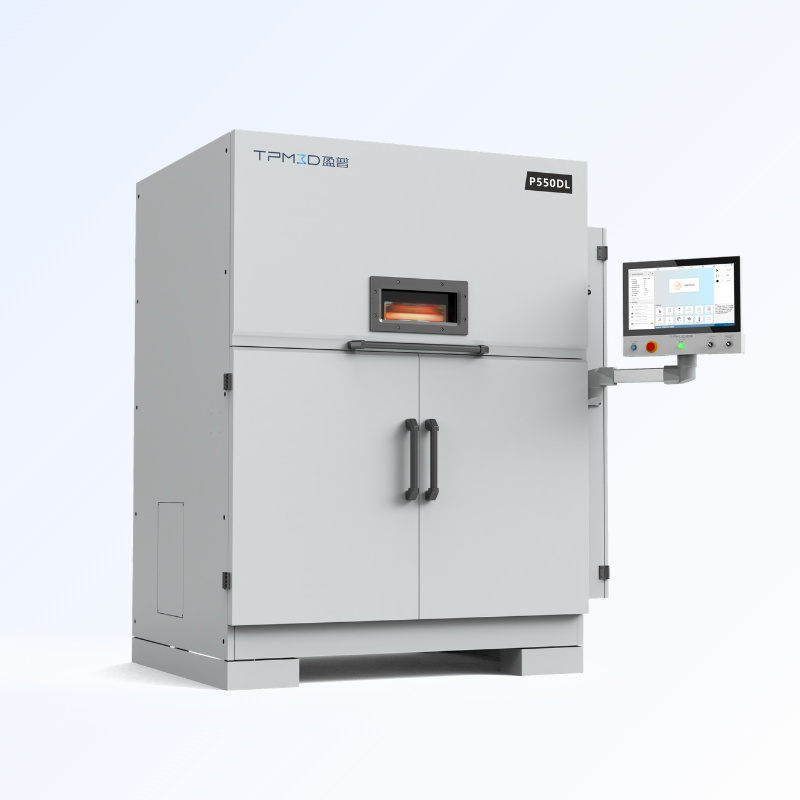
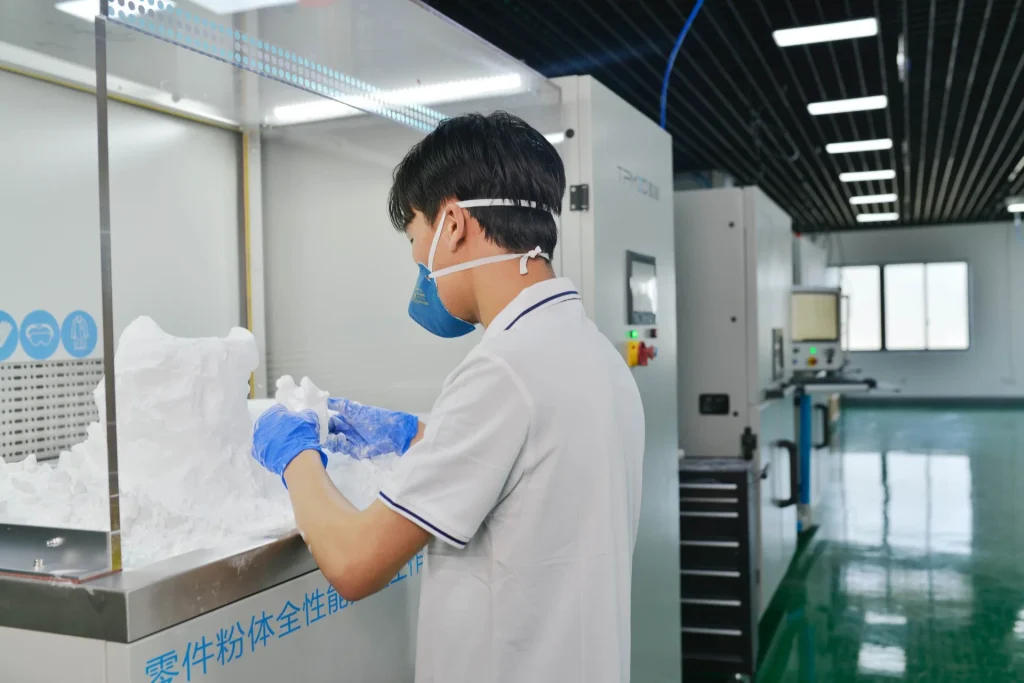
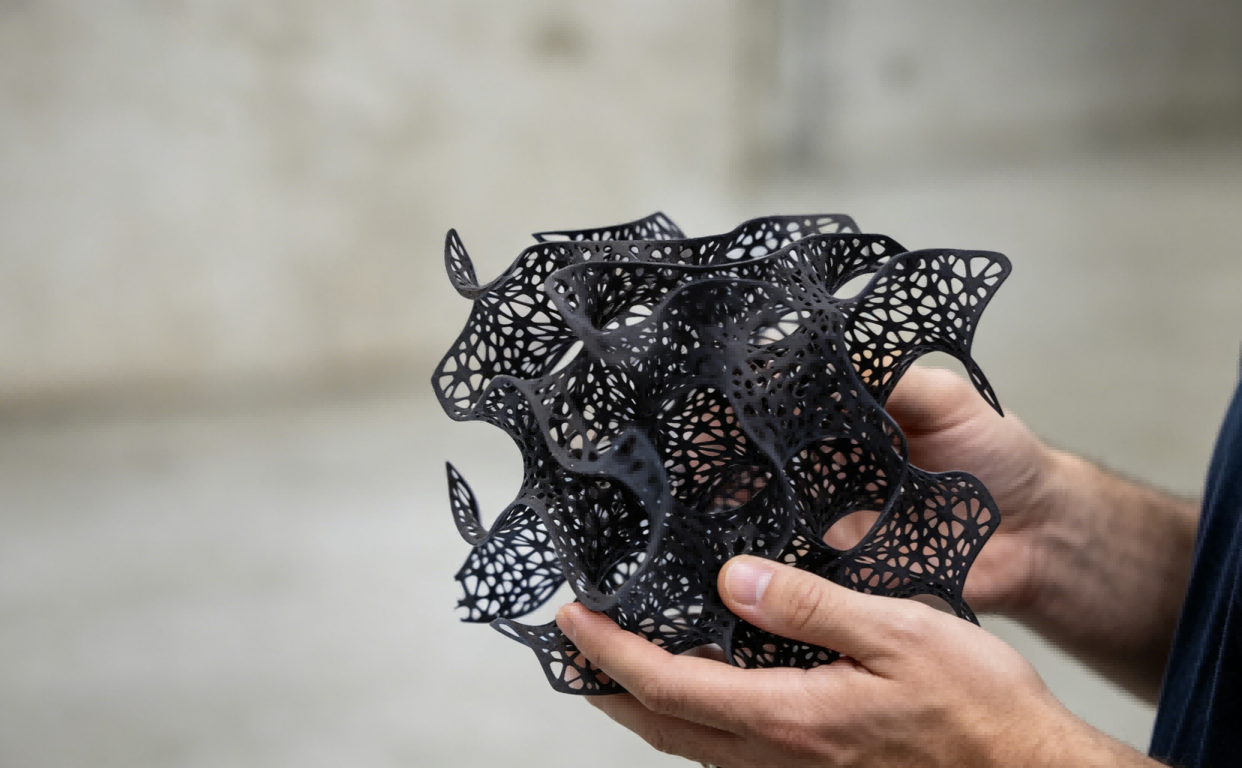
Selective Laser Sintering (SLS) is an additive process that uses a high-powered CO₂ laser to selectively fuse (sinter) small particles of polymer powder—most commonly nylon—into a solid structure. Unlike other 3D printing methods, SLS is support-free because the unsintered powder acts as a natural support bed. This enables “3D nesting,” where hundreds of parts can be stacked vertically in a single build, maximizing throughput in a way that traditional “flat” 3D printing cannot.
Is Injection Molding Stronger Than 3D Printing?
A persistent concern among engineers is that 3D-printed parts are inherently fragile compared to their molded counterparts. Historically, this was true, as earlier methods often resulted in anisotropy—where the part was significantly weaker along the vertical Z-axis due to poor layer bonding.
Breaking the Strength Barrier with SLS Isotropy
Industrial SLS technology has largely overcome this limitation. TPM3D’s SLS systems produce parts with 97% to 98% quasi-isotropy. Because the powder bed is preheated to roughly 85% of the material’s melting point, the laser sinters particles that are already in a semi-fused state with the layer below.
Real Data: To demonstrate toughness, consider the parameters of specialized TPM3D Precimid powders:
- Extreme Toughness (Nylon 11): Precimid1180 offers exceptional ductility with an elongation at break of 45%. In IZOD impact strength tests (ASTM D256), it frequently records “no rupture,” making it tough enough for functional prosthetic sockets and automotive snap-fits that must survive repeated dynamic stress.
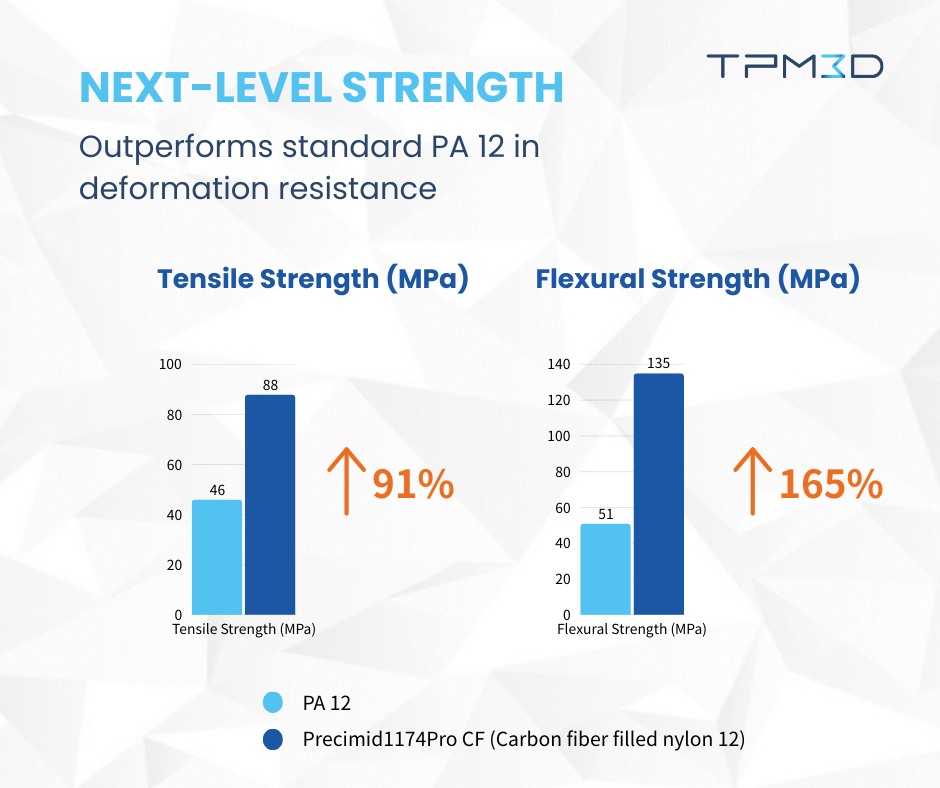
- High Rigidity (Carbon Fiber): Precimid1174Pro CF (30% carbon fiber reinforced) reaches a tensile strength of 88 MPa and a flexural modulus of 6,000 MPa in the X-axis. This represents a 91% increase in strength over standard nylon, allowing it to replace metal in high-performance applications like 6-gram drone frames.
- Thermal Endurance (Glass Bead): Precimid1172Pro GF30 features a Heat Deflection Temperature (HDT) of 184.4°C. This material was used to print V8 intake manifolds that survived the intense thermal environments of racing engines, where molded plastics might warp.
While injection molding creates a homogenous solid mass that remains the gold standard for absolute structural rigidity in mass production, industrial SLS parts are now mechanically comparable and fully suitable for high-stress “end-use” applications.
The Professionalism Dilemma: Overcoming the “Prototype Feel”
A common hesitation for small businesses is the fear that 3D printing—no matter how accurate—will always have a “prototype feel” that makes a product seem “basic” or “unprofessional” compared to the sleek finish of a molded part.
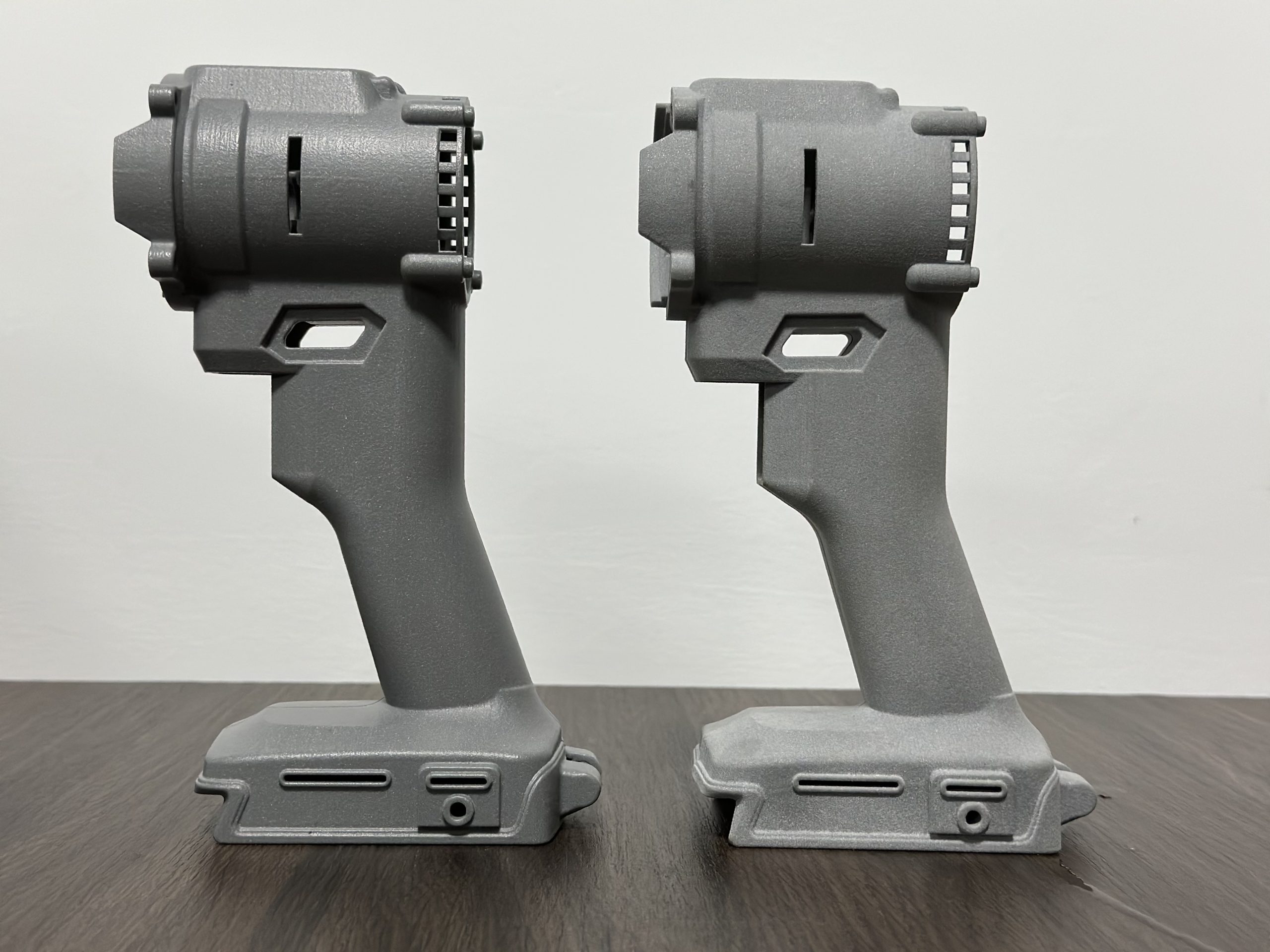
In the past, visible layer lines and a grainy texture were dead giveaways of 3D printing. However, industrial SLS produces parts with a uniform, matte surface that is already “cleaner” than other 3D technologies because there are no marks from removed support structures.
For consumer-facing products, methods like vapor smoothing can transform this matte finish into a smooth, glossy, and hydrophobic surface that is nearly indistinguishable from injection-molded plastic. This allows brands to maintain a professional aesthetic while retaining the “unique” and “complex” designs that are impossible to mold.
Is 3D Printing Cheaper Than Injection Molding?
The economics of 3D printing vs. injection molding center on one primary factor: Tooling.
The Tooling Bottleneck
Injection molding requires a significant upfront investment in a metal tool, which can cost anywhere from $5,000 to $50,000. Furthermore, injection molding often requires a complete redesign for manufacturability (DFM). You must account for draft angles, constant wall thickness, and the elimination of undercuts to ensure the part can slide out of the mold. A minor design error found after the tool is cut can double your costs as the mold must be scrapped or heavily modified.
The Zero-Tooling ROI of SLS
3D printing eliminates tooling costs entirely. You can move from a CAD file to a finished part in a single step.
- Break-even Point: Industry benchmarks indicate that 3D printing is the more cost-effective solution for volumes up to 13,050 parts.
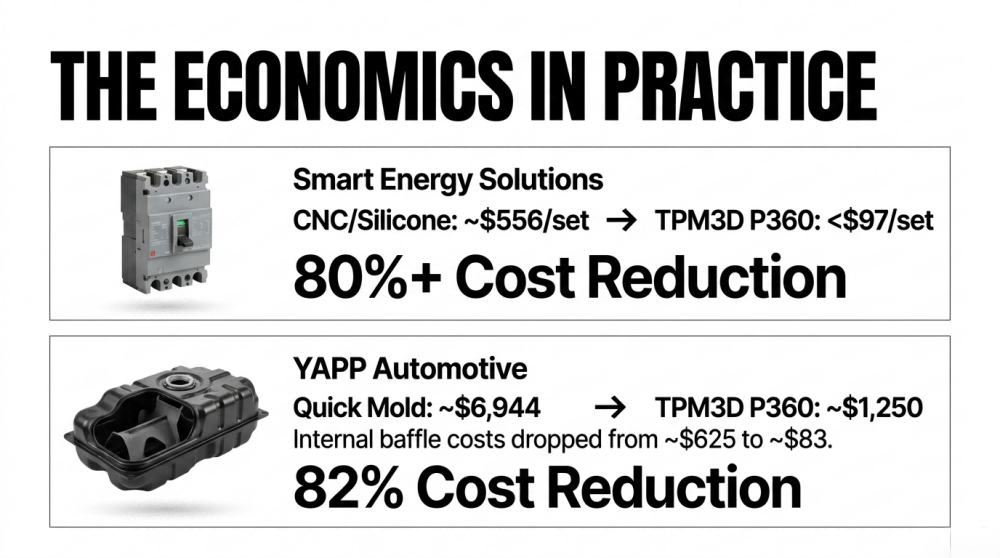
- TPM3D Real-World Data: A global leader in smart energy solutions switched from CNC and silicone molding to the TPM3D P360 for their circuit breaker (MCCB) prototypes. The cost per set plummeted from ~$556 to under ~$97—an 80%+ reduction. (Learn more)
- Automotive Efficiency: For YAPP Automotive, producing a fuel tank body with traditional “quick molds” cost ~$6,944 per set. By using the TPM3D P360, the cost dropped to ~$1,250, while internal baffle costs fell from ~$625 to just ~$83.
How Many Times Slower Is 3D Printing Than Injection Molding?
The answer depends on whether you are measuring cycle time or lead time.
1. Cycle Time: The High-Volume Sprints
Once the mold is ready, injection molding is incredibly fast. A typical cycle for a small part might take only 50 seconds and produce two or more parts at once. In contrast, a 3D printer builds at a linear speed of 10 to 25 mm/h. On a purely “per-second” basis, injection molding is hundreds of times faster.
2. Lead Time: The R&D Marathon
Lead time is the total duration from “Final Design” to “Finished Part in Hand.” This is where 3D printing wins:
- Injection Molding: Fabricating a mold takes 4 to 6 weeks. If the part fails a test, you wait another 6 weeks for a new mold.
- 3D Printing: Parts can be ready in 24 to 48 hours.
- TPM3D Case Study: For YAPP Automotive, the traditional lead time for a prototype fuel tank was 12 days. Using the TPM3D P360, it was reduced to 2 days—an 83% reduction.
For companies iterating monthly or producing “low-volume, semi-custom” batches (e.g., 1–50 pieces), 3D printing is effectively much “faster” because it avoids the 6-week tooling bottleneck.
Design Freedom: Complexity Without Penalty
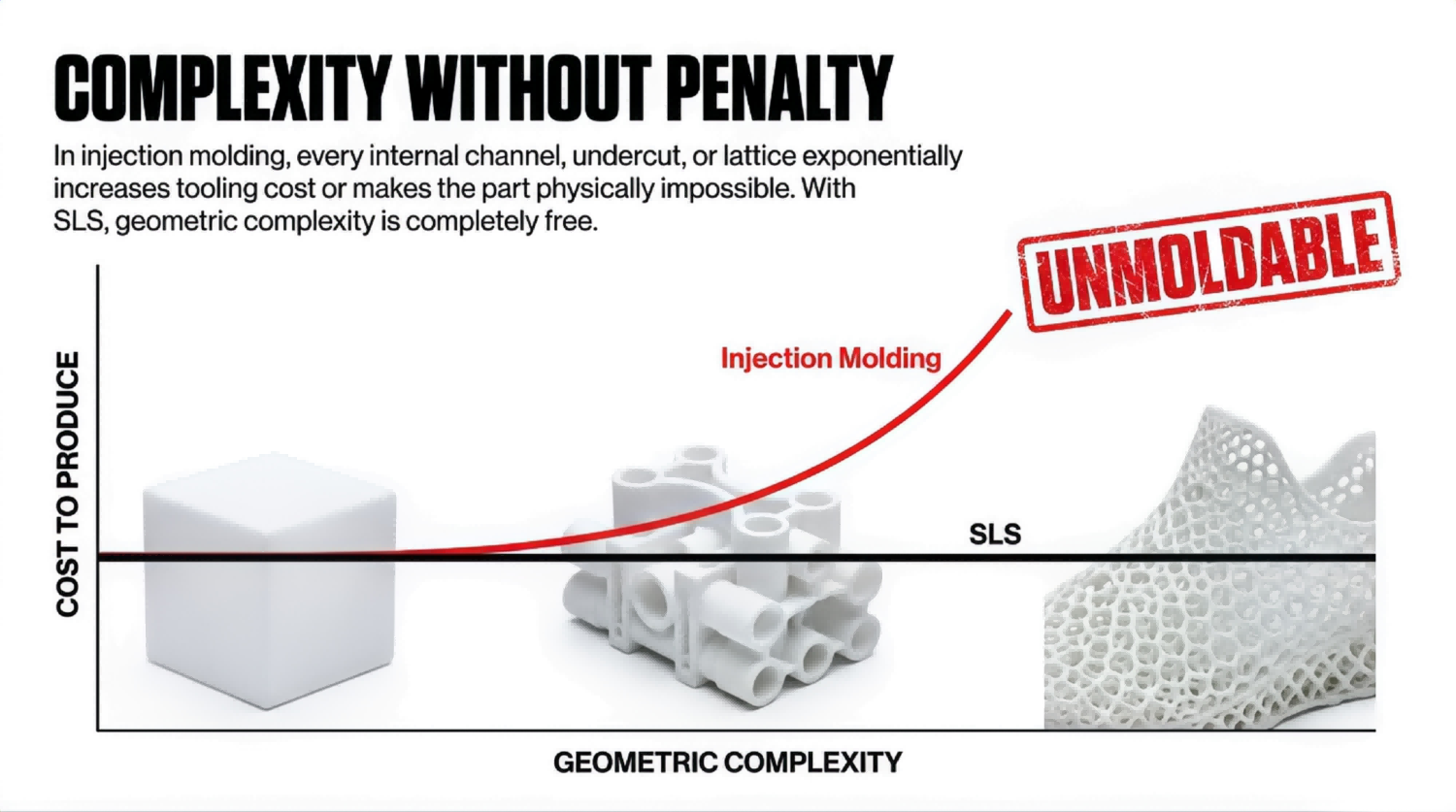
One of the most significant advantages of 3D printing vs. injection molding is how they handle complexity. In injection molding, every extra “feature”—internal channels, lattices, or interlocking tabs—increases the complexity and cost of the mold. Some geometries are simply unmoldable.
Because SLS is support-free, there are no manufacturing constraints. You can print:
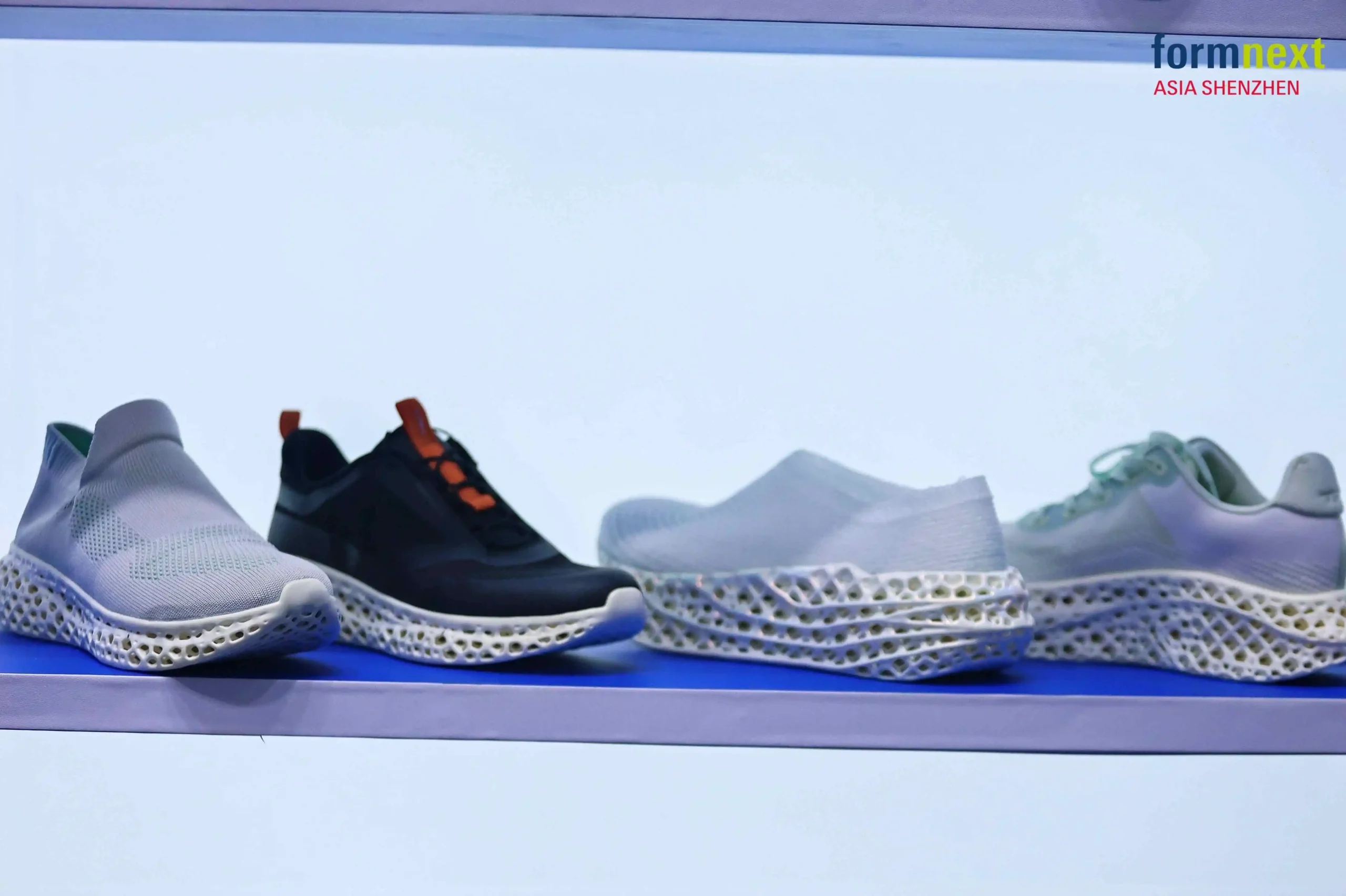
- Lattice structures for lightweighting (as seen in TPM3D’s breathable shoes).
- Internal channels for optimized airflow (as seen in DTMRS’s V8 intake manifolds).
- Integrated assemblies that reduce the need for welding and fasteners.
Will 3D Printing Replace Injection Molding?
The short answer is no. They are complementary technologies.
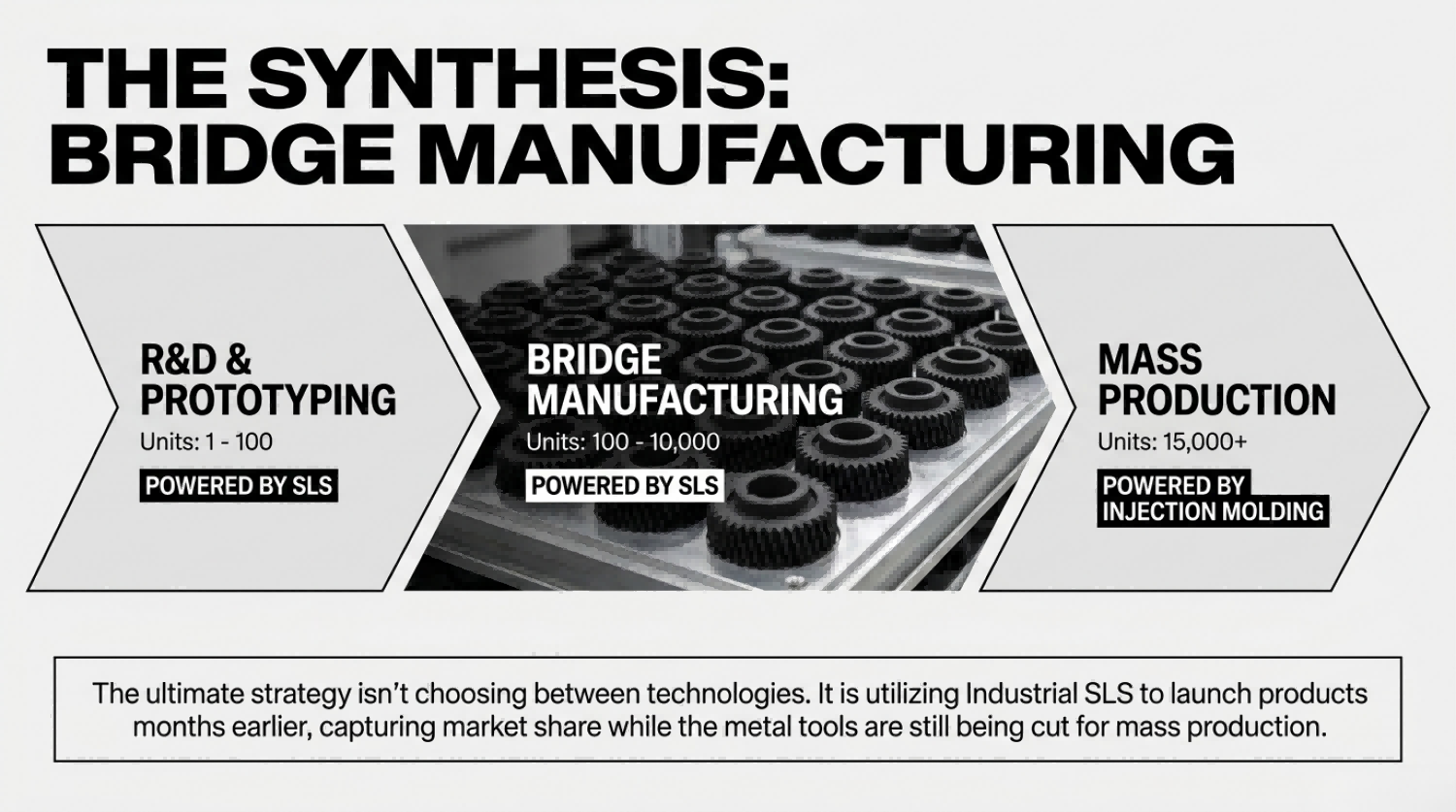
Injection molding will remain the engine for mass-producing millions of identical, low-cost consumer items like bottle caps or toothbrushes. However, 3D printing is rapidly replacing injection molding in “Bridge Manufacturing”—the production phase between the first prototype and the first 10,000 units.
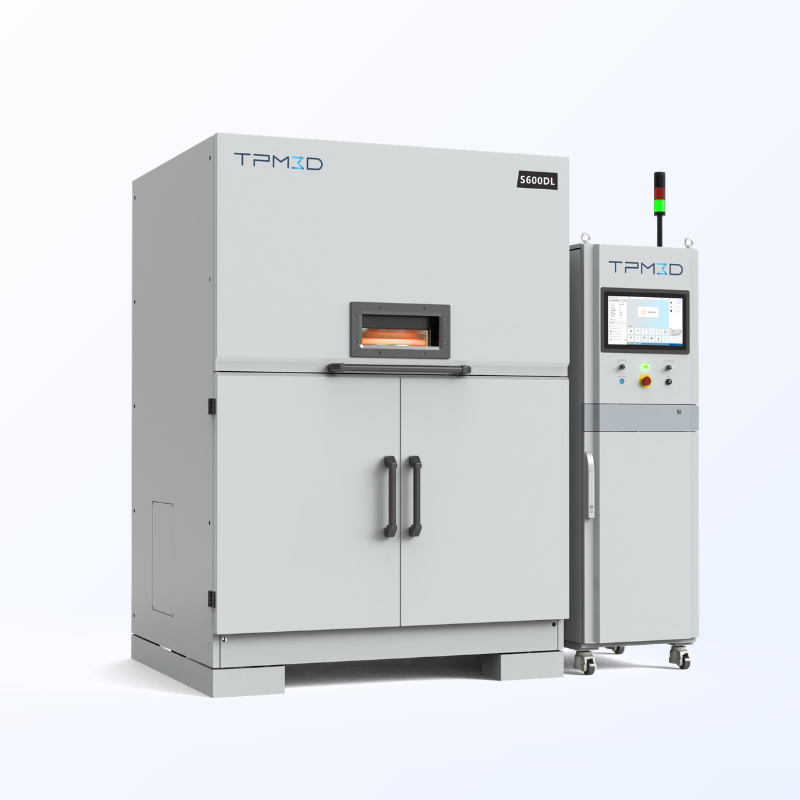
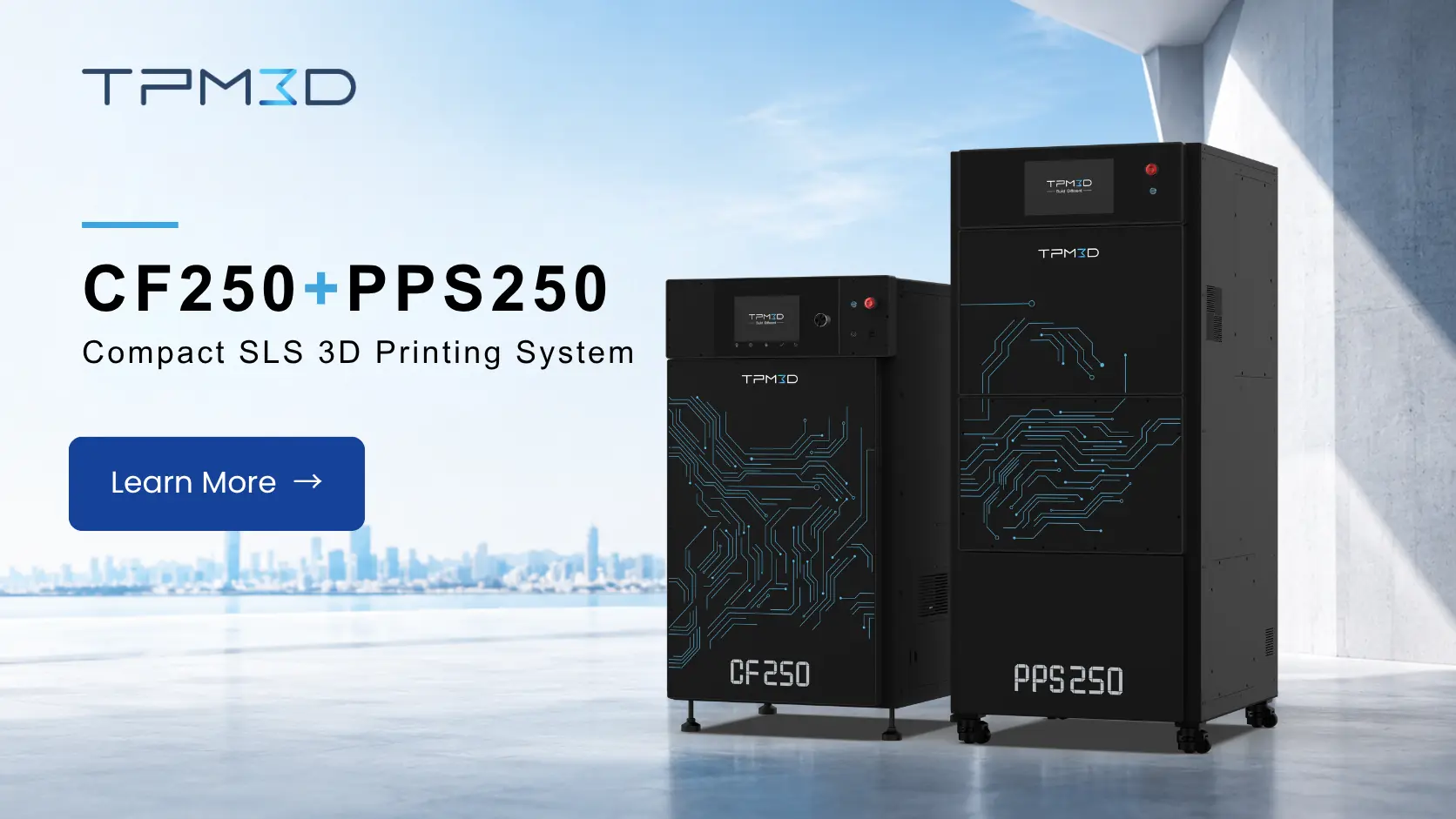
By bringing SLS in-house with systems like the TPM3D P360 or the large-format S600DL, businesses can “shore up their supply chain,” launch products months earlier, and produce highly personalized components that a fixed metal mold simply cannot accommodate.
Decision Guide: Which Path for Your Production?
| Feature | Choose 3D Printing (SLS) If… | Choose Injection Molding If… |
|---|---|---|
| Volume | Under 10,000 units | Over 15,000+ units |
| Timeline | Part needed in 2–3 days | Can wait 4–6 weeks for tooling |
| Complexity | Lattices, internal channels, or thin walls | Simple shapes with constant thickness |
| Cost Focus | Minimize upfront capital/tooling risk | Minimize per-unit cost for mass scale |
| Design Status | Design is likely to change or iterate | Design is 100% finalized and frozen |
| Customization | Each part needs to be unique (e.g., Medical) | Every part must be identical |
Conclusion: Selecting Your Manufacturing Engine
The debate of 3d printing vs injection molding is no longer about which technology is “better,” but about which strategy allows your business to move with more agility.
By utilizing TPM3D’s industrial SLS solutions, manufacturers are bypassing the high costs and long delays of traditional molds. Whether you are achieving an 82% weight reduction in a robotic structural frame or slashing your R&D costs by 80%, the objective remains the same: professional-grade parts, delivered with digital precision, without the burden of steel.
As manufacturing becomes more agile, the “freedom, strength, and efficiency” of SLS is moving from the lab to the production floor, serving as the essential engine for the next generation of industrial innovation.