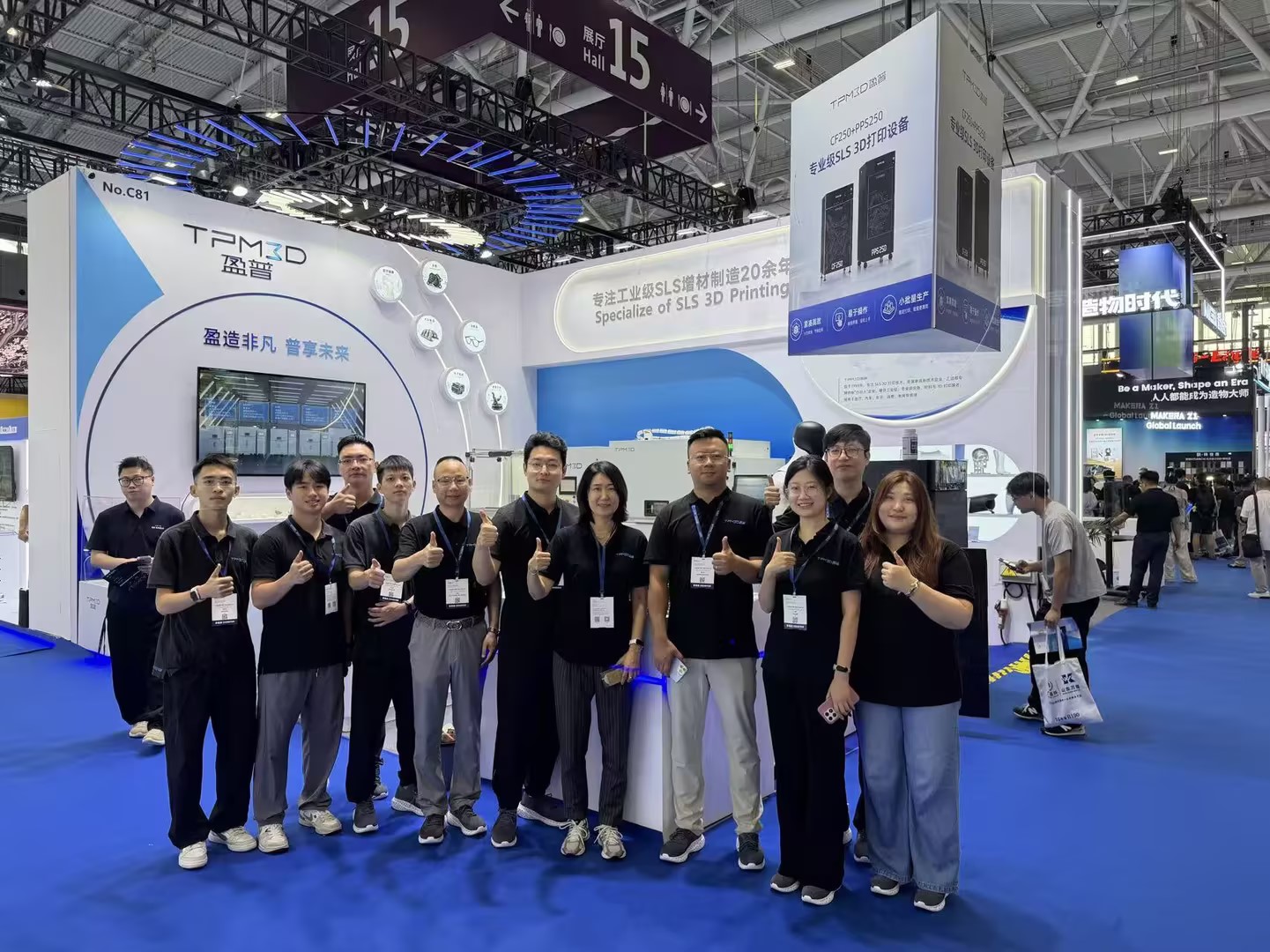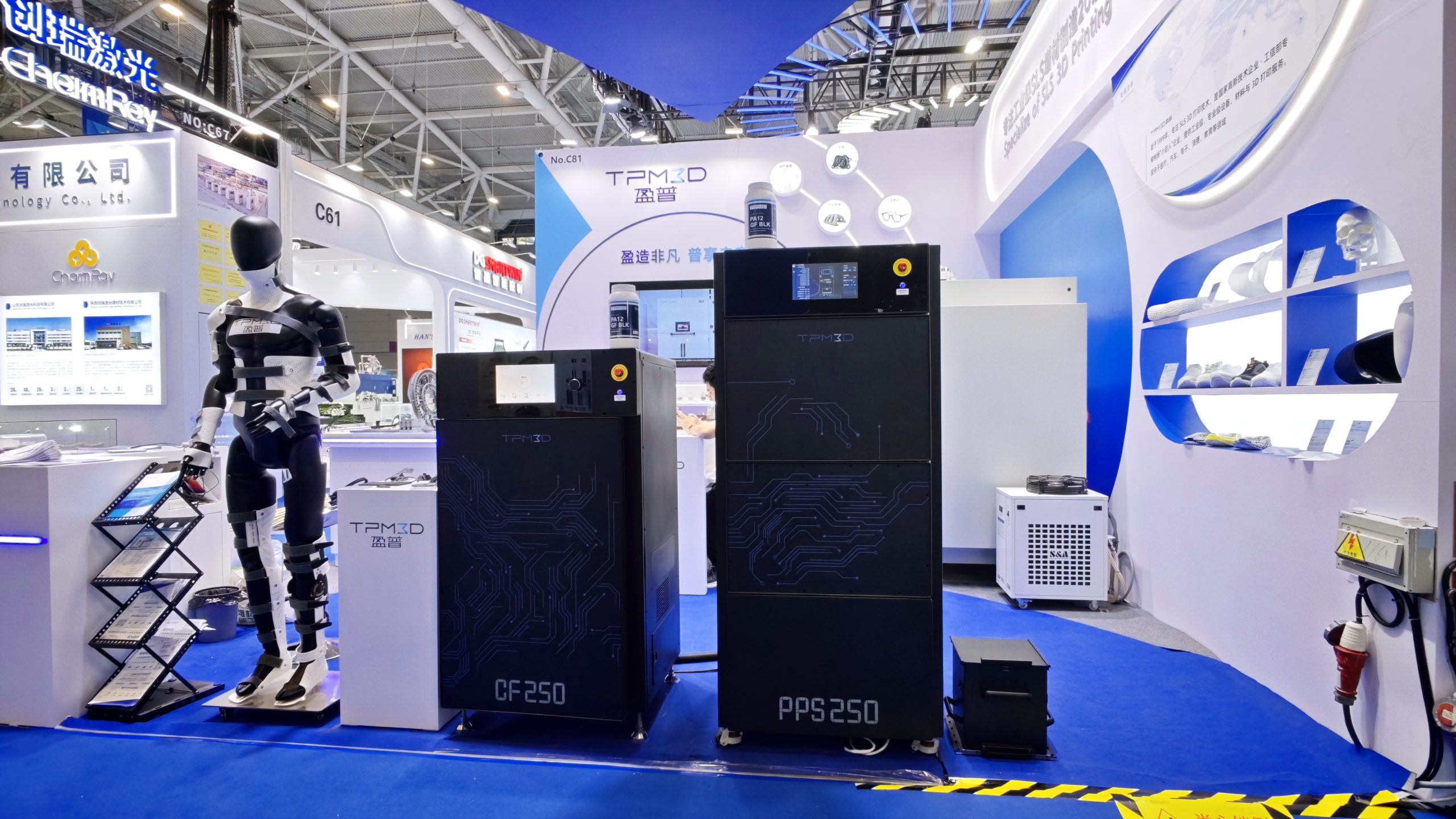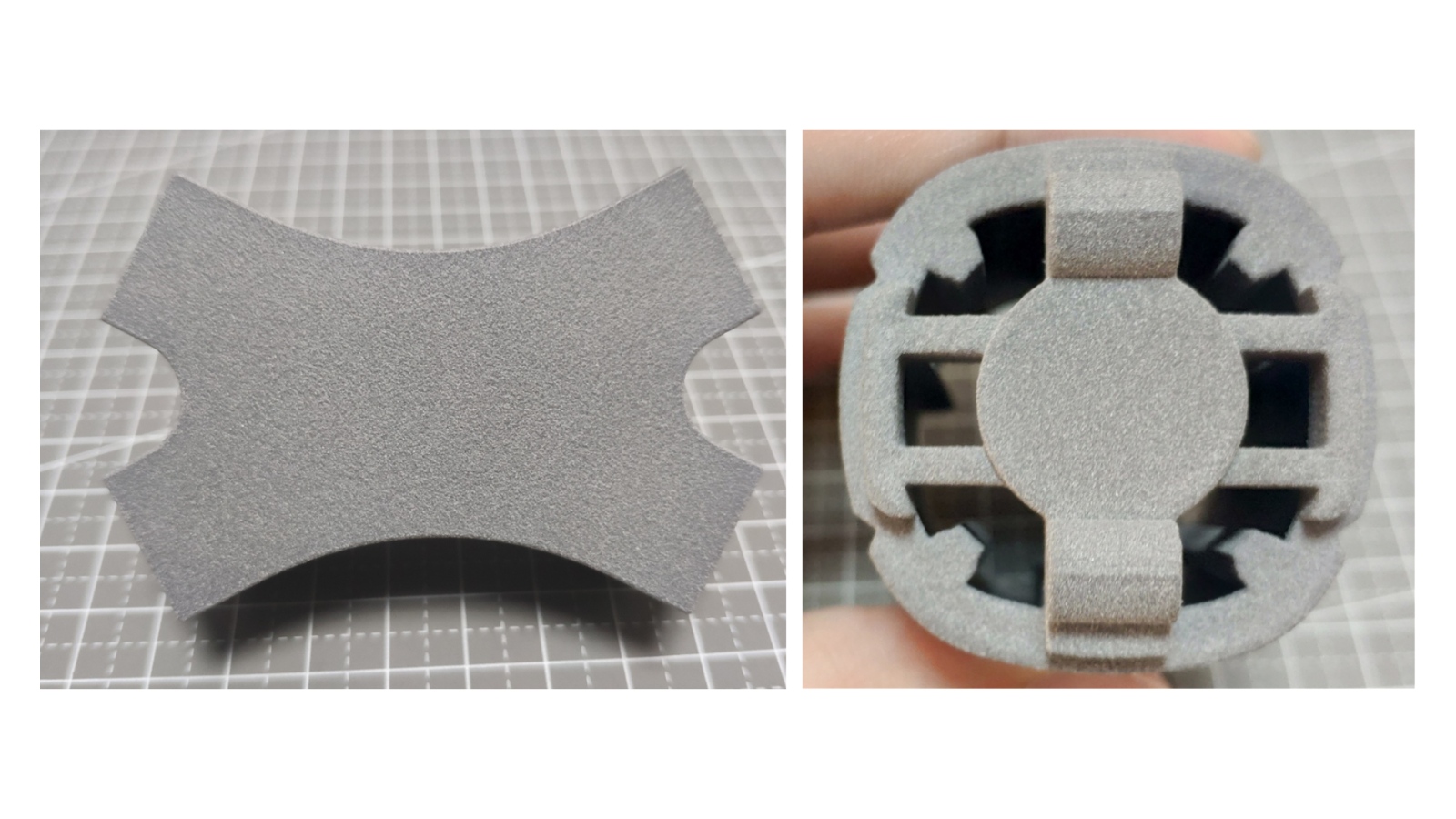
At Formnext Asia Shenzhen 2026, TPM3D presented its latest approach to 3D-printed footwear, combining selective laser sintering (SLS) with foaming technology to address the challenges of weight, energy return and durability in lattice-based footwear components.
The solution was presented at the Technology & Application Forum for the Footwear Industry, held alongside Formnext Asia Shenzhen 2026. In a presentation titled “Innovative Applications Combining SLS 3D Printing and Foaming Technology,” TPM3D outlined how structural design, material processing and post-processing can be integrated into a single workflow for footwear development.
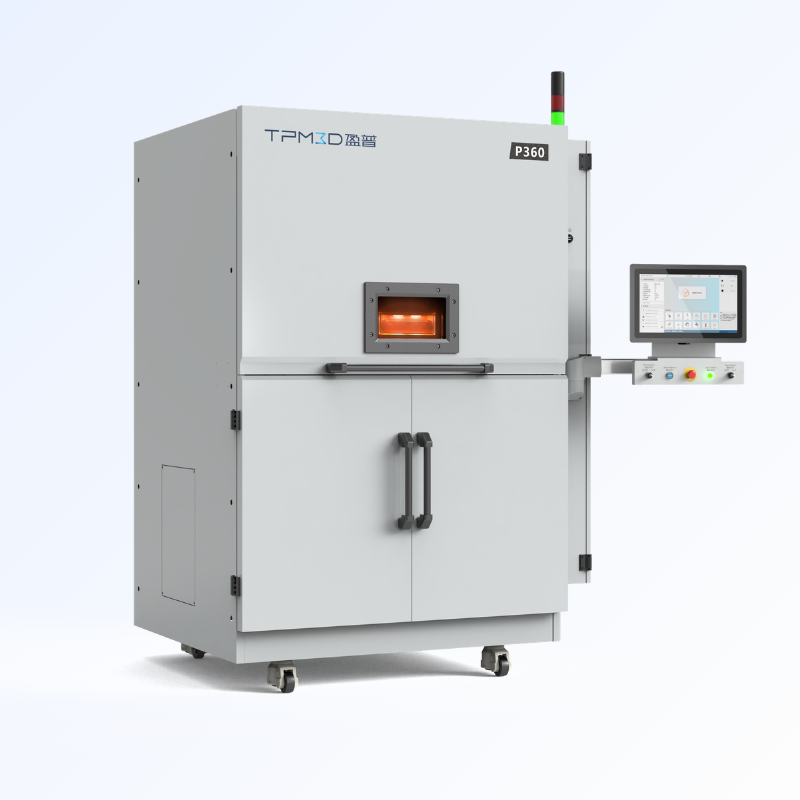
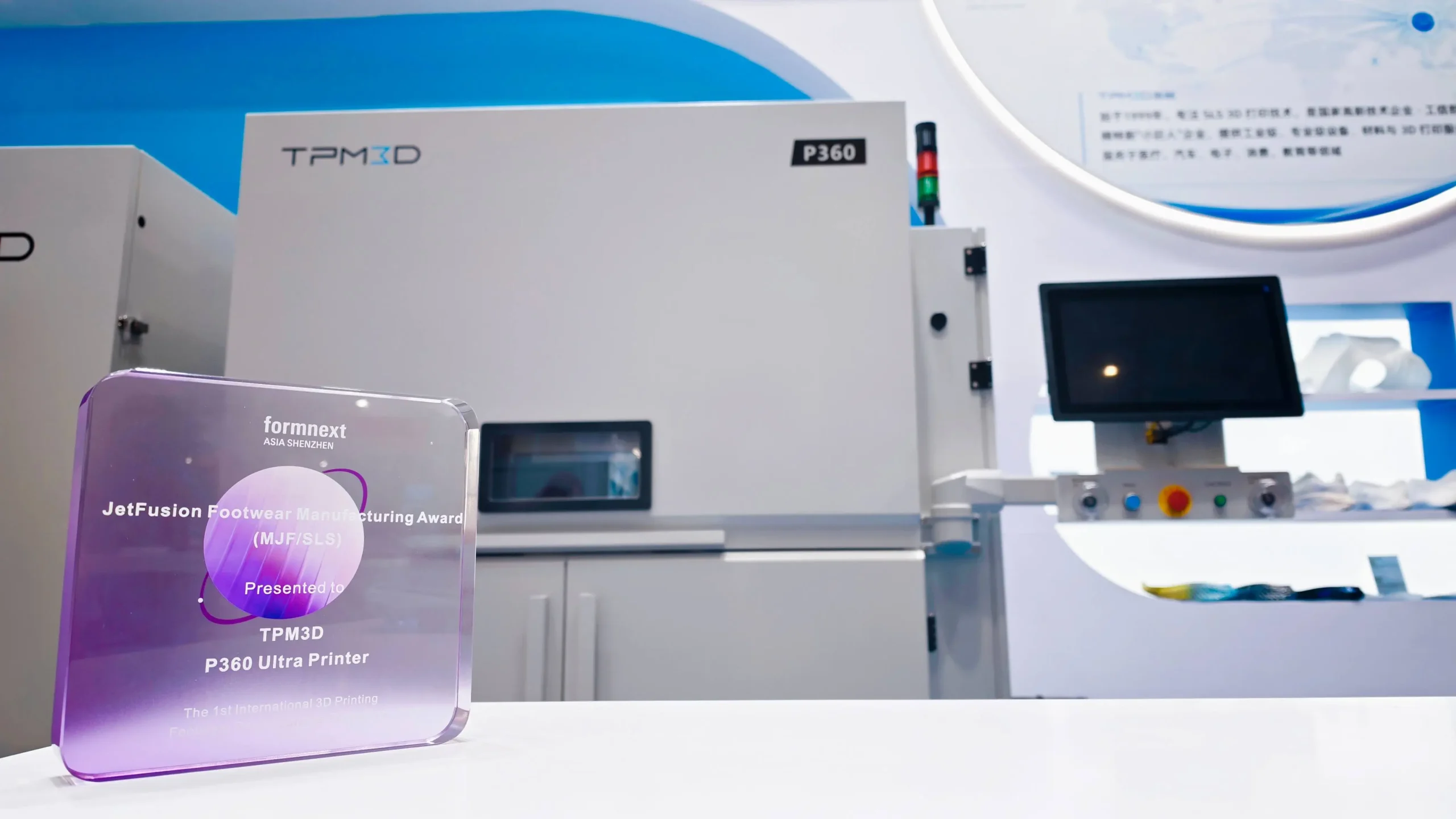
The event also saw TPM3D’s P360 Ultra industrial SLS system recognized with the JetFusion Footwear Manufacturing Award (MJF/SLS) at the 1st International 3D Printed Footwear Design Awards. The award recognizes equipment and manufacturing technologies contributing to the development of 3D printed footwear.
Moving 3D Printed Footwear from Prototypes Toward Production
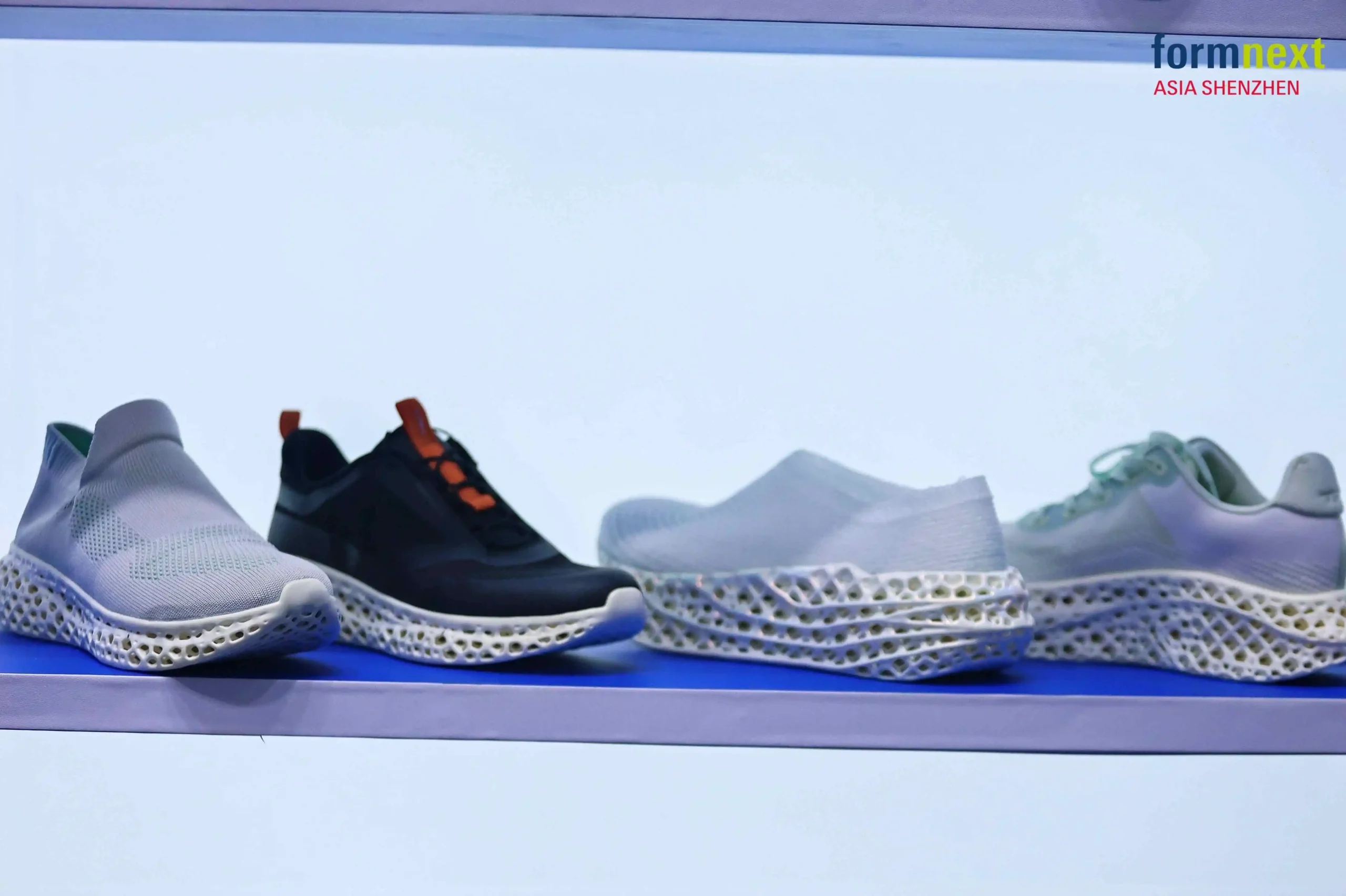
3D printing has become an established tool for exploring new footwear geometries, particularly for midsoles and other components where lattice structures can provide opportunities for weight reduction and localized mechanical tuning.
However, translating a printed lattice from a prototype into a functional footwear product involves several challenges.
Increasing the amount of material in a printed sole can improve structural strength but also increase weight. At the same time, a lattice structure designed primarily for softness does not necessarily provide sufficient energy return or resistance to repeated loading.
For footwear manufacturers, the challenge is therefore not simply to produce a lightweight lattice. The structure needs to provide an appropriate balance between weight, cushioning, energy return and fatigue resistance, while remaining compatible with a practical manufacturing workflow.
TPM3D’s SLS and foaming approach addresses these requirements through three interconnected stages: lattice structure design, material processing and post-processing.
SLS Enables Zoned Lattice Structures
One of the advantages of SLS for footwear development is its ability to produce complex three-dimensional geometries without conventional support structures.
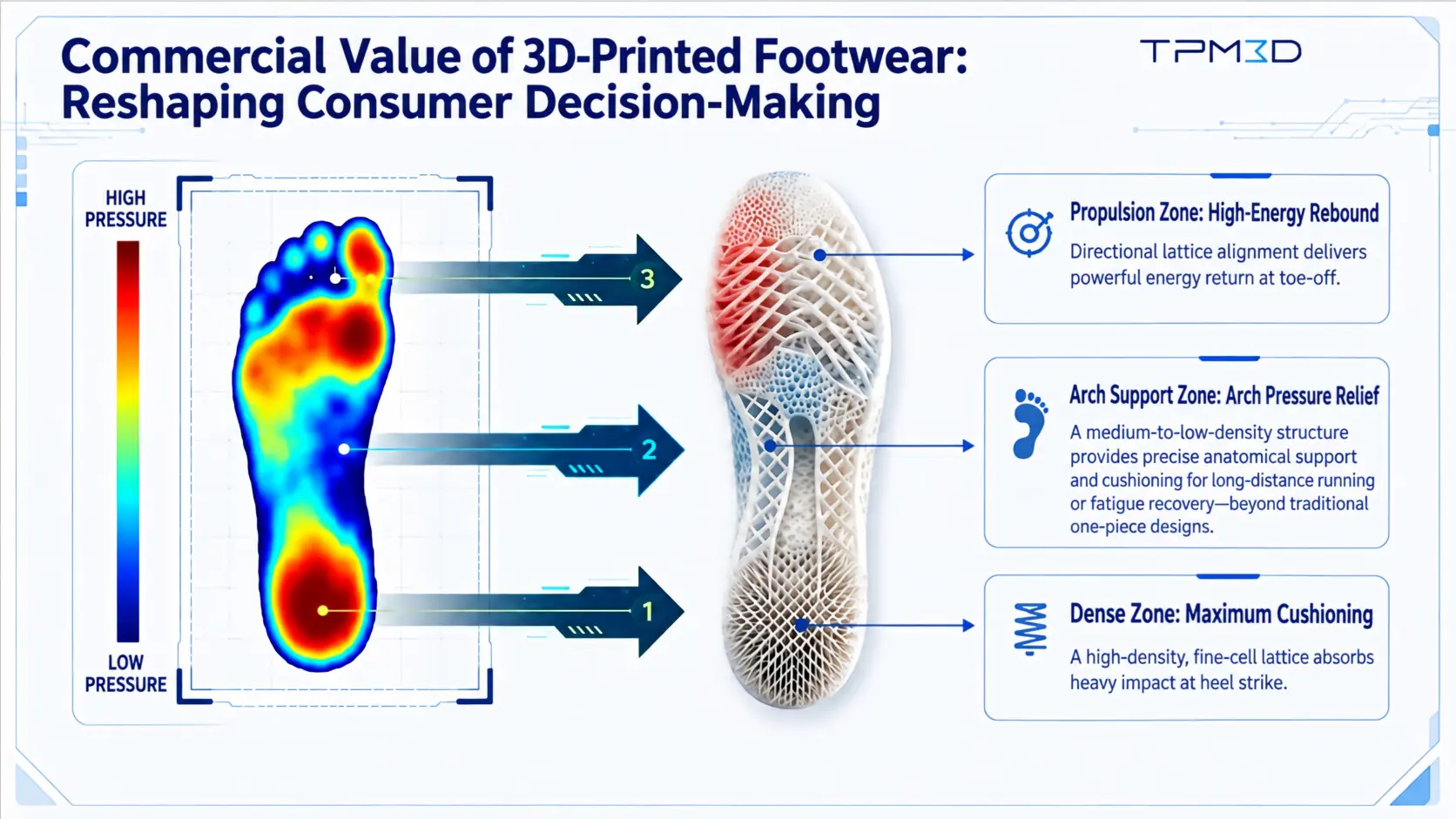
This makes it possible to design lattice structures with different densities, geometries and orientations within the same component. Instead of applying a uniform lattice across the entire sole, designers can divide the component into functional zones according to expected loading conditions.
For example, a footwear midsole could incorporate:
- Higher-density structures in the heel for greater cushioning and load management
- Medium- or lower-density structures around the arch to balance support and flexibility
- Directional lattice structures in the forefoot to influence deformation and energy return during propulsion
This approach allows the mechanical response of different areas of a component to be adjusted digitally, without requiring a new physical mold for every structural variation.
The same design flexibility can also be applied to other footwear components, including midsoles, lasts, outsole structures and torsional support elements, depending on the application and material requirements.
Combining Lattice Geometry with Foaming
The second part of the process is material foaming.
After the SLS process establishes the external geometry and lattice structure, foaming is used to modify the material’s internal structure. The objective is to reduce material density while retaining the designed external lattice architecture.
According to the test data presented by TPM3D, the process can achieve a foaming ratio of up to 2.5×. The reported density can reach 0.3 g/cm³, with an apparent density as low as 0.1 g/cm³ under the stated processing conditions.
The combination of a digitally controlled lattice structure and material foaming provides additional parameters for tuning the mechanical behavior of the finished component.
Rather than relying solely on the geometry of the lattice to determine softness and rebound, the material’s microstructure can also be adjusted through the foaming process.

200,000-Cycle Bending Test
Durability is an important consideration when evaluating 3D printed footwear because the components are subjected to repeated deformation during normal use.
In the testing presented at Formnext Asia Shenzhen, the combined SLS and foaming process achieved a reported compression deformation rate of 22–26% and an energy return rate above 70%.
A third-party dynamic bending test involving 200,000 cycles was also completed on the tested structures. According to the reported test results, the samples showed no collapse or fracture after the test.
These results provide a reference for the fatigue behavior of the tested structures. Actual footwear durability, however, depends on the complete product design, material formulation, processing parameters and conditions of use. Further footwear-level testing is required to evaluate performance under specific applications.
Industrial SLS Supports Flexible Small-Batch Production
For footwear manufacturers, performance is only one part of the transition from development to production. Build capacity, powder handling, post-processing and process consistency also influence the practicality of an additive manufacturing workflow.
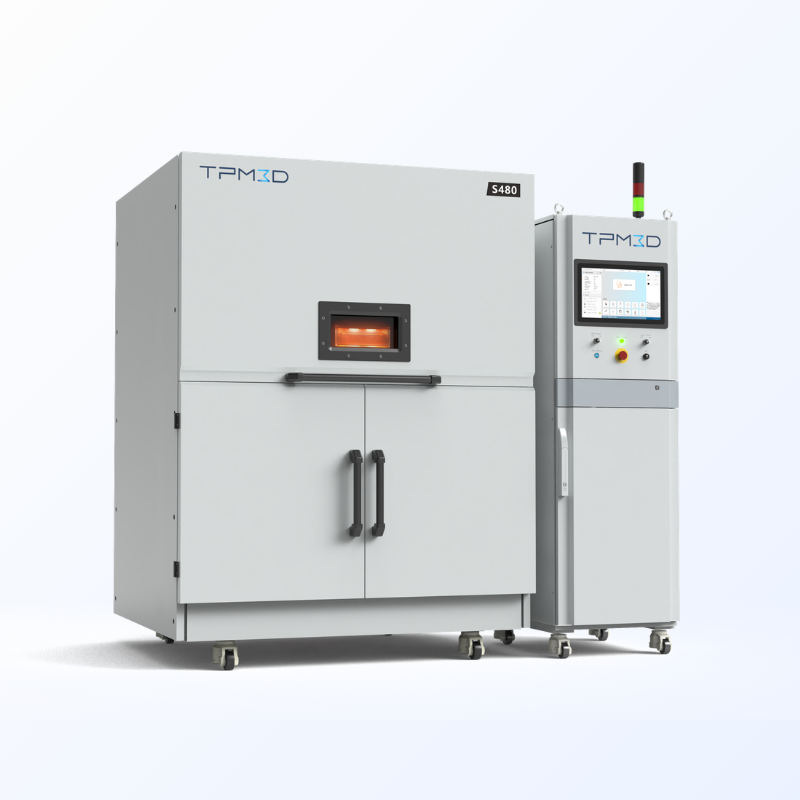
TPM3D’s industrial SLS systems are designed for batch production of polymer components through efficient nesting and three-dimensional stacking.
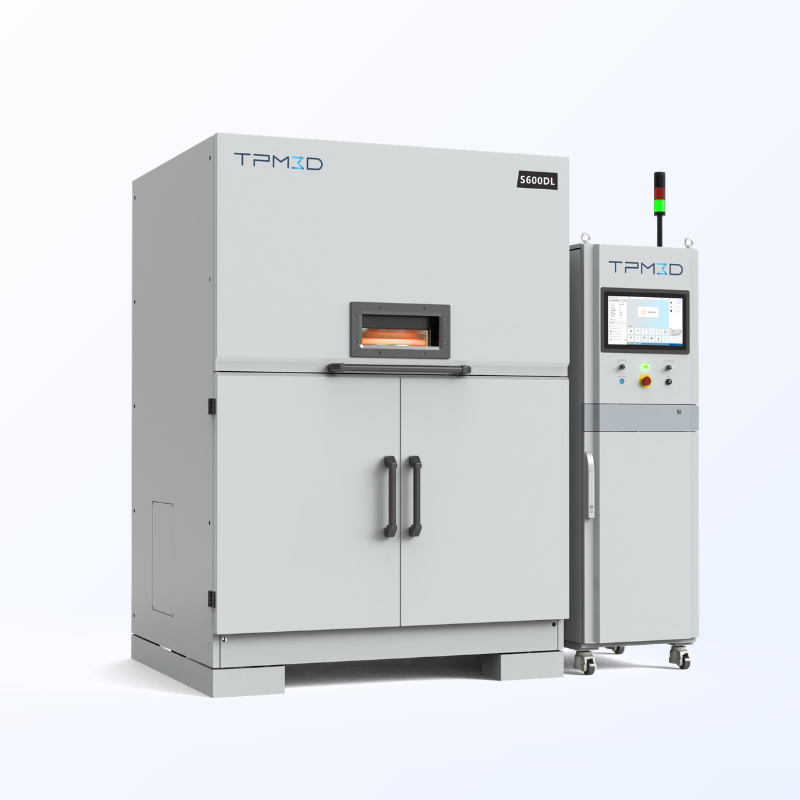
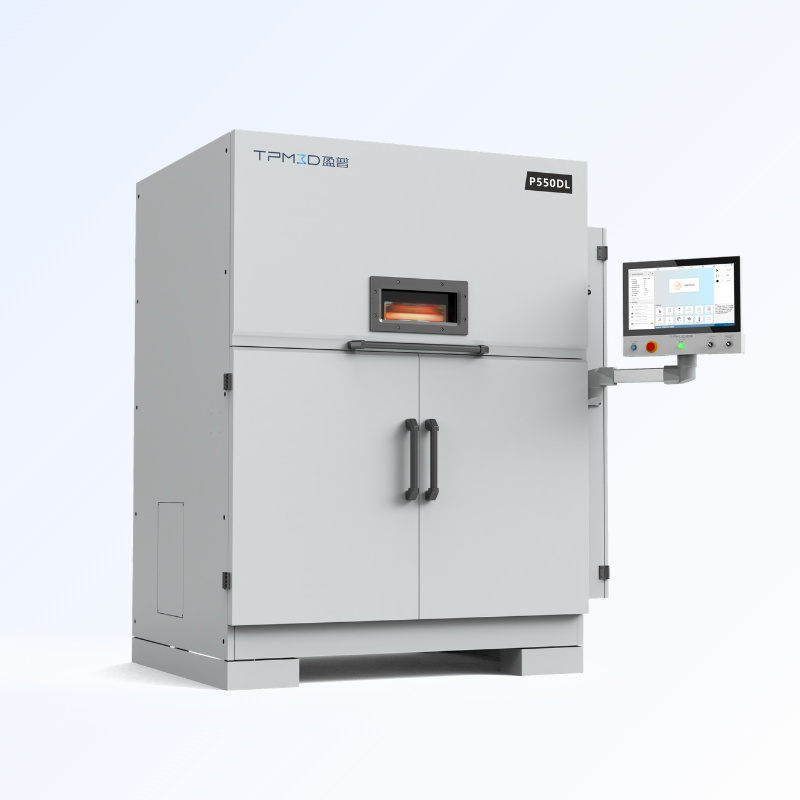
The P360 Ultra, which received the Manufacturing Process Award at the Jetfusion Manufacturing Award, is part of TPM3D’s industrial SLS portfolio. Larger systems such as the P550DL can further increase build capacity for footwear applications. According to TPM3D’s production data, a single P550DL can accommodate up to 190 shoe soles in one build, depending on component geometry and nesting arrangement.
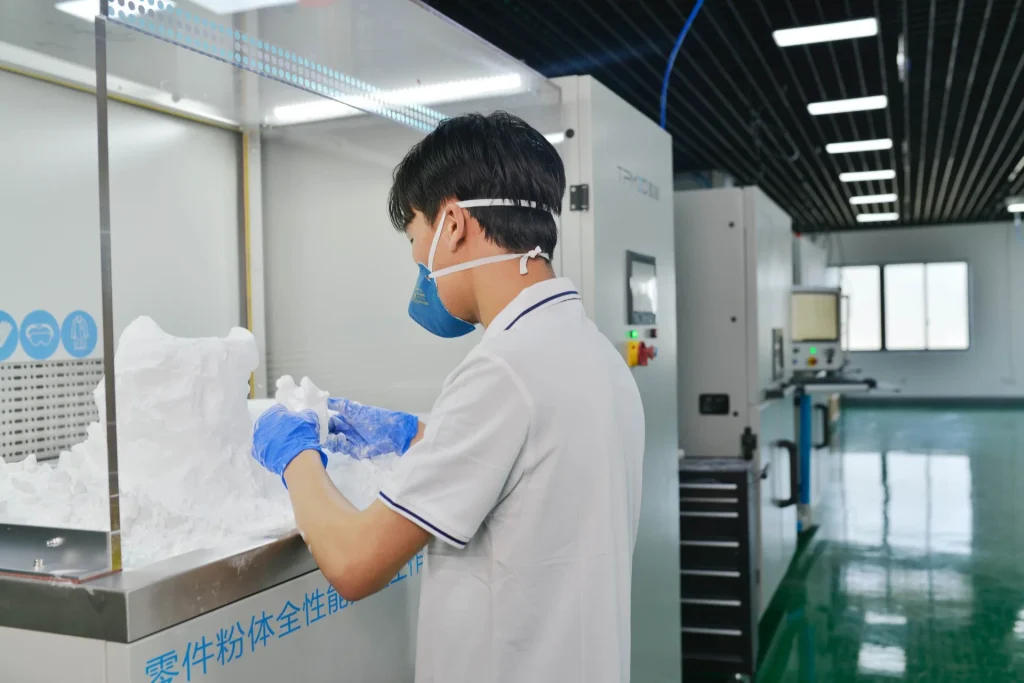
A workflow incorporating powder management and post-processing equipment can further support material handling and production preparation. This provides a pathway from digital design and functional prototyping to flexible small-batch manufacturing.
Compared with conventional tooling-based production, digital manufacturing can also make it easier to produce different geometries or product variants without creating a new mold for each design iteration.
From Digital Structure to Product Performance
The footwear application presented by TPM3D at Formnext Asia Shenzhen 2026 demonstrates how SLS can be combined with polymer processing to explore new approaches to functional footwear components.
The role of each stage is distinct:
SLS provides the structural design freedom. Complex lattice geometries can be produced directly and divided into different functional zones.
Foaming modifies the material structure. The subsequent process can reduce density and influence the mechanical response of the printed component.
Industrial SLS production provides the manufacturing pathway. Efficient build nesting, powder management and post-processing can connect footwear development with flexible small-batch production.
This combination shifts the focus of 3D printed footwear from geometry alone toward the interaction between structure, material and manufacturing process.
For footwear developers, this creates more variables that can be considered when designing a component for a specific combination of weight, cushioning, energy return and durability requirements.
As additive manufacturing continues to develop in footwear, the practical adoption of these technologies will depend on application-specific validation, repeatability and production economics. TPM3D’s ongoing work in SLS footwear focuses on connecting these technical considerations with industrial manufacturing workflows.
Read more: