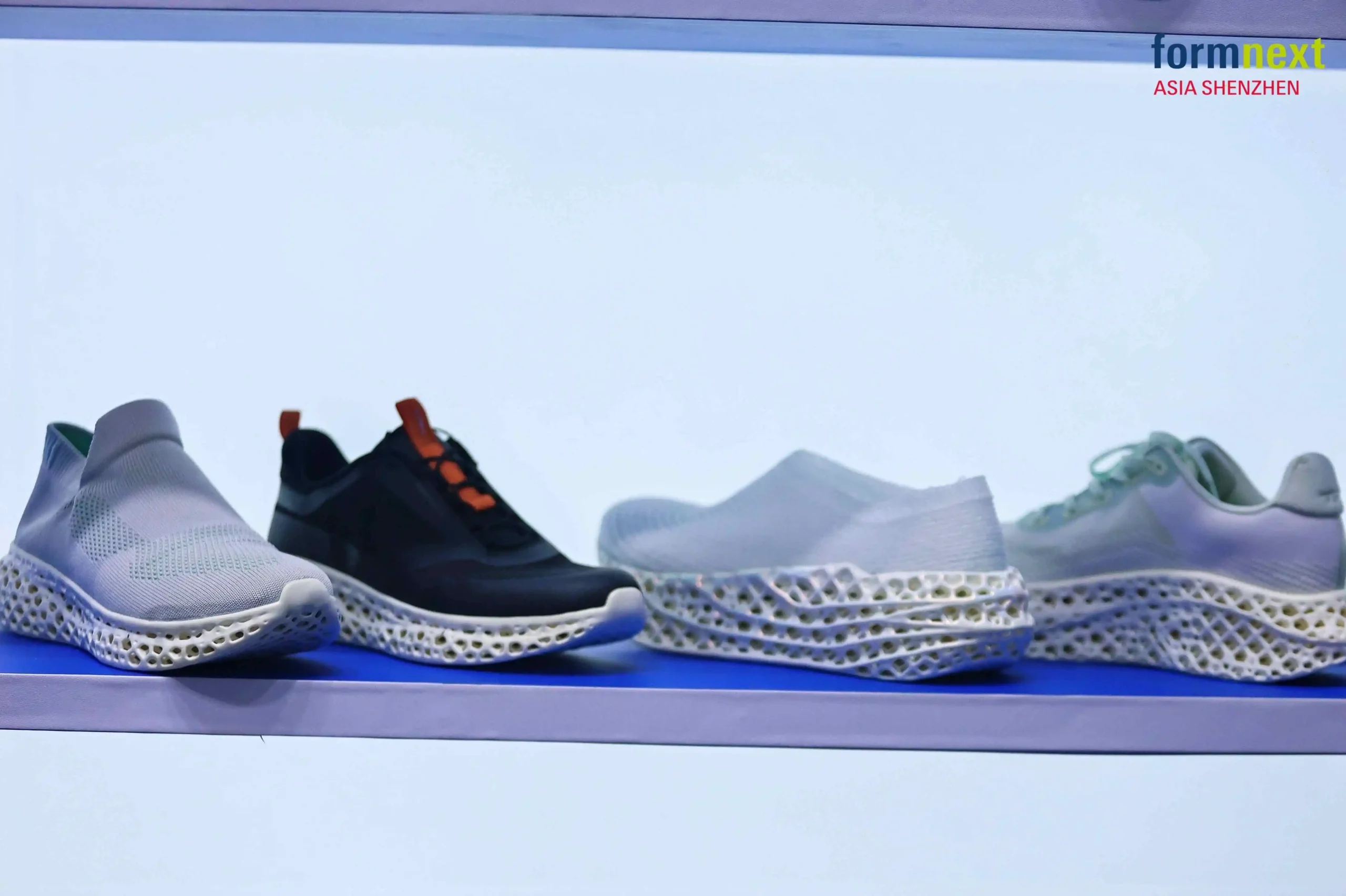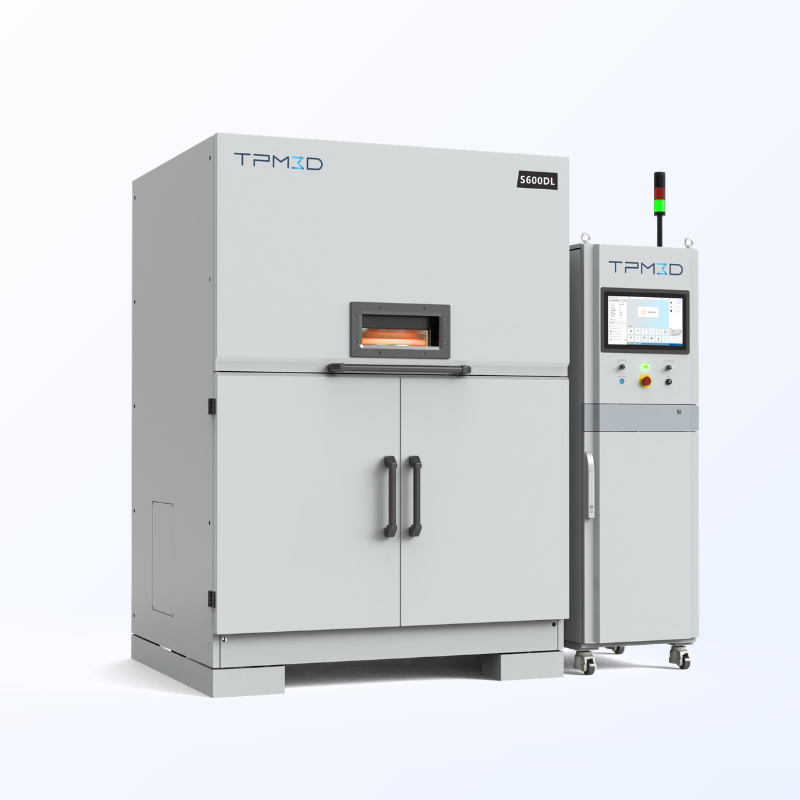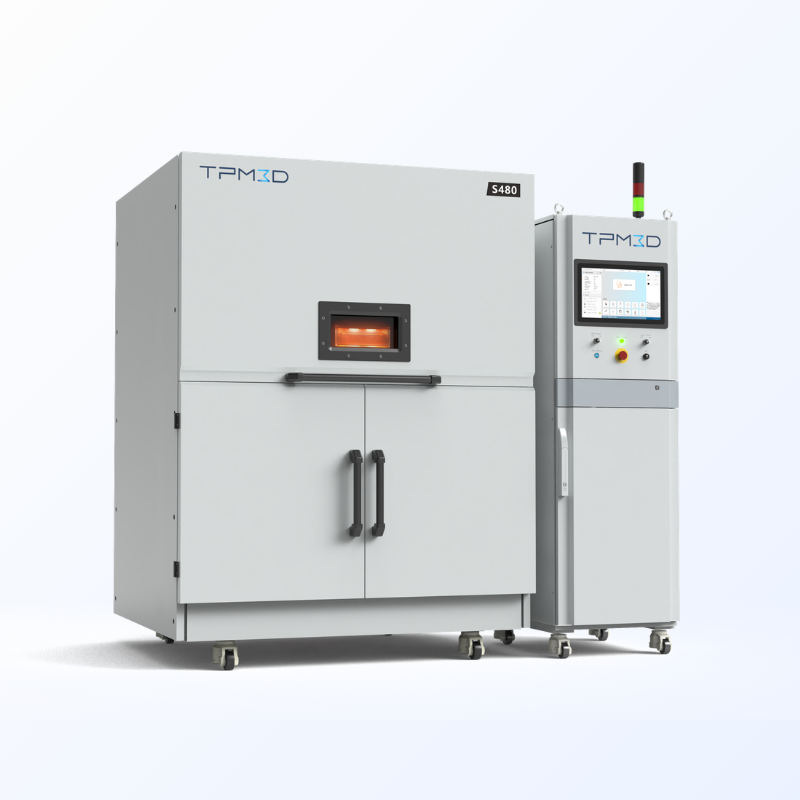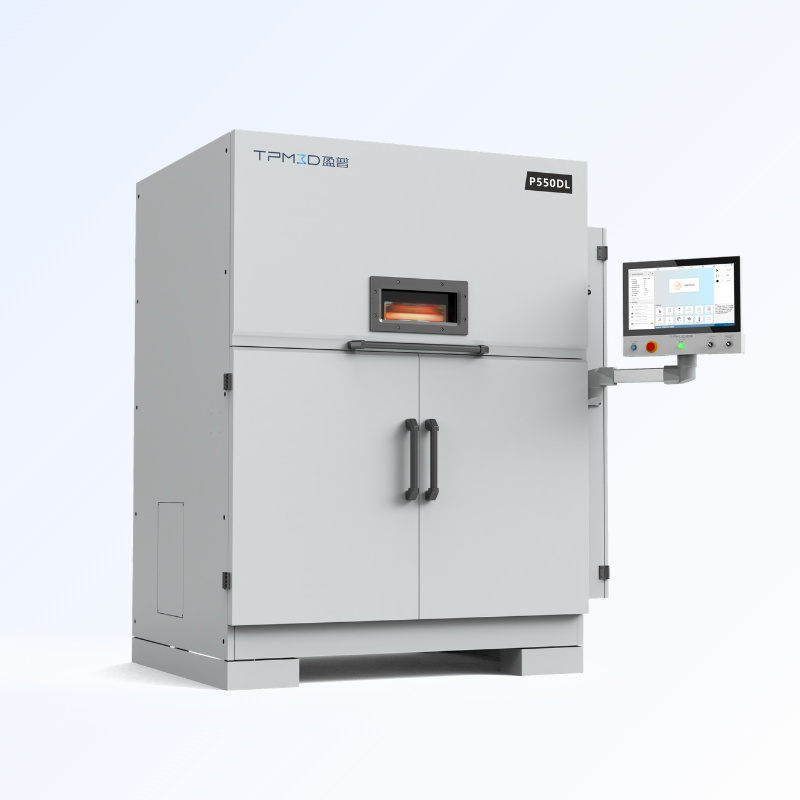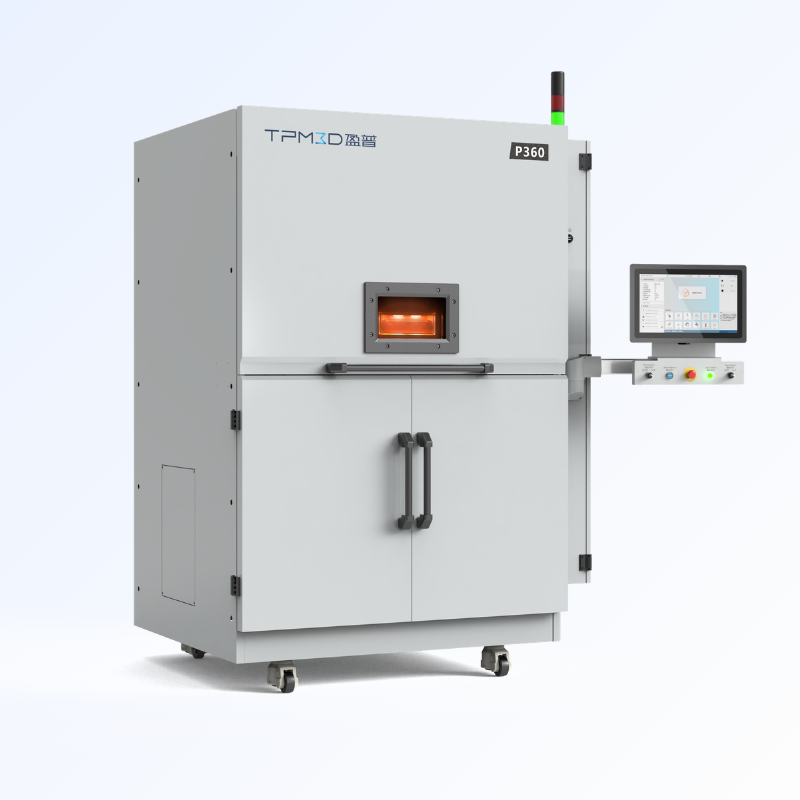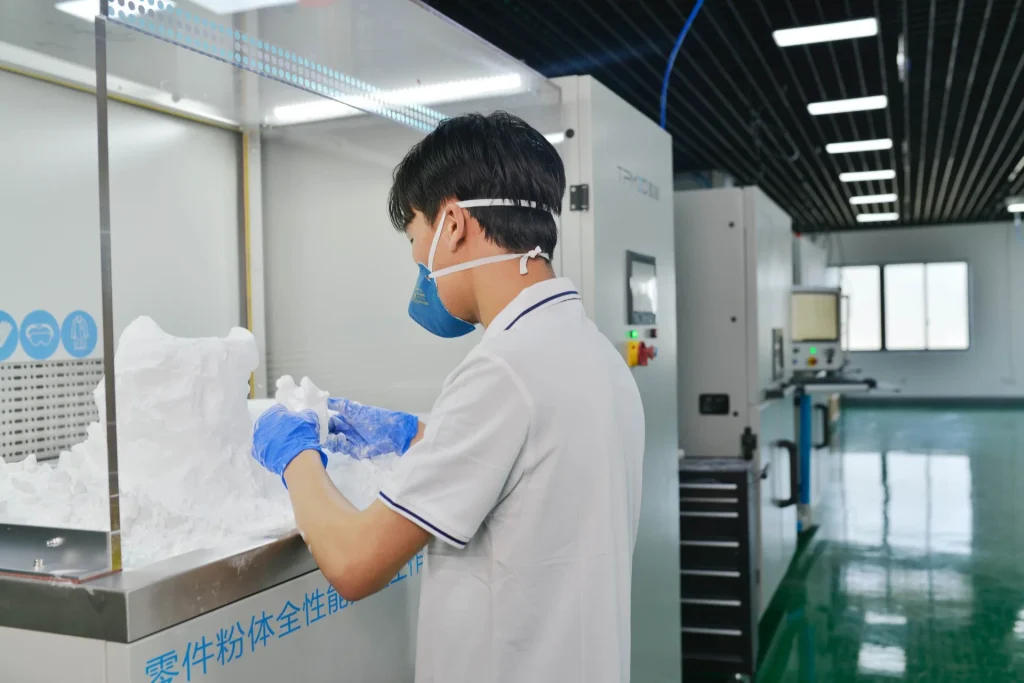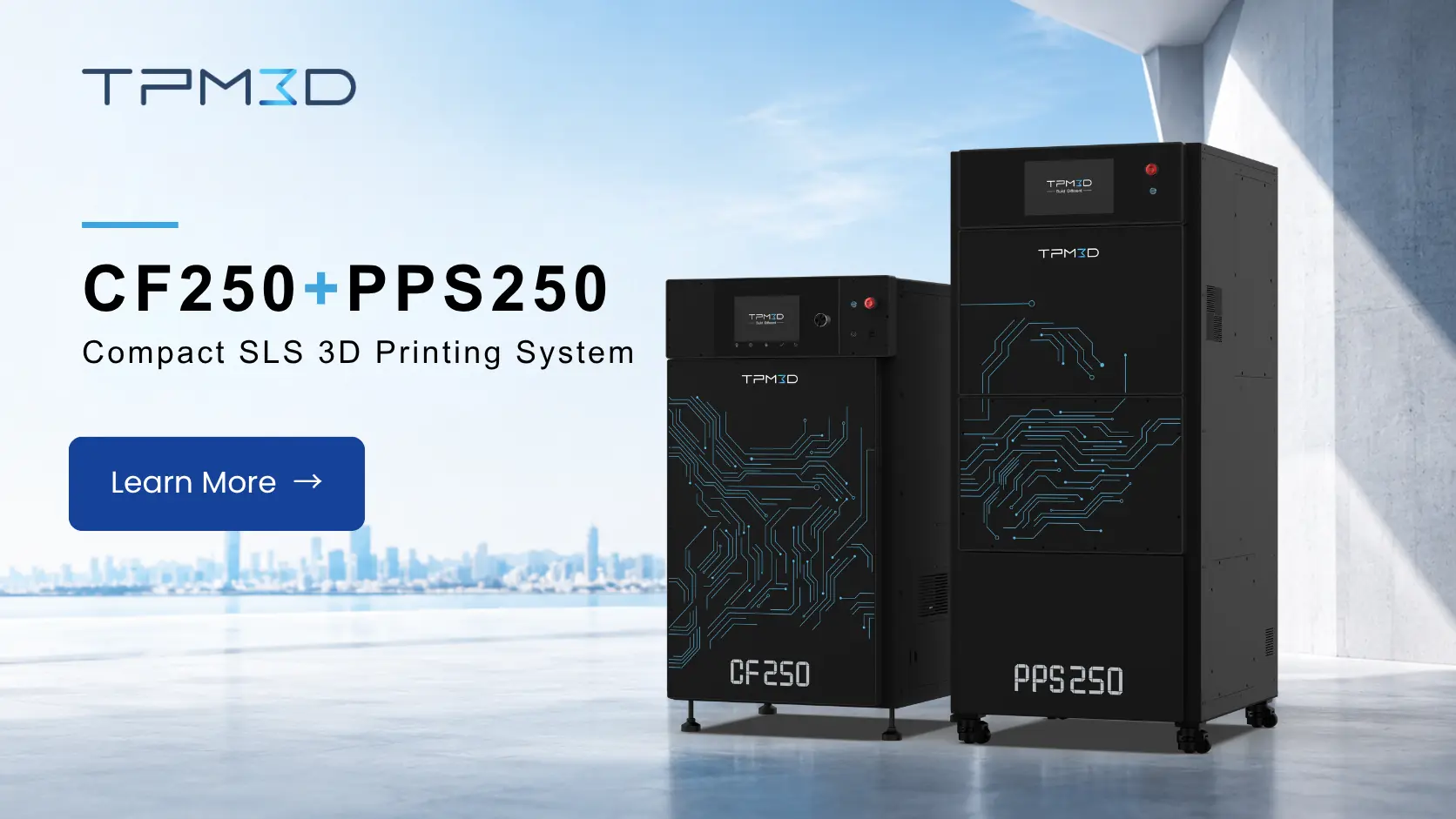
As global athletic giants accelerate their adoption of additive manufacturing, the 3D-printed footwear market is undergoing a seismic shift — moving from aesthetically driven lifestyle shoes to high-performance athletic footwear. TPM3D has now reached a technical milestone: the world’s first industrial-scale integration of Selective Laser Sintering (SLS) with high-performance PEBA elastomers for end-to-end footwear manufacturing.

Pioneers like Zellerfeld have successfully popularized 3D-printed shoes, but the industry has long been held back by a persistent “performance ceiling.” Most current solutions rely on DLP, SLA, or FDM technologies. While these processes can deliver striking visual appeal, they often fall short in professional athletic scenarios due to limited fatigue resistance and insufficient energy return. TPM3D is changing that landscape by bridging the gap between SLS core technology and advanced materials science.
Why SLS PEBA?
The breakthrough lies in the deep synergy between the SLS process and high-performance PEBA materials. Unlike the standard resins or TPU materials commonly used, TPM3D’s SLS PEBA process delivers superior isotropic mechanical properties.
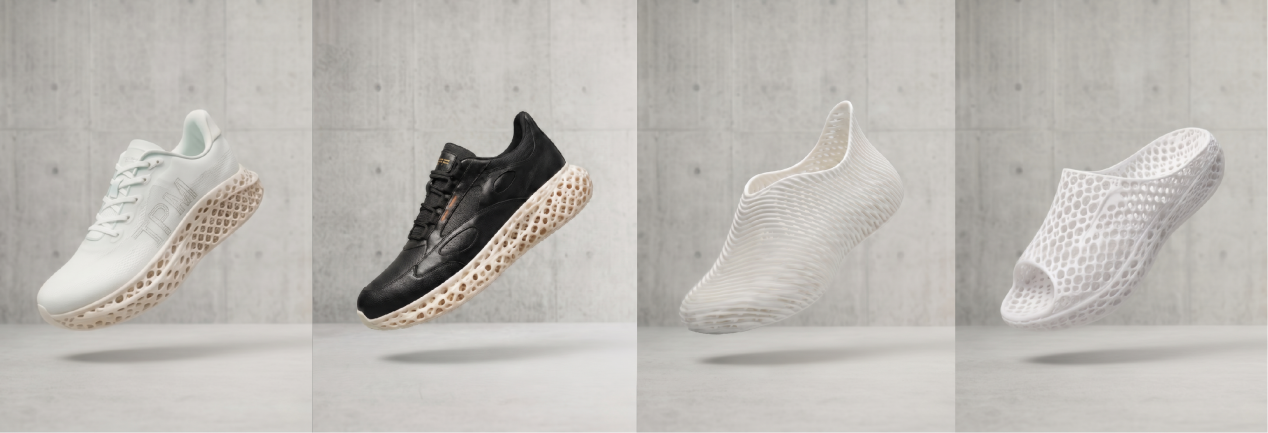
In addition, the support-free forming capability of SLS unlocks unprecedented design freedom. Designers can fully exploit complex lattice structures, functionally zoned support structures, and optimized midsole topological designs in ways that traditional manufacturing simply cannot replicate.
By integrating a proprietary performance-enhancing post-treatment technology, TPM3D’s SLS PEBA footwear solution achieves three core competitive strengths:
- Extreme Lightweighting: Effective weight reduction without compromising structural stability and integrity.
- Superior Energy Return: A synergistic combination of micro elastic matrix and macro lattice structure realizes efficient shock absorption and instant rebound, meeting the strict mechanical demands of running and high-intensity sports.
- Industrial Scalability: Standardized, repeatable manufacturing procedures move beyond laboratory prototyping and support high-volume commercial production.
Closing the Durability Gap
Durability and long-term mechanical degradation have been the key bottlenecks keeping 3D-printed midsoles from achieving large-scale commercialization in elite sports. TPM3D has addressed this “durability gap” with rigorous engineering data. Internal testing shows a compression set of 22%-26%, with zero irreversible deformation after 200,000 dynamic flex cycles.
“We are shifting the industry from model-based design to true mechanical design through precise micro-structural control,” states the TPM3D R&D team. This evolution marks the transition of 3D-printed footwear from a niche lifestyle market category to an industrial manufacturing solution for high-performance athletic equipment.
Zero-Mold Intelligence and a Sustainable Supply Chain
Beyond performance, TPM3D’s solution tackles the structural inefficiencies that have long plagued conventional footwear manufacturing: lengthy R&D cycles, exorbitant mold costs, high minimum order quantities (MOQs), and heavy material waste, through a fully digital, mold-free process that supports rapid prototyping, flexible manufacturing, and localized on-demand delivery.
- Zero-Waste Loop: Unused SLS powder is highly recyclable, maximizing material efficiency.
- Green Manufacturing: A fully physical sintering process that requires no toxic additives or organic solvents, delivering both clean and resource-efficient manufacturing.
- Circular Economy: End-of-life shoes can be crushed and re-granulated, re-entering the production cycle as new raw materials, meeting the ESG requirements of global brands.
The Vision of the Founder
This breakthrough is steered by Mr. Luan Zhao (Mark), Founder and Chairman of TPM3D. With 26 years of in-depth experience in product design and digital additive manufacturing, Mark is a pioneer who prioritizes substance over market hype.
Since establishing his first technical team in 1999, Mark has built TPM3D into a full-stack global provider of SLS 3D printing solutions. This latest footwear milestone is the result of more than two decades of SLS mastery, aimed at empowering leading athletic brands with a mature, differentiated, and sustainable supply chain.
As the global athletic footwear market demands faster response times and higher performance, TPM3D stands out by offering a vertically integrated production model for high-performance 3D-printed footwear — bringing together proprietary SLS technology, purpose-engineered materials, and a digitally driven manufacturing chain that spans design and prototyping right through to final delivery. This anchors the company as a driving force in the next evolution of athletic footwear.