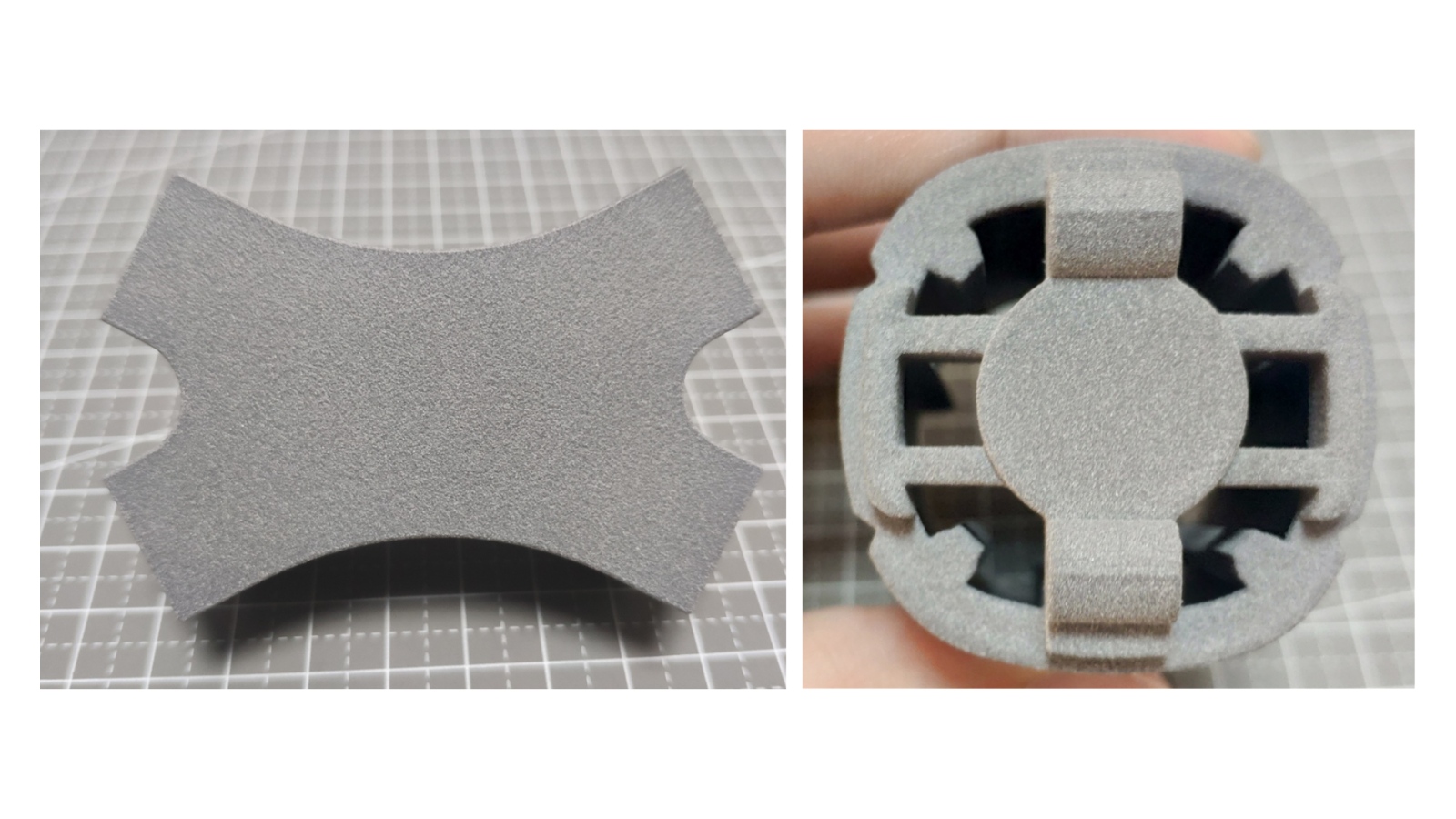
Selective laser sintering (SLS) uses a laser to fuse polymer powder into solid parts, layer by layer. No support structures needed — the unsintered powder holds everything in place. That one difference means complex geometries, nested parts, and functional prototypes come straight off the machine.
SLS 3D printers range from compact systems for laboratories and rapid prototyping to large-format dual-laser platforms for industrial batch production. The right machine depends on part size, material requirements, throughput, powder workflow, facility constraints, and total cost of ownership. This guide compares eight TPM3D systems across those purchasing criteria.
Quick answer: Which TPM3D SLS printer should I choose?
| Requirement | Recommended model |
|---|---|
| Compact laboratory or office system | CF200 |
| Small-to-medium industrial parts | S260 |
| PEEK, PEKK and high-temperature materials | S320HT |
| General industrial production | P360/S360 or S480 |
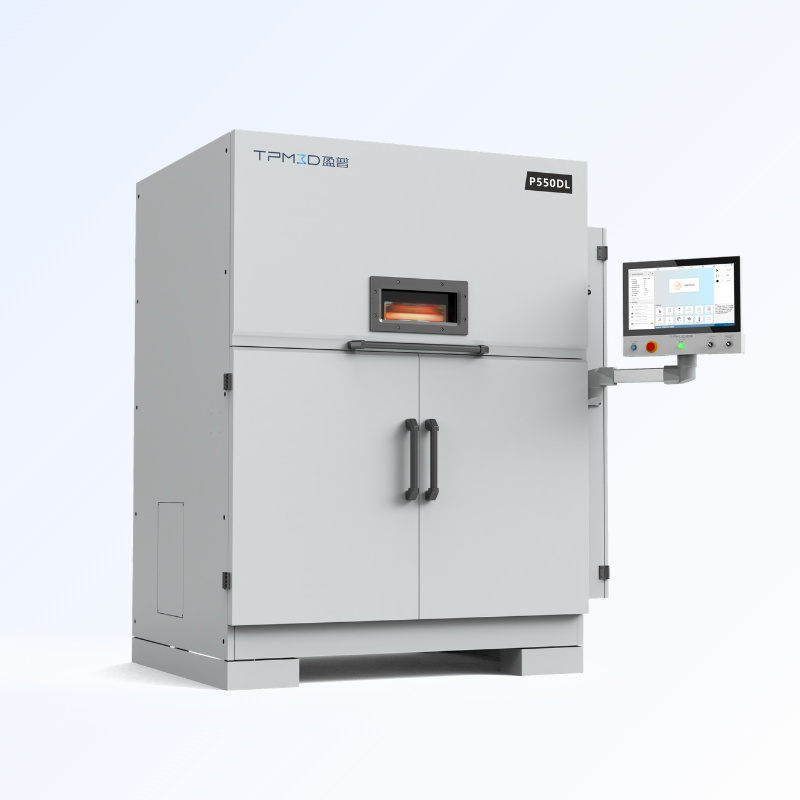
| Tall, high-throughput production | P550DL |
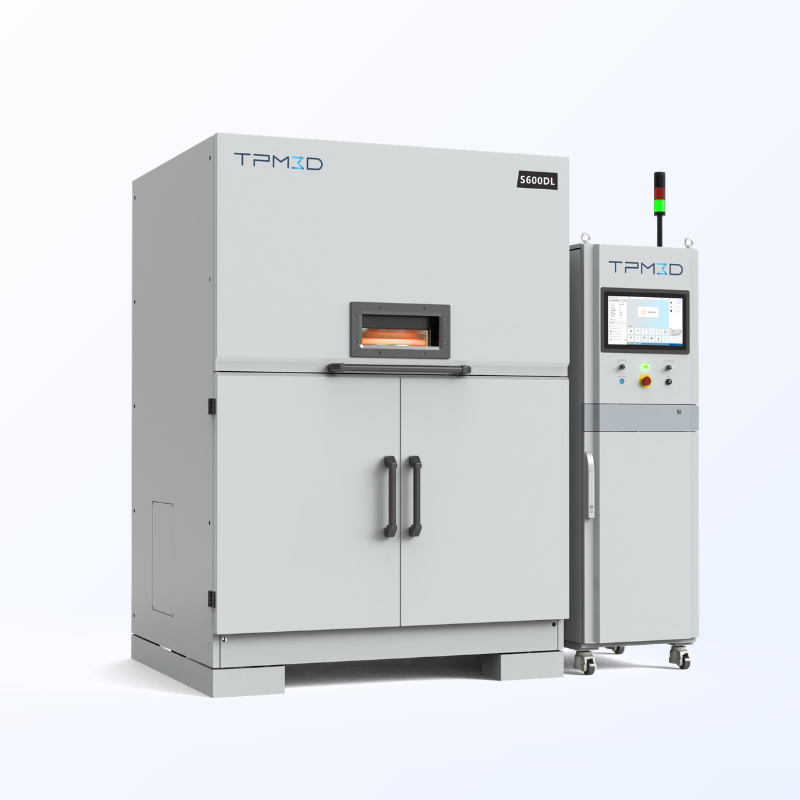
| Wide, large-format dual-laser production | S600DL |
What to Look for When Choosing an SLS Printer
The machine you pick comes down to build volume, material requirements, and throughput. If you need compact benchtop capability with single-phase power, start with the CF200. For industrial production, the S-Series spans configurations from the S260 to the dual-laser S600DL. If high-temperature materials such as PEEK or PEKK are required, choose the S320HT.
1. Build Volume
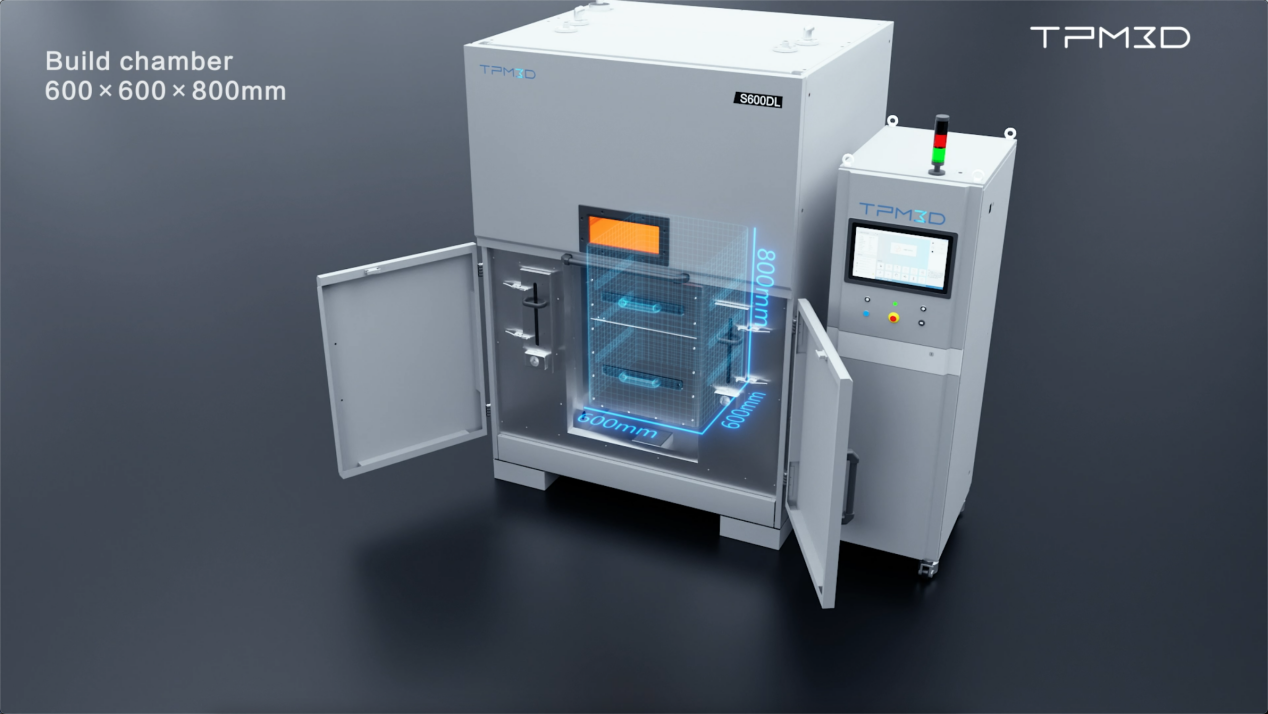
The most direct constraint: can the machine physically fit your largest part? But it’s not just about max dimensions. A larger build chamber also lets you nest multiple smaller parts in a single run — multiplying throughput without changing print speed.
What to check: Your largest single part dimension, plus whether you plan to batch smaller parts. A 260mm chamber handles most prototyping and small-part production. If you’re printing automotive or aerospace components that regularly exceed 300mm, you’ll need 360mm or larger.
2. Laser Type, Power, and Beam Diameter
SLS printers use either CO₂ or fiber lasers. The difference matters.
- CO₂ lasers: Standard for most polymer SLS. Work across PA12, TPU, PA-GF, PA-CF, and other common materials. Power ranges from 30W to 140W. Higher wattage = faster sintering per layer. Beam diameter ranges from 0.22mm (S320HT) to 0.42mm (S600DL) — smaller beam = finer feature resolution, larger beam = faster area coverage.
- Fiber lasers: TPM3D’s CF200 uses a 30W fiber laser. More compact, lower power consumption, well-suited for benchtop systems and office environments.
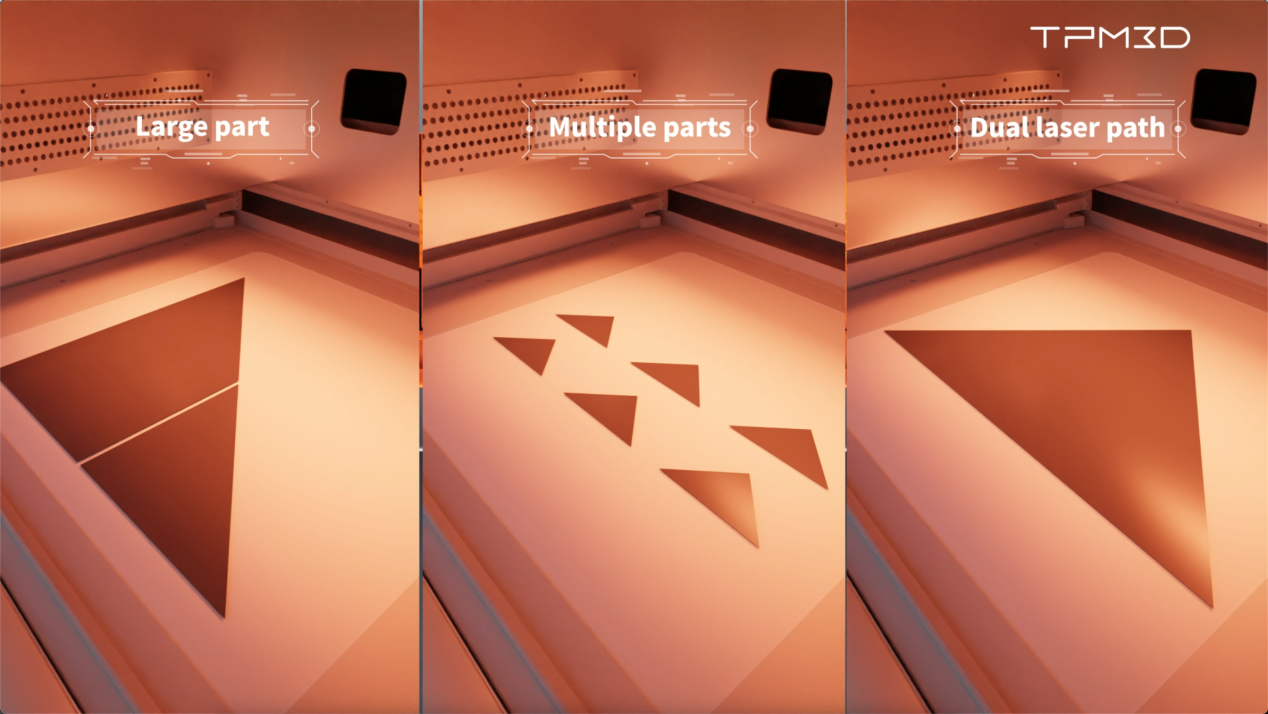
Single vs. dual laser: Dual-laser systems (S600DL, P550DL) split the build area between two lasers, essentially doubling print speed for large-format builds. Worth it if throughput is your bottleneck.
3. Scanning Speed and Build Speed
Two related but distinct metrics:
- Max scanning speed (mm/s) — how fast the laser can move across the powder bed. Higher numbers mean faster layer times, especially for large cross-sections.
- Build speed (mm/h or L/h) — actual vertical build rate accounting for recoating time, heating, and cooling between layers. Most TPM3D industrial machines deliver 10–25 mm/h; the CF200 is rated at 0.5–0.8 L/h.
A machine with 25,000 mm/s scan speed doesn’t automatically print 3× faster than one with 8,000 mm/s — recoating and thermal management are the real bottlenecks for most builds.
4. Layer Thickness
SLS layer thickness is adjustable, typically 0.06–0.2 mm. Thinner layers = smoother surface finish but longer print time. Thicker layers = faster builds with more visible layer lines. Most TPM3D machines default to 0.1–0.15 mm as the recommended sweet spot.
5. Chamber Temperature
Standard SLS machines operate at 230°C powder bed / 160°C chamber — sufficient for PA12, PA11, TPU, and glass-filled nylons. High-temperature machines (TPM3D’s S320HT at 350°C powder bed / 300°C chamber) are required for PEEK, PEKK, and other high-performance polymers.
What to check: Your current material requirements — and your roadmap. If PEEK is on the horizon, buy a high-temp machine now rather than upgrading later.
PEEK 3D Printing: Complete Guide to High-Temperature Additive Manufacturing
6. Facility Requirements: Power, Footprint, and Weight
These determine whether the machine fits your space and infrastructure:
- Power: Benchtop CF200 runs on 220V single-phase. Industrial machines need 380V three-phase, typically 32A.
- Footprint: CF200+PPS200 takes under 1 m². S260/S360 at ~1.7 m². S600DL at ~2.5 m².
- Weight: From 130 kg (CF200) to 1,750 kg (S600DL). Floor loading matters — industrial machines need ground-floor or reinforced installation.
7. Material Capability
Not every SLS printer handles every material. Key dividing lines:
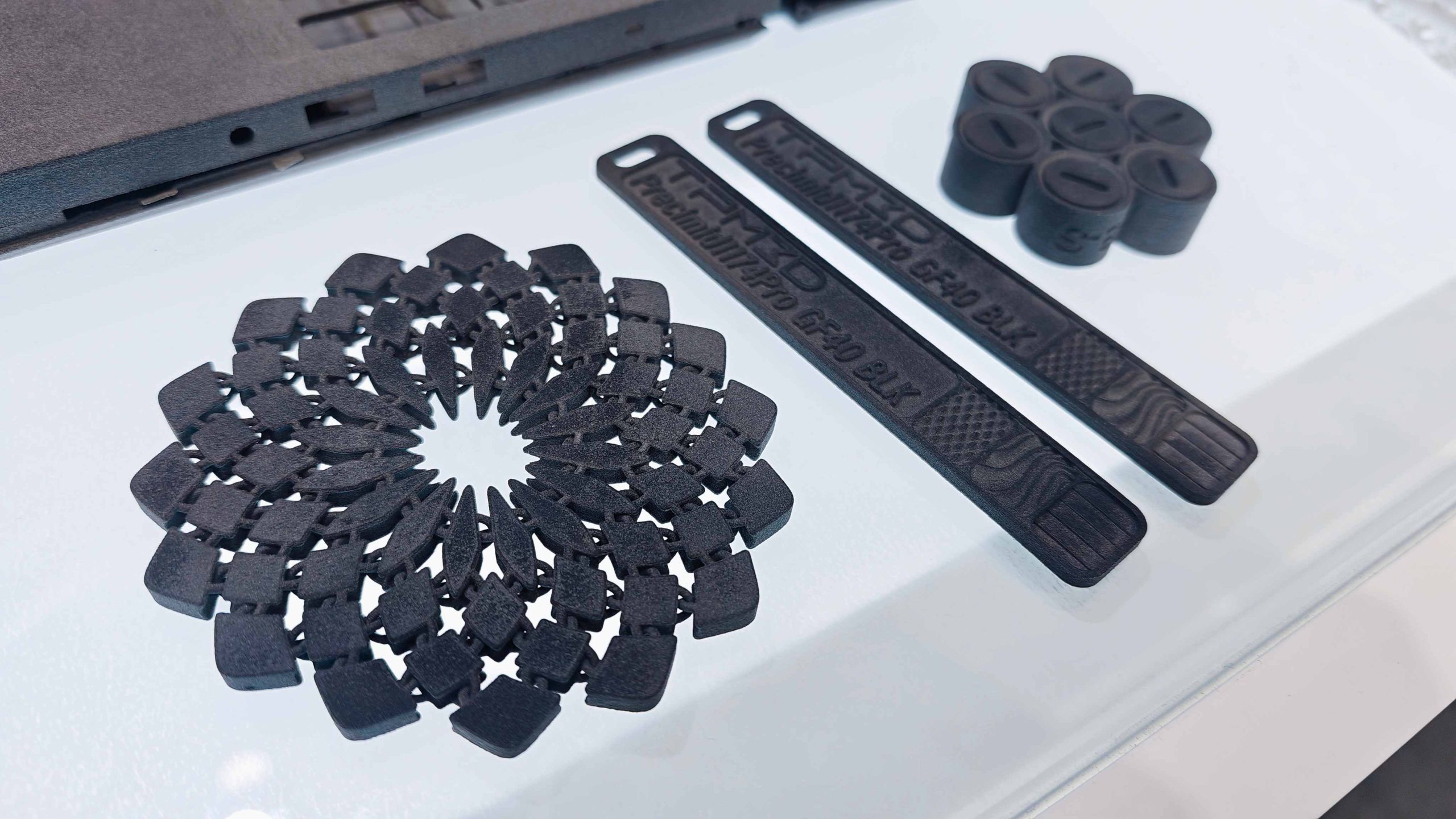
- Standard machines: PA12, PA11, TPU, PA-GF, PA-CF — covers most prototyping and production needs.
- High-temperature machines: Required for PEEK, PEKK, and other high-performance polymers that need chamber temperatures above 300°C. TPM3D’s S320HT is purpose-built for this category, with a 350°C build chamber.
What to check: Your current material requirements — and your roadmap. If PEEK is on the horizon, buy a high-temp machine now rather than upgrading later.
8. Powder Handling
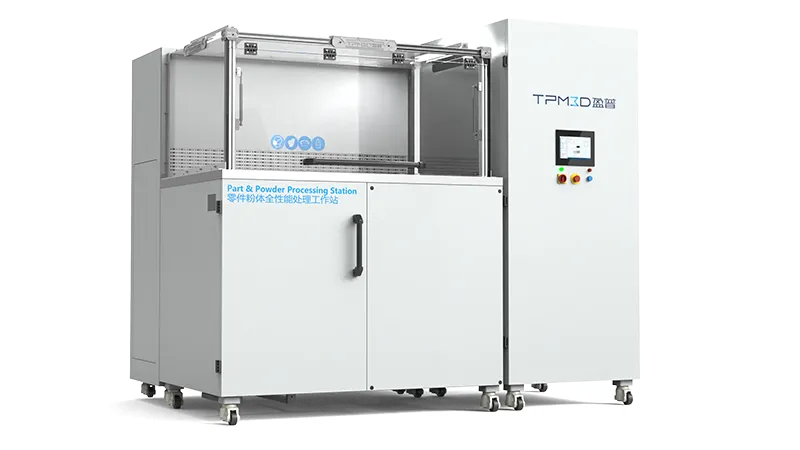
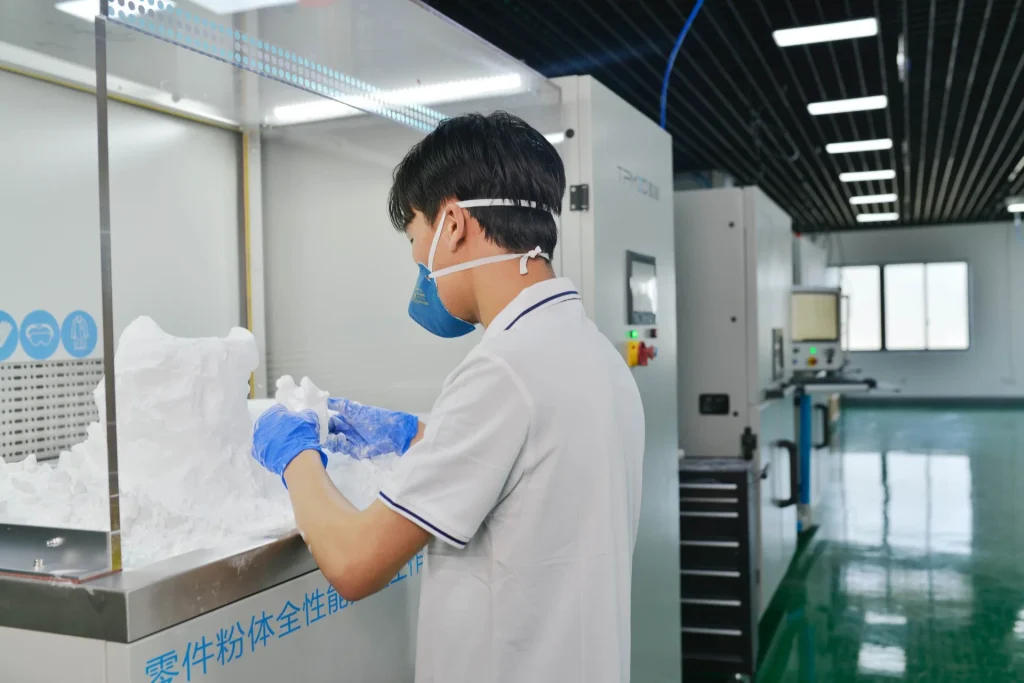
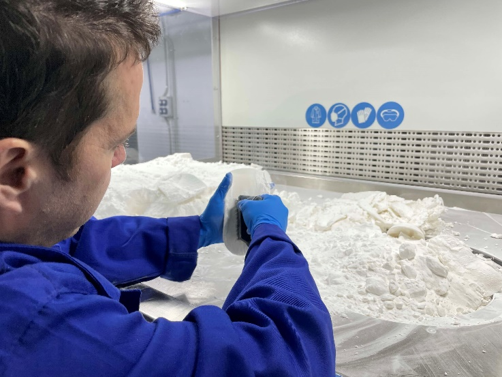
SLS doesn’t end when the print finishes. You need to break parts out of the powder cake, depowder them, and sieve used powder for reuse. Some systems include integrated powder handling; others require a separate station. TPM3D’s Powder Processing Station (PPS) handles depowdering and sieving in one unit.
What to check: Whether your budget and floor space can accommodate a powder handling station, or if you need a more integrated solution.
9. Software and Workflow Integration
The printer’s build preparation software determines how efficiently you can nest parts, manage print queues, and track material usage. TPM3D machines come with Voxeldance Additive — software that handles part orientation, nesting, and support-free slicing for SLS.
By Use Case: Which Machine Fits Your Workflow
Compact / R&D / Office Environment
CF200: 200mm build cube, fiber laser, 220V single-phase power. Under 1 m² total footprint with PPS200. Designed for R&D labs and design offices that need in-house SLS without facility modifications. Best for: prototyping, material testing, small-batch nylon parts.
Entry Industrial — Small to Medium Parts
S260: 260 × 260 × 450mm build volume. The most compact S-Series machine with TÜV CE + PL-e certification. Best for: prototyping and small-batch production where parts stay within a 260mm envelope and certification matters.
High-Temperature / Specialty Materials
S320HT: Purpose-built for PEEK, PEKK, and high-performance polymers. 350°C powder bed temperature with 0.22mm beam for fine feature resolution. Best for: aerospace, medical implants, oil & gas, chemically aggressive environments. If your application needs PEEK, this is the only machine in the lineup built for it.
Read more: Southern University Advances High-Performance Polymer Research with SLS 3D Printing
Balanced Production Workhorses
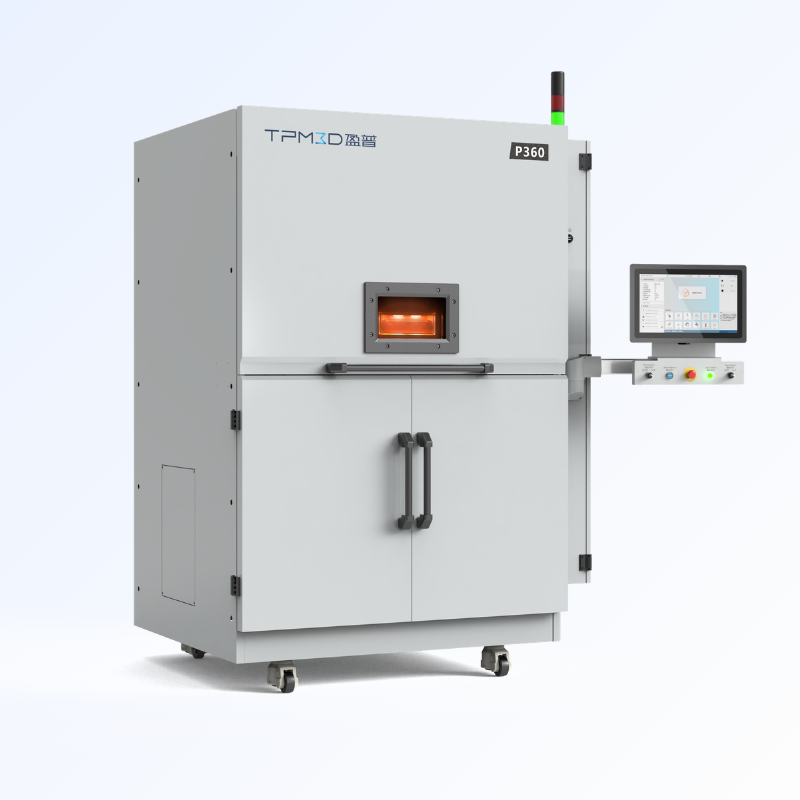
P360 / S360: Same 360 × 360 × 600mm build volume and 60W CO₂ laser. How they differ:
- S360 is the industrial-grade option: TÜV CE, PL-e safety, 1,300 kg, compact 1.7 m² footprint. Built for demanding production with certification requirements.
- P360 adds integrated N₂ generator and active cooling as standard, lists a broader material range (PEEK, PPS, TPU, PP), and runs on 380V/3P+N+PE. Build quality is production-grade; certification tier is PL-d.
- Best for: service bureaus, pilot production lines, manufacturers bringing prototyping in-house at scale
- Read more: How Sichuan Yinshidai Expanded Its Rapid Prototyping Business with TPM3D SLS Technology
Large Format, Single Laser
S480: 480 × 480 × 600mm with 100W CO₂ laser. For parts or nests that outgrow the 360mm platform but don’t yet justify dual-laser throughput. Best for: large single parts, high-density nesting of medium parts.
Read more: German Additive Manufacturing Service Provider Cirp Expands Automotive Production with TPM3D S480 Industrial SLS 3D Printer
High Throughput — Dual Laser
P550DL / S600DL: Both run dual 140W CO₂ lasers splitting the build area.
Decision Point P550DL S600DL Build volume 550 × 550 × 850 600 × 600 × 800 Max scan speed 22,000 mm/s 25,000 mm/s Beam diameter 0.40 mm 0.42 mm Certifications PL-d TÜV CE + PL-e N₂ / Active Cooling Integrated, standard (check with TPM3D) Machine footprint 2.76 m² 2.51 m² The P550DL gives you the tallest Z-axis in the lineup (850mm) with integrated N₂. The S600DL gives you the largest XY footprint (600 × 600mm) with TÜV CE certification. Choose based on whether your parts are tall (P550DL) or wide/deep (S600DL), and whether TÜV CE matters for your industry.
Read more: TPM3D S600DL & P550DL: Powering the Future of Large-Format SLS 3D Printing
TPM3D SLS Printer Lineup: Full Engineering Comparison
TPM3D’s SLS printers span three product lines: C-Series (compact/benchtop), P-Series (production), and S-Series (industrial). Here’s how they compare across the parameters that matter most.
Table 1: Build & Laser Specifications
| Model | Build Volume (X×Y×Z, mm) | Laser | Power | Beam Ø (mm) | Max Scan Speed (mm/s) | Build Speed | Layer Thickness (mm) |
|---|---|---|---|---|---|---|---|
| CF200 | 200 × 200 × 320 | Fiber | 30W | — | — | 0.5–0.8 L/h | 0.1 |
| S260 | 260 × 260 × 450 | CO₂ | 30W | 0.30 | 8,000 | 10–25 mm/h | 0.06–0.2 (rec. 0.12) |
| S320HT | 320 × 320 × 380 | CO₂ | 60W | 0.22 | 13,000 | 10–25 mm/h | 0.06–0.2 (rec. 0.12) |
| P360 | 360 × 360 × 600 | CO₂ | 60W | 0.25 | 15,000 | 10–25 mm/h | 0.06–0.2 (rec. 0.12) |
| S360 | 360 × 360 × 600 | CO₂ | 60W | 0.25 | 15,000 | 10–25 mm/h | 0.06–0.2 (rec. 0.12) |
| S480 | 480 × 480 × 600 | CO₂ | 100W | 0.31 | 21,000 | 10–25 mm/h | 0.06–0.2 (rec. 0.12) |
| P550DL | 550 × 550 × 850 | CO₂ × 2 | 140W × 2 | 0.40 | 22,000 | 10–25 mm/h | 0.06–0.2 (rec. 0.15) |
| S600DL | 600 × 600 × 800 | CO₂ × 2 | 140W × 2 | 0.42 | 25,000 | 10–25 mm/h | 0.06–0.2 (rec. 0.15) |
How to read this table:
- Beam diameter determines minimum feature resolution. S320HT’s 0.22mm beam delivers the finest detail; S600DL’s 0.42mm beam prioritizes area coverage speed.
- Scan speed alone doesn’t dictate throughput — recoating, heating, and cooling dominate cycle time. S600DL’s 25,000 mm/s is the ceiling, but actual build rate is still 10–25 mm/h.
- Build speed is vertical rate (Z-axis). Taller parts = proportionally longer prints.
Table 2: Thermal & Physical Specifications
| Model | Chamber Temp (Powder/Chamber, °C) | Machine Dims (m, L×W×H) | Weight (kg) | Power | Avg Consumption (kW) | Powder Recoater | Active Cooling | N₂ Generator |
|---|---|---|---|---|---|---|---|---|
| CF200 | —² | 0.70 × 0.63 × 1.35 | 130 | 220V / 1-phase / 50Hz | — | Dual-side, top feed | — | Optional |
| S260 | 230 / 160 | 1.32 × 1.28 × 2.08 | 1,150 | 380V / 3-phase / 50–60Hz | 2 | Single blade | ✓ | Integrated |
| S320HT | 350 / 300 | 1.34 × 1.28 × 2.15 | 1,350 | 380V / 3-phase / 50–60Hz | 5 | Smart dual blade | ✓ | Integrated |
| P360 | 230 / 160 | 1.48 × 1.29 × 2.09 | 1,250 | 380V / 3P/N/PE / 32A / 50Hz | ~3 | Dual-side, top feed, blade | ✓ | Integrated |
| S360 | 230 / 160 | 1.32 × 1.28 × 2.09 | 1,300 | 380V / 3-phase / 50–60Hz | 3 | Single blade | ✓ | Integrated |
| S480 | 230 / 160 | 1.60 × 1.48 × 2.09 | 1,450 | 380V / 3-phase / 50–60Hz | 3.5 | Single blade | ✓ | Integrated |
| P550DL | 230 / 160 | 1.85 × 1.49 × 2.32 | 1,600 | 380V / 3P/N/PE / 32A / 50–60Hz | ~4 | Dual-side, top feed, blade | ✓ | Integrated |
| S600DL | 230 / 160 | 1.65 × 1.52 × 2.36 | 1,750 | 380V / 3-phase / 50–60Hz | 4 | Smart dual blade | ✓ | Integrated |
How to read this table:
- Chamber temperature is the hard dividing line. S320HT at 350/300°C is the only machine rated for PEEK/PEKK. All others cap at 230/160°C.
- Weight matters for installation. Any machine over 1,000 kg needs ground-floor placement or structural assessment.
- S-Series and P-Series ship with integrated N₂ generator and active cooling as standard.
- Power consumption scales predictably: ~2 kW for single 30W laser → 3–3.5 kW for 60–100W → 4–5 kW for dual 140W or high-temp.
Table 3: Capability & Software
| Model | Materials Supported | Software | Certifications | Electrical Safety | Key Differentiator |
|---|---|---|---|---|---|
| CF200 | PA11, PA12, PA12 GF, PA12 CF, TPU | User-friendly SW³ | CE | — | Compact benchtop, single-phase power, <1 m² total footprint |
| S260 | PA12, PA11, TPU, PP, PA6X, PPS | Voxeldance Additive (TPM3D) | TÜV CE | PL-e | Smallest S-Series footprint; entry industrial |
| S320HT | PA12, PA11, TPU, PP, PA6X, PPS, PEEK, PEKK | Voxeldance Additive (TPM3D) | TÜV CE | PL-e | Only high-temp machine (350°C); PEEK/PEKK capable |
| P360 | PA12, PA11, PPS, PEEK, TPU, PP | Voxeldance Additive (TPM3D) | — | PL-d | Integrated N₂ + active cooling; wider material window than S360 |
| S360 | PA12, PA11, TPU, PP, PA6X, PPS | Voxeldance Additive (TPM3D) | TÜV CE | PL-e | TÜV-certified industrial workhorse; compact 1.7 m² footprint |
| S480 | PA12, PA11, TPU, PP, PA6X, PPS | Voxeldance Additive (TPM3D) | TÜV CE | PL-e | Largest single-laser build volume; 100W laser |
| P550DL | PA11, PA12, PA6X, TPU, PP, CF-filled, GF-filled | Voxeldance Additive (TPM3D) | — | PL-d | Dual 140W laser + integrated N₂; tallest Z-axis (850mm) |
| S600DL | PA12, PA11, TPU, PP, PA6X, PPS | Voxeldance Additive (TPM3D) | TÜV CE | PL-e | Largest build volume in lineup; dual 140W laser |
³ CF200 software not named on product page; described as “user-friendly.”
How to read this table:
- TÜV CE + PL-e = highest safety certification tier in the lineup. S-Series carries this across all models. P-Series uses PL-d (single-channel); CF200 has basic CE.
- PEEK listed under P360 — the product page mentions PEEK as a processable polymer, but P360’s chamber temperature caps at 230°C. For production-grade PEEK parts, S320HT’s 350°C chamber is the correct tool. P360’s PEEK listing likely refers to experimental/small-scale capability rather than production use.
- P-Series materials list is broader — includes CF-filled and GF-filled explicitly, while S-Series groups these under the general material categories.
Key Benefits: Why SLS Earns Its Place
1. Production-Grade Parts Without Tooling
SLS parts deliver mechanical properties close to injection-molded components — dense, strong, and durable. No tooling. No minimum order quantity. One part or five hundred, the per-part process is the same.
Case in point: YAPP Automotive Systems switched from outsourced tooling to in-house SLS for fuel tank prototypes. They cut costs by over 80% and lead times by over 80%, with parts passing all functional validation tests.
2. Design Freedom Without Compromise
No support structures means internal channels, complex undercuts, interlocking assemblies, and features that can’t be machined or molded — all printable in a single build. Designers optimize for function instead of manufacturability.
3. Nesting = Throughput Multiplier
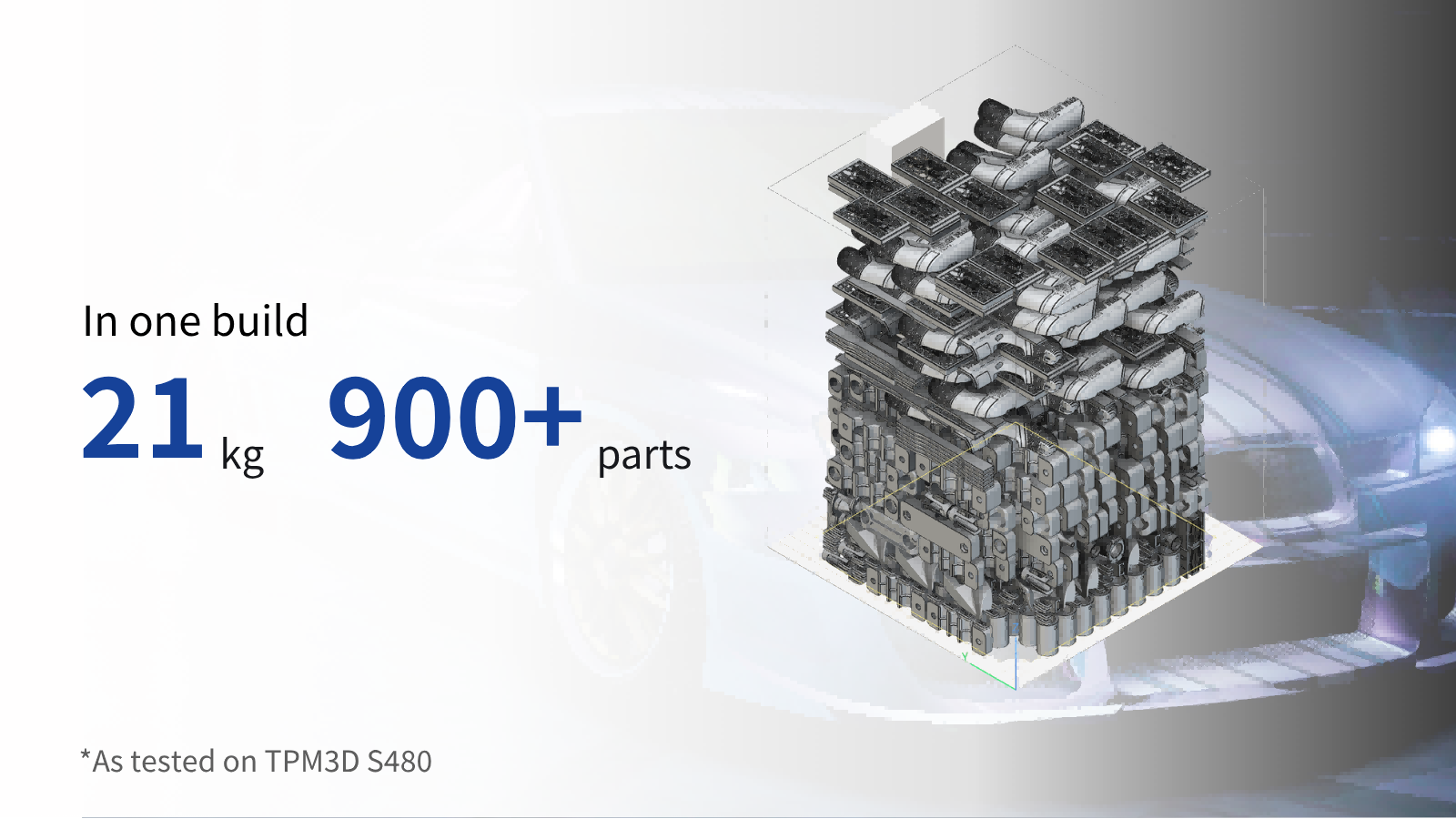
Because the full build volume is usable, you pack parts in 3D — not just across the platform, but stacked vertically. After printing, you dig the parts out of the powder cake.
Case in point: DTM Racing Sport printed a 1.9 kg V8 intake manifold in one piece using SLS, combining multiple sub-components that previously required assembly. The part went straight to dyno testing.
SLS Materials: A Quick Reference
Material choice determines what your parts can do. Here are the main categories, and which TPM3D machines support them.
| Material | Properties | Typical Use | Machine Requirement |
|---|---|---|---|
| PA12 | Strong, stiff, tough; chemical resistant | Functional prototypes, end-use parts | All models |
| PA11 | Higher elongation than PA12; impact resistant | Snap-fits, living hinges | All models |
| TPU-88A | Flexible, rubber-like; tear resistant | Seals, gaskets, wearables | All models |
| PA-GF | Glass-filled; stiffer, heat resistant | Jigs, fixtures, under-hood | All models |
| PA-CF | Carbon-fiber-filled; very stiff, lightweight | Aerospace, motorsport | All models |
| PEEK | 350°C+ capable, chemical resistant | Aerospace, medical implants | S320HT required |
| PEKK | Similar to PEEK, higher thermal stability | Oil & gas, chemical processing | S320HT required |
| PPS | High chemical resistance, flame retardant | Under-hood, electronics | S-Series, P-Series |
| PP | Lightweight, excellent chemical resistance | Fluid handling, containers | S-Series, P-Series |
| PA6X | High strength, good thermal stability | Structural components | S-Series, P-Series |
| Biocompatible PA12 | USP Class VI / food contact | Medical devices, surgical guides | S/P Series (not CF200) |
Note on PEEK and P360: P360’s product page lists PEEK as a processable polymer. However, P360’s chamber ceiling is 230°C — S320HT’s 350°C chamber is purpose-built for production-grade PEEK parts. For prototyping or experimental PEEK work, P360 may offer limited capability; for production, use S320HT.
Read more: Complete Guide to SLS 3D Printing Materials (PA12, PA11, CF, GF, PEEK & More)
TPM3D offers PA12 variants including Precimid 1171Pro (biocompatible white, USP Class VI) and flame-retardant nylon for automotive and electronics.
Material recommendation: If you’re buying your first SLS machine, start with PA12 and TPU. These two cover most prototyping and small-batch production needs. Add glass-filled or carbon-fiber-filled materials when stiffness requirements demand it. PEEK and PEKK are specialized — you’ll know if you need them, and in that case the S320HT is your starting point.
PEEK 3D Printing: Complete Guide to High-Temperature Additive Manufacturing
SLS Costs: What to Budget For
Industrial SLS printer pricing depends on build volume, laser configuration, maximum processing temperature, powder-handling equipment, software, installation, training, and service requirements. TPM3D provides configuration-specific quotations because these requirements vary significantly between compact prototyping systems and large-format production platforms.
Printer: Costs scale with build volume, laser configuration, and chamber temperature capability. A benchtop fiber-laser system costs a fraction of what a dual-laser industrial machine with high-temp capability does.
Materials: Powder is the main consumable. The “refresh rate” — how much fresh powder you need to mix with used powder for each build — drives your ongoing material cost. Lower refresh = lower operating cost. CF200’s spec sheet lists 20–40% fresh powder ratio as a reference point.
Post-Processing: A powder handling station for part breakout, depowdering, and sieving, plus a bead blasting cabinet for surface finishing. TPM3D’s Powder Processing Station (PPS) — available in PPS200 (for CF200) and full-size configurations — combines depowdering and sieving in one unit.
Operating Costs: Electricity (see avg. consumption in Table 2), routine maintenance, service contracts for industrial machines, spare parts (recoater blades, filters), and operator training.
Total Cost of Ownership (TCO): TCO = printer + materials + post-processing + operating costs, divided by parts produced over the machine’s lifetime. The math changes fast with throughput — a machine running at capacity has a very different cost-per-part than one running occasionally. Run your numbers with real volumes before committing.
Bottom Line
SLS earns its place in production workflows by solving a clear problem: strong, complex nylon parts without tooling, without supports, without assembly.
The machine you pick comes down to build volume, material requirements, and throughput. If you need compact benchtop capability with single-phase power, start with the CF200. For industrial production, the S-Series spans five configurations — from the S260 to the dual-laser S600DL. If high-temperature materials like PEEK are in your roadmap, the S320HT is the only machine in the lineup built for it. And between the two dual-laser options: P550DL for tall parts with integrated N₂, S600DL for wide parts with TÜV CE certification.
Compare the full S-Series lineup — build volumes, laser configurations, and material capabilities across all five models. For application-specific advice, contact us for a quote.
Read more:
FAQs
How much does an industrial SLS printer cost?
Industrial SLS printer pricing depends on the build volume, laser configuration, maximum processing temperature, material compatibility, software, powder-handling equipment, installation, training, and service requirements. A compact system for laboratory work and prototyping costs substantially less than a large-format, dual-laser production platform. Buyers should also budget for materials, powder recovery, post-processing, maintenance, energy, and operator time. TPM3D provides configuration-specific quotations because the final cost depends on the required printer, workflow equipment, materials, and support package.
Which SLS printer size do I need?
Choose an SLS printer based on your largest part and your expected batch volume. The build chamber must accommodate the part with sufficient process clearance, while a larger chamber allows more components to be nested in each build. TPM3D options range from the compact CF200 at 200 × 200 × 320 mm to the S600DL at 600 × 600 × 800 mm. For most buyers, CF200 or S260 suits smaller parts, S360 or P360 provides balanced production capacity, S480 supports larger parts and batches, and P550DL or S600DL is intended for large-format production.
Do I need a powder-processing station?
Every SLS workflow requires a method for unpacking parts, recovering unused powder, sieving it, blending it with fresh material, and preparing it for the next build. A dedicated powder-processing station is not always essential for occasional low-volume work, but it is strongly recommended for regular production. It reduces manual powder handling, improves workflow consistency, helps contain dust, and makes material recovery more efficient. The compact CF200 can be paired with the PPS200, while TPM3D’s larger industrial printers can be integrated with the full-size Powder Processing Station.
Which TPM3D printer supports PEEK and PEKK?
The TPM3D S320HT is specifically designed for processing high-temperature polymers such as PEEK and PEKK. It provides a maximum powder operating temperature of up to 350°C and a build volume of 320 × 320 × 380 mm. These materials require carefully controlled temperatures, validated process parameters, and compatible powder-handling procedures. Material compatibility can vary by grade and application, so buyers should confirm the required PEEK or PEKK material, mechanical properties, and processing package with TPM3D engineering before selecting a system.
How does powder refresh rate affect cost?
Powder refresh rate is the percentage of fresh powder mixed with recovered powder before the next build. A lower validated refresh rate reduces the amount of new material required and can lower the material cost per part. For example, a 30% refresh rate means that 30% of the prepared blend is fresh powder and 70% is recovered powder. However, repeatedly heated powder can change in flow, color, and mechanical performance. The lowest-cost ratio is therefore not always the best ratio: manufacturers should use the refresh rate validated for the material, printer, application, and required part quality.