In the current era of “agile manufacturing,” the focus of 3D printing has shifted from visual prototyping to the production of functional, end-use parts. While standard thermoplastics like Nylon (PA12 and PA11) serve a vast range of industrial needs, certain mission-critical environments in aerospace, medical, and oil & gas demand performance levels that exceed the capabilities of standard polymers. This has led to the rise of high-performance polymers, most notably Polyether ether ketone (PEEK), which sits at the top of the polymer pyramid.
PEEK 3D printing is a high-temperature additive manufacturing process used to produce functional parts from ultra-performance polymers such as PEEK and PEKK. It requires specialized PEEK 3D printers capable of maintaining extreme thermal stability, making it one of the most advanced areas of industrial 3D printing.
This guide provides an objective, data-driven framework for understanding PEEK, its thermal requirements, the technologies used to process it, and its industrial applications.
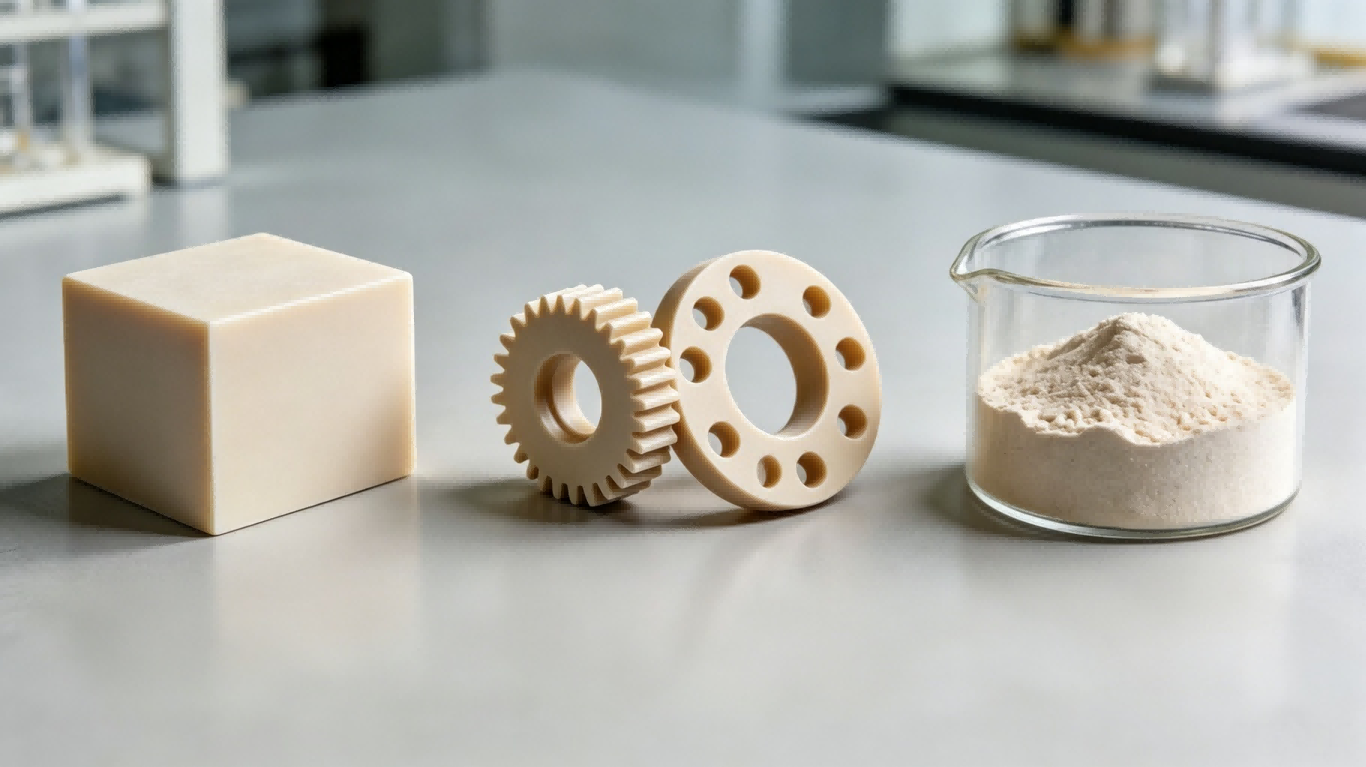
What is PEEK 3D Printing?
Polyether ether ketone (PEEK) is a semi-crystalline thermoplastic member of the PAEK (polyaryletherketone) family, known for its high thermomechanical properties. Chemically, its molecular structure consists of a ketone and two ethers—organic compounds of the carbonyl family featuring double bonds between carbon and oxygen atoms.
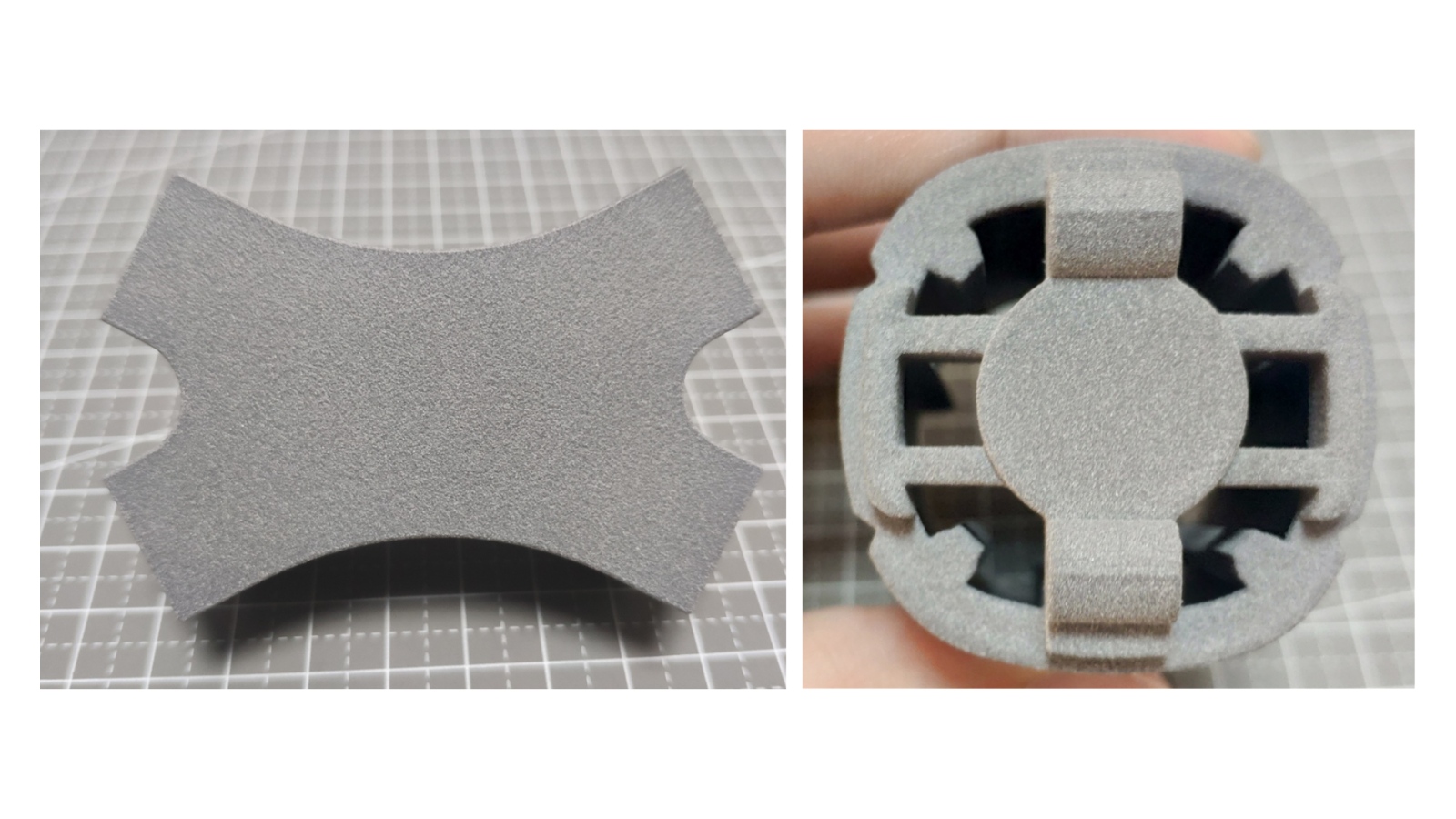
As a high-performance polymer, PEEK is prized for its high strength-to-weight ratio, often allowing it to serve as a viable substitute for certain metals. In the context of additive manufacturing, PEEK 3D printing refers to the layer-by-layer fabrication of parts using PEEK in either filament form for Fused Deposition Modeling (FDM) or powder form for Selective Laser Sintering (SLS).
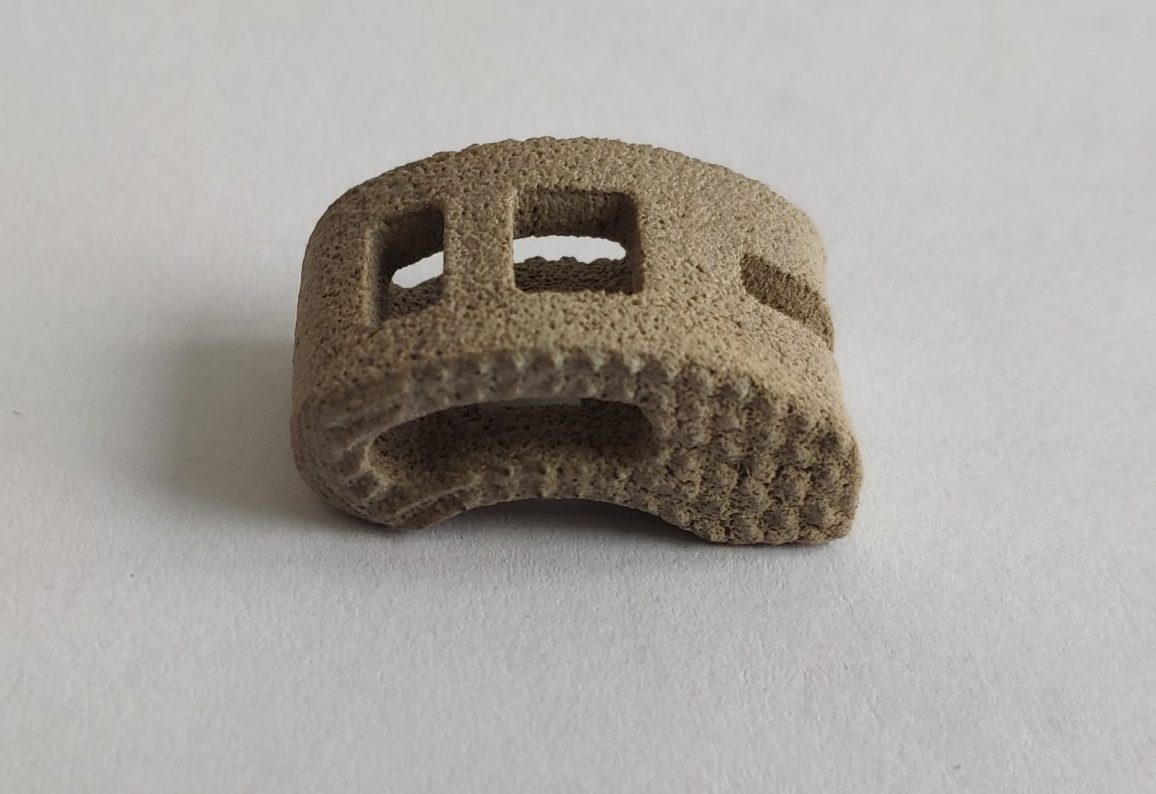
Key Characteristics of PEEK
- Mechanical Strength: Maintains high rigidity and structural integrity under heavy mechanical loads.
- Thermal Resistance: Retains its mechanical characteristics when temperatures are significantly increased.
- Chemical Stability: Highly resistant to wear, aggressive solvents, and fuels.
- Flame Resistance: Inherently flame resistant, which is critical for sectors with high fire/smoke constraints.
- Biocompatibility: Sterilizable and biocompatible, with mechanical properties similar to human bone.
What Is a PEEK 3D Printer?
A PEEK 3D printer is a specialized, high-temperature additive manufacturing system specifically engineered to process advanced polymers like PEEK and PEKK. Because PEEK is a demanding material with high thermal thresholds, these machines must provide significantly more heat and precise environmental control than standard 3D printers.
For industrial applications, a PEEK 3D printer must manage extreme thermal environments, often requiring components like high-temperature extruders (for FDM) or high-powered CO₂ lasers (for SLS), as well as heated build chambers and platforms to ensure proper part crystallization.
Why PEEK Requires High-Temperature 3D Printing
The primary challenge and necessity of a high-temperature system lie in the material’s semi-crystalline nature. When PEEK melts, its molecules arrange themselves under the effect of heat, creating a specific order that is maintained until the material solidifies. To achieve the desired mechanical properties, this crystallization process must be strictly controlled.
Thermal Thresholds
To successfully process PEEK, specific thermal parameters must be met to avoid fluctuations that compromise part density and quality:
- Extrusion/Sintering Temperature: For FDM, the extruder must reach at least 400°C. In SLS systems, the laser energy must be sufficient to sinter the powder particles while the build environment is maintained at high temperatures.
- Build Chamber Temperature: A heated chamber is required to prevent rapid cooling and ensure proper layer bonding. In FDM systems, this is typically around 120°C, whereas industrial SLS printers like the S320HT maintain maximum operating temperatures of 350°C/300°C.
- Build Plate Temperature: In FDM, a build plate heated to 230°C is necessary to ensure part adhesion and prevent warping.
Environmental Control
Because the material changes density during printing and contracts as it cools, high thermal capability is non-negotiable. Without precise thermal management, parts will suffer from internal stresses, warping, and poor interlaminar strength. Industrial systems utilize advanced pyrometers to ensure the sintering environment remains stable, with some sensors offering a long-term stability of 0.1°C per year.
SLS vs. FDM for PEEK
While PEEK is available for both FDM and SLS, the choice of technology impacts the part’s mechanical performance and geometric freedom.
PEEK 3D Printer FDM Systems
FDM is a common method for PEEK 3D printing, utilizing filament-based extrusion.
- Advantages: Widely available hardware for basic high-temperature setups.
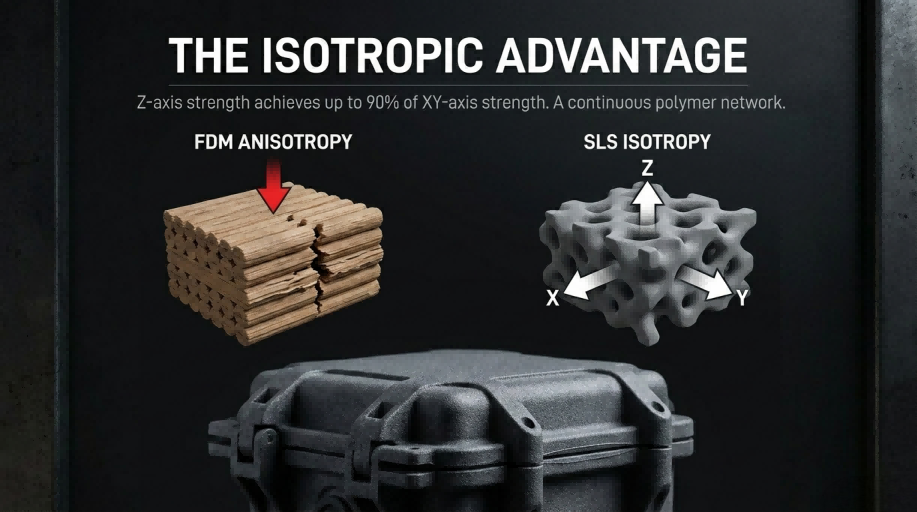
- Limitations: Parts are built in a linear timeframe and often require sacrificial support structures for complex geometries. FDM parts are also generally anisotropic, meaning their strength in the Z-axis is significantly lower than in the XY plane.
Industrial PEEK SLS Printer Systems
Industrial PEEK SLS printers are emerging as highly efficient tools for processing PEEK in powder form.
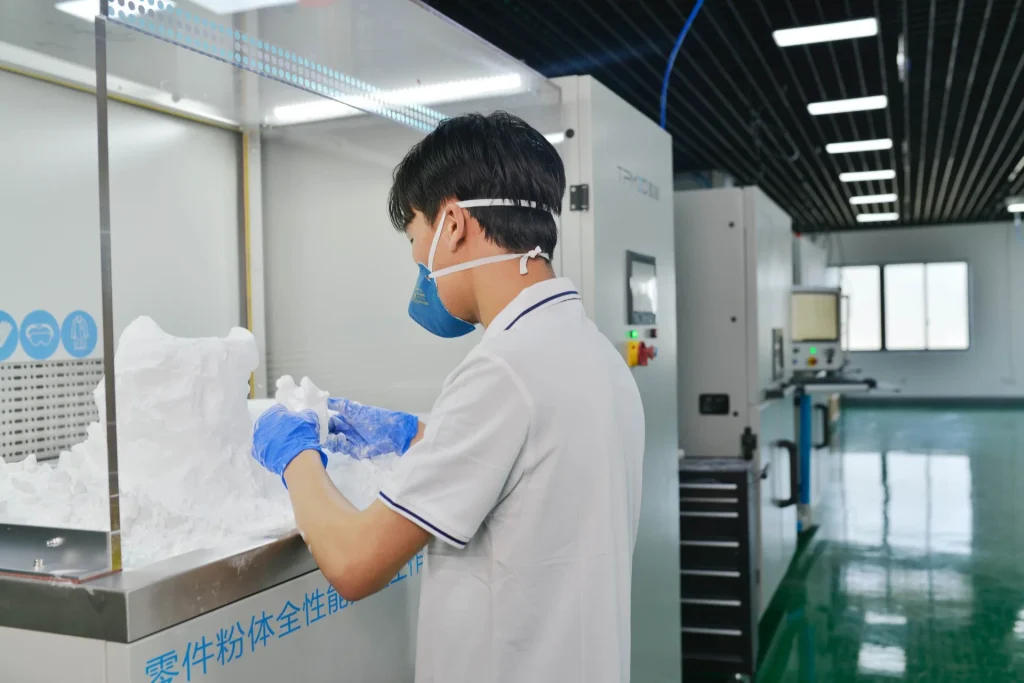
- The Support-Free Advantage: SLS is uniquely positioned because it does not require support structures; the unsintered powder acts as a natural support bed. This allows for 3D nesting, where hundreds of parts can be stacked in a single build chamber, maximizing throughput.
- Quasi-Isotropy: SLS produces parts with 97-98% isotropy. This ensures the part does not delaminate under load and maintains consistent mechanical strength across all axes.
> Compare FDM and SLS 3D printing technologies
Technical Specifications of PEEK 3D Printing Materials
When selecting a material for a high-temperature 3D printer, engineers must evaluate specific mechanical and thermal metrics. TPM3D PEEK IND is an industrial-grade polymer powder designed for PEEK 3D printers using SLS technology.
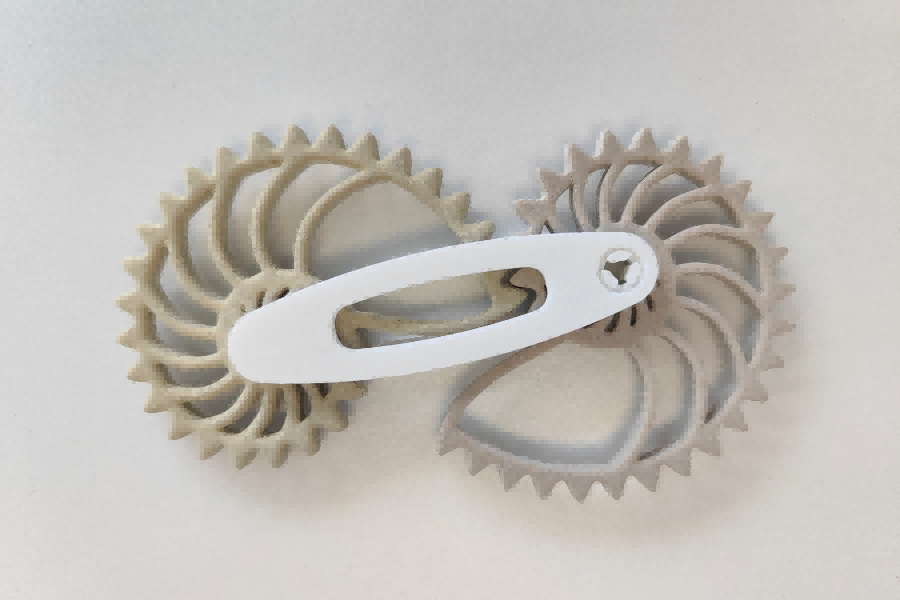
Table 1: Mechanical and Thermal Properties of TPM3D PEEK IND
| Property | Test Method | Metric |
|---|---|---|
| Part Color | Visual | Yellowish Black |
| Density | DIN 53466 | 1.13 g/cm³ |
| Tensile Strength | ASTM D638 | 80 MPa |
| Tensile Modulus | ASTM D638 | 5,000 MPa |
| Flexural Strength | ASTM D790 | 95 MPa |
| Flexural Modulus | ASTM D790 | 4,000 MPa |
| Elongation at Break | ASTM D638 | 6.3% |
| Heat Deflection Temp (0.45 MPa) | ASTM D648 | 294 °C |
| Heat Deflection Temp (1.82 MPa) | ASTM D648 | 170 °C |
(Source: TPM3D PEEK IND | Yellowish Black PEEK)
These figures highlight PEEK’s ability to maintain structural performance under heavy mechanical stress and extreme thermal environments exceeding 200°C.
Advanced Engineering Polymers: PEKK and PPS
For the most demanding environments, standard nylons are often insufficient, leading to the use of a broader family of high-performance polymers like PEKK and PPS.
- PEKK (Polyether ketone ketone): PEKK is a member of the PAEK family offering high stiffness and inherent flame retardancy. TPM3D PEKK IND features a Flexural Modulus of 7,200 MPa and a Flexural Strength of 160 MPa, making it ideal for high-rigidity functional parts. (See specifications)
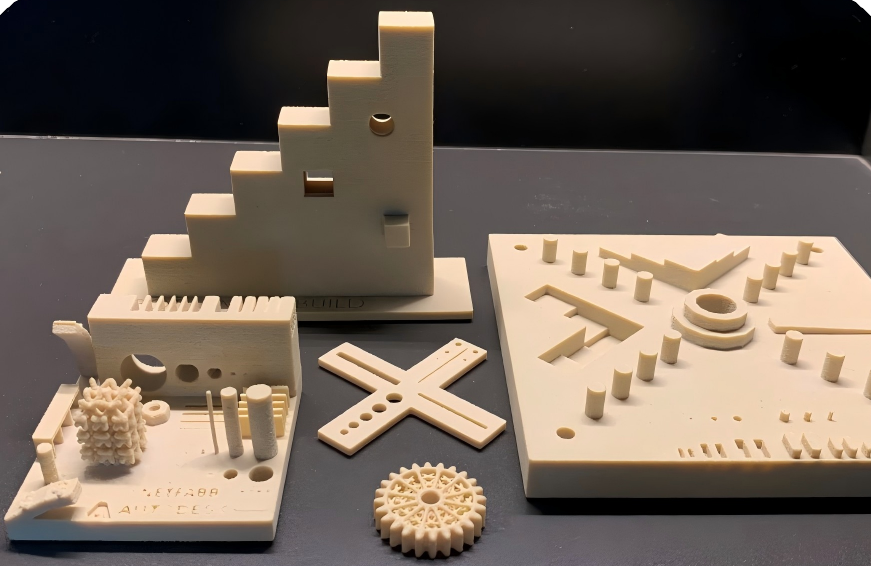
- PPS (Polyphenylene sulphide): PPS offers high stiffness, stable chemical properties, and inherent flame retardancy. TPM3D PPS IND maintains mechanical integrity at temperatures exceeding 200°C and is stable in aggressive solvents and fuels. (See specifications)
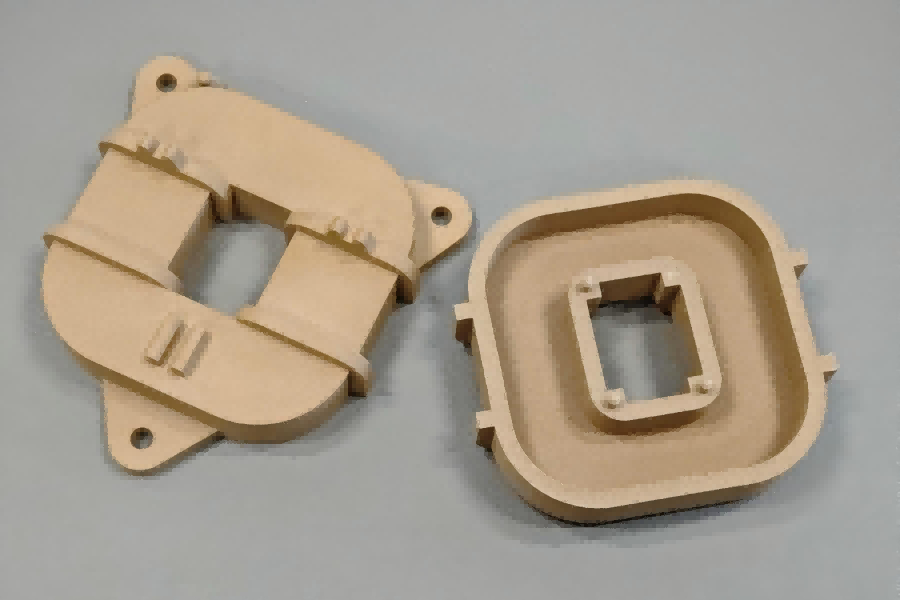
Critical Industrial Applications
PEEK’s unique balance of heat resistance and mechanical strength makes it a premium choice for several demanding sectors.
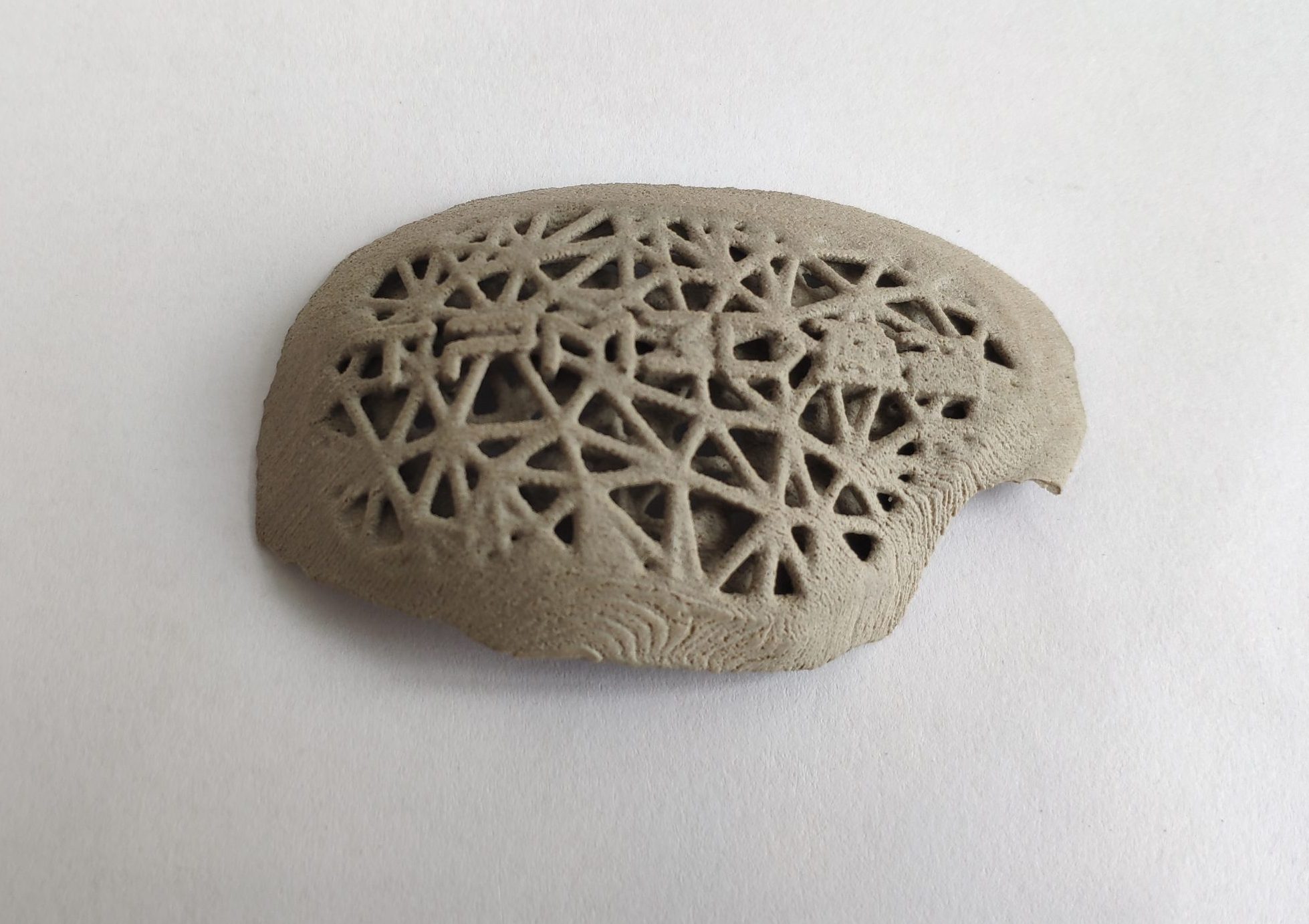
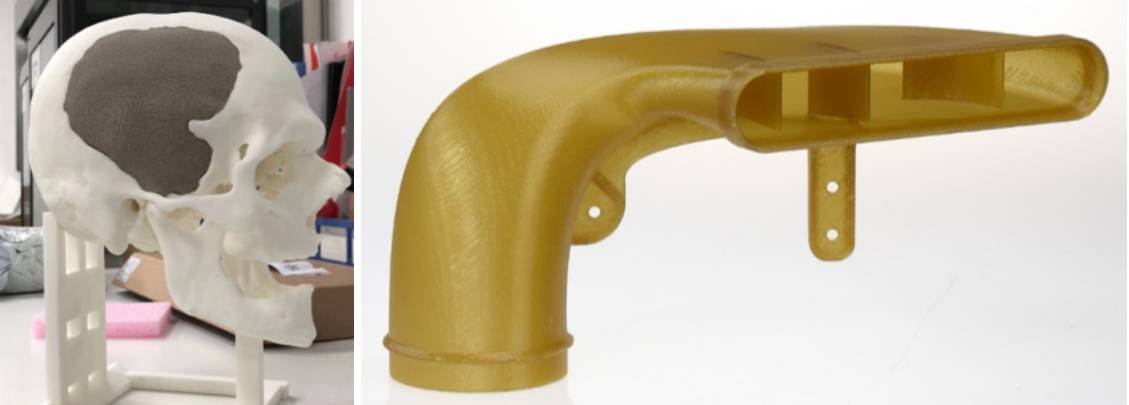
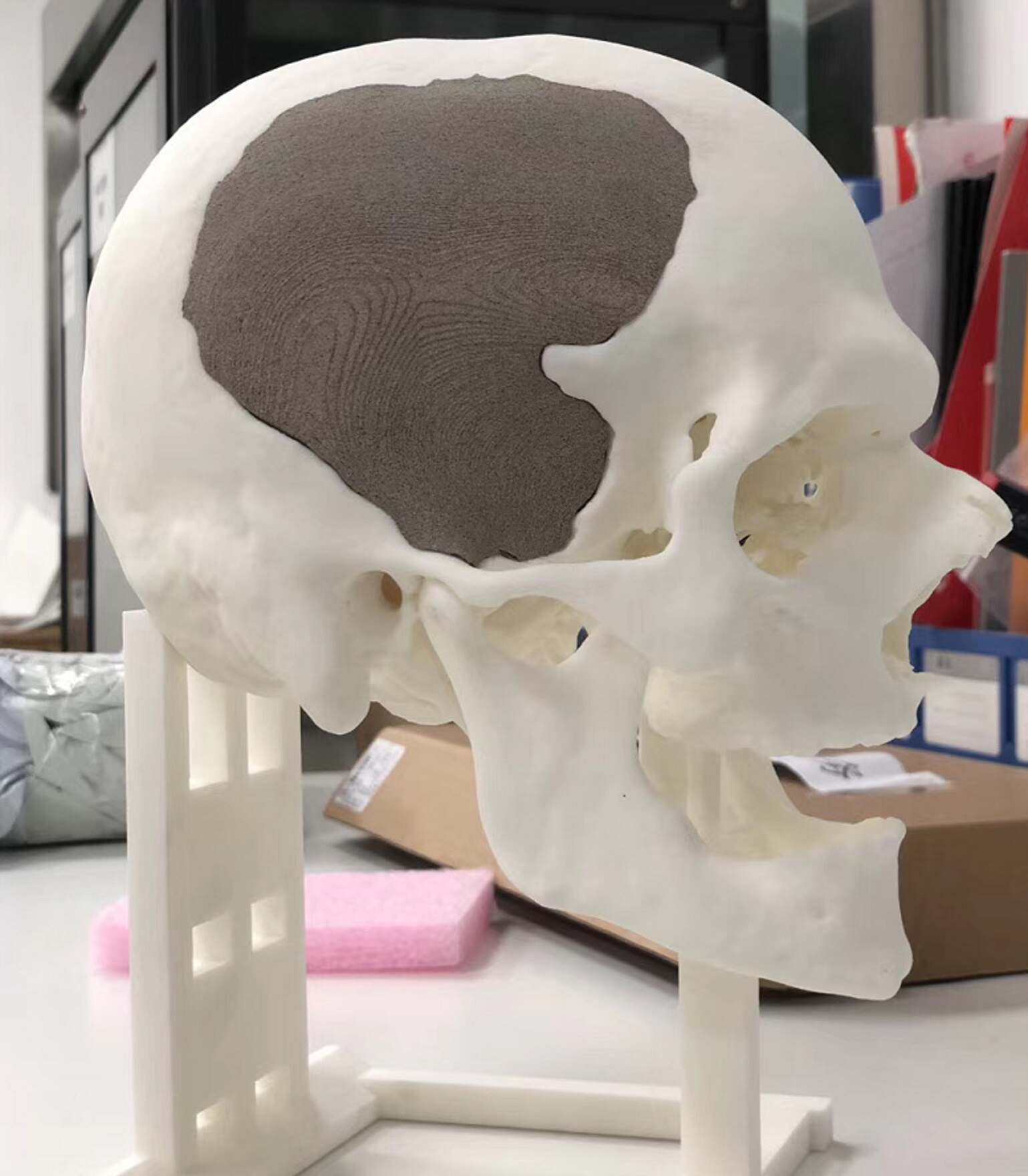
- Medical and Dental: PEEK is biocompatible and sterilizable. It has properties similar to human bone, allowing 3D-printed implants to promote tissue reconstruction and accelerate osseointegration.
- Aerospace and Defense: High strength-to-weight ratios allow PEEK to replace metal components, optimizing weight—a key factor in aerospace. Parts from PEEK have already been sent to space, proving the material can survive the most demanding environments.
- Automotive and Motorsports: Used for heat-resistant functional parts in under-the-hood applications that must withstand aggressive fuels and lubricants.
Industrial PEEK 3D Printer Systems
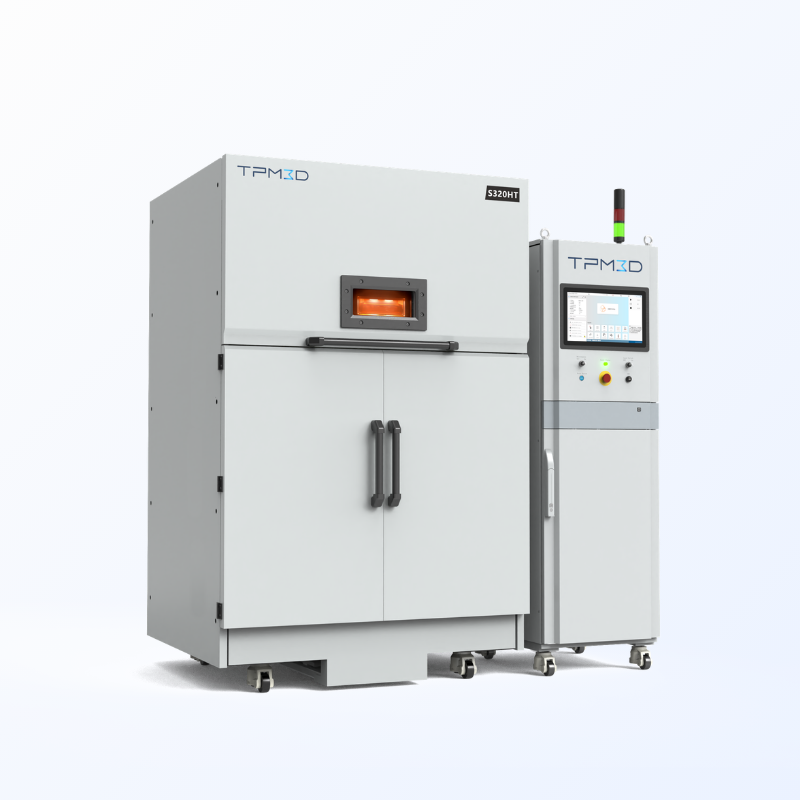
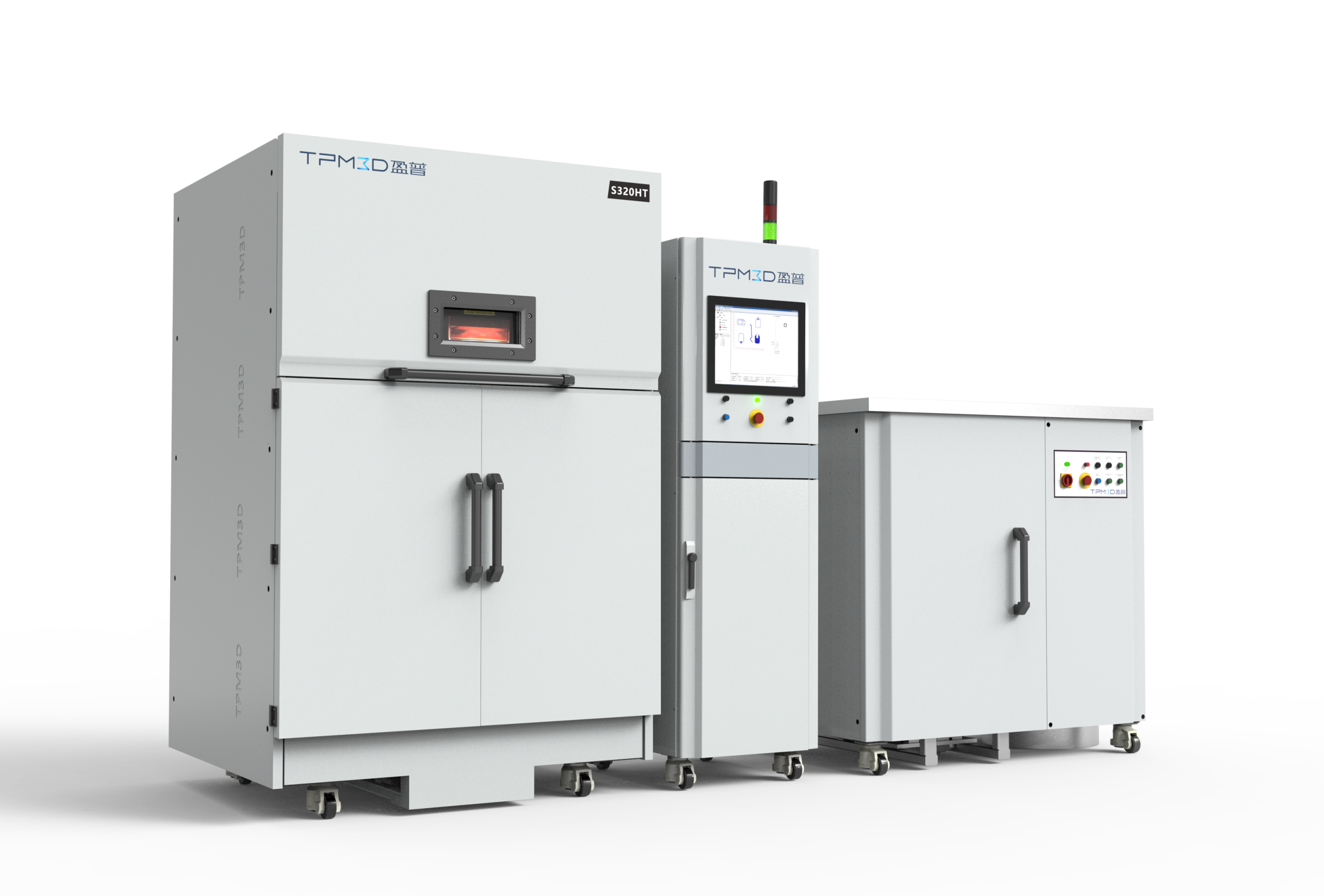
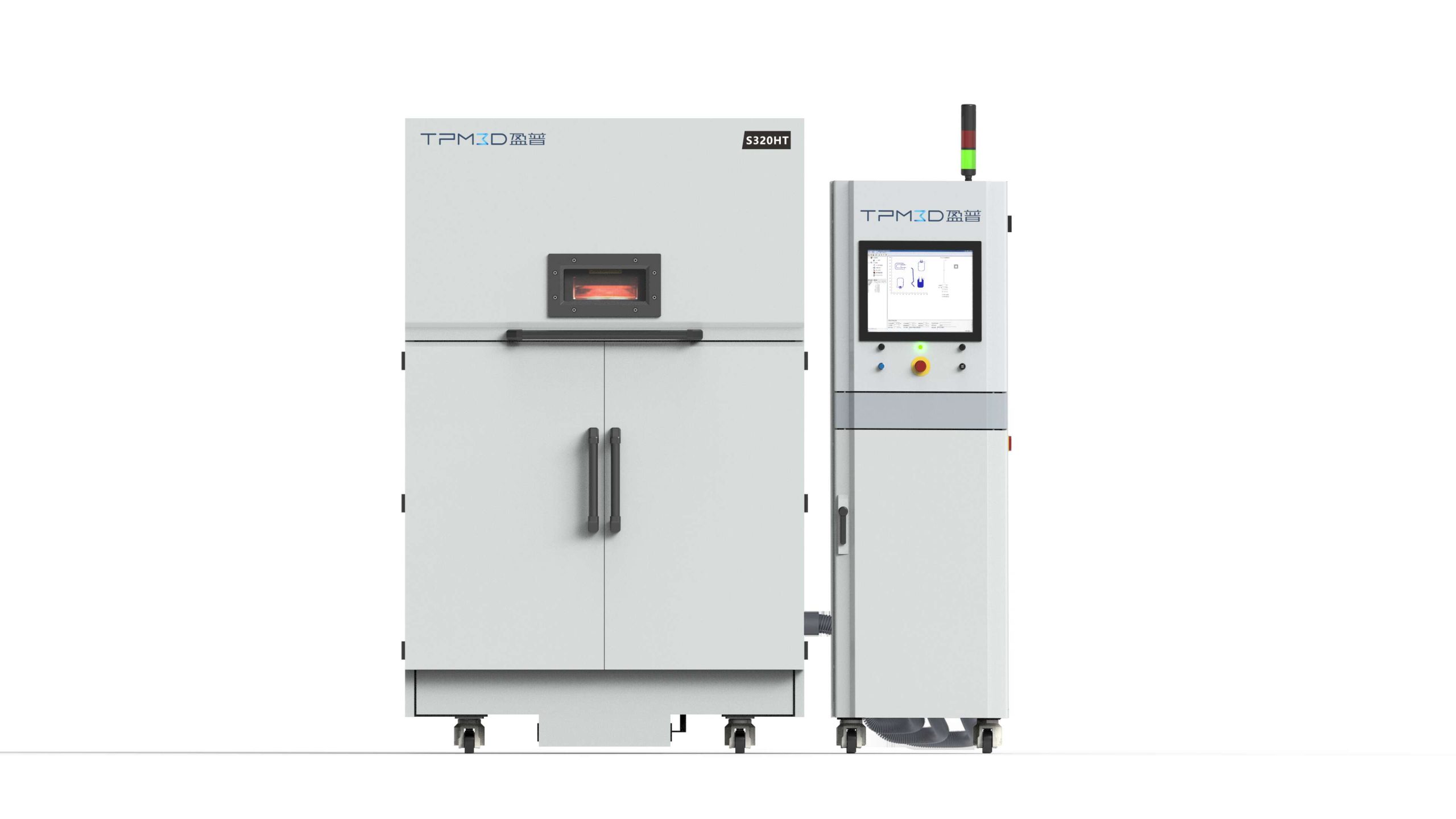
The S320HT is an example of a high-temperature PEEK 3D printer system designed for industrial SLS processing of PEEK, PEKK, and PPS materials.
Key Features for High-Temperature Processing
- High Thermal Capability: Maximum operating temperatures of 350°C / 300°C provide the stable thermal environment needed for advanced polymer sintering.
- 3-Axis Dynamic Focusing: Maintains precise laser control to ensure dimensional accuracy and superior surface finish across the build area.
- Flexibility: It features interchangeable build chambers (e.g., 320x320x380 mm or 250x250x380 mm) to suit different production needs.
- Precision Optics: Equipped with a 60W CO₂ laser and a laser beam diameter of 0.22 mm, it delivers repeatable results on complex parts.
- Smart Blade Recoater: Improves powder spreading in high-temperature environments for improved part quality.
> See specifications of S320HT
Case Study: High-Performance Research at Southern University
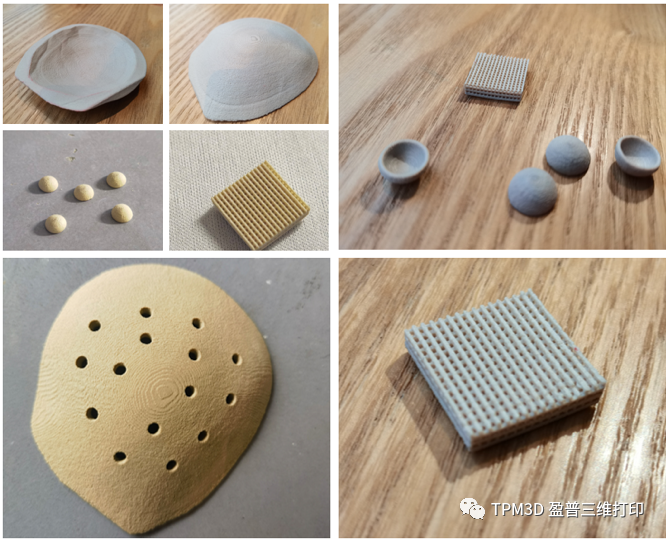
The Southern University of Science and Technology utilizes the TPM3D S320HT system to advance research in intelligent manufacturing and 3D printing. By overcoming the challenges of strict molding temperatures, the university’s research team has achieved stable and controllable printing processes for their proprietary PEEK materials.
Their work focuses on high-end industrial potential, specifically in medical implants and biocultivation, where PEEK’s biocompatibility and bone-like properties are essential.
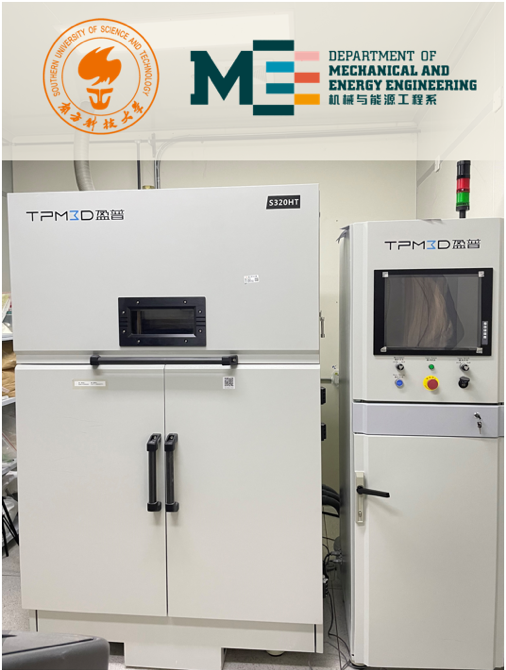
Beyond simply operating the hardware, SUSTech developed its own proprietary PEEK polymer material and molding techniques. The research team focused on three primary application areas:
- Medical Implants: Utilizing PEEK’s bone-like properties for custom surgical devices.
- Biocultivation: Leveraging the material’s biocompatibility for laboratory and clinical research.
- High-End Manufacturing: Producing components capable of replacing metal parts in industrial machinery.
The Result: Controllable Processes for Industrial Potential
Through the use of the S320HT platform, the research team achieved a stable and controllable printing process.
This capability allows for the consistent production of high-performance components that possess strong industrial potential, proving that the technical challenges of high-temperature polymer 3D printing can be overcome with the right combination of material science and industrial-grade hardware.
FAQ: PEEK 3D Printing
What is a PEEK 3D printer?
A PEEK 3D printer is a high-temperature additive manufacturing system capable of processing PEEK and PEKK polymers.
Why is PEEK difficult to 3D print?
Because it requires extremely high processing temperatures and precise thermal control to achieve proper crystallization and mechanical performance.
Is SLS or FDM better for PEEK?
SLS is preferred for industrial applications due to isotropic mechanical properties and support-free manufacturing.
What industries use PEEK 3D printing?
Aerospace, medical, automotive, and industrial manufacturing.