As competition in the 3D printing service industry continues to intensify, the rapid prototyping market is facing increasing challenges in delivery speed, print quality, and cost control. In Southwest China, one company has been deeply engaged in 3D printing services since 2014: Sichuan Yinshidai Additive Manufacturing Co., Ltd.
As one of the early companies in the region to apply 3D printing technology, Yinshidai has long been committed to providing professional and efficient integrated 3D printing solutions for enterprises and universities. The company has also continued to explore new technologies and emerging trends in additive manufacturing. Today, Yinshidai has developed into a high-tech enterprise offering prototype production, 3D printing services, CNC precision machining, and low-volume vacuum casting. Its services cover multiple industries, including automotive, aerospace, electronics, home appliances, and industrial design.
In recent years, resin-based 3D printing services have increasingly faced bottlenecks in capacity, application scenarios, and production efficiency. To expand its service capabilities, Yinshidai began exploring the potential of SLS technology. After evaluating equipment suppliers and technical solutions, the company introduced two TPM3D P360 selective laser sintering systems and one PPS powder processing station, with one PPS workstation serving both P360 printers, to form the core of its new SLS rapid prototyping service.
So why did Yinshidai choose TPM3D?
Balancing Print Quality and Delivery Speed
For Yinshidai, print quality and delivery speed were two of the most important considerations. TPM3D’s P360 was selected to address both needs.
The P360 uses a high-performance CO₂ laser and a dynamic focus scanning system to maintain laser spot accuracy across the full build area, enabling excellent detail reproduction and consistent part quality. With a build volume of 360 × 360 × 600 mm and a scanning speed of up to 15 m/s, the system balances build capacity with production efficiency, making it well suited for small-to-medium batch, multi-variety rapid prototyping projects.
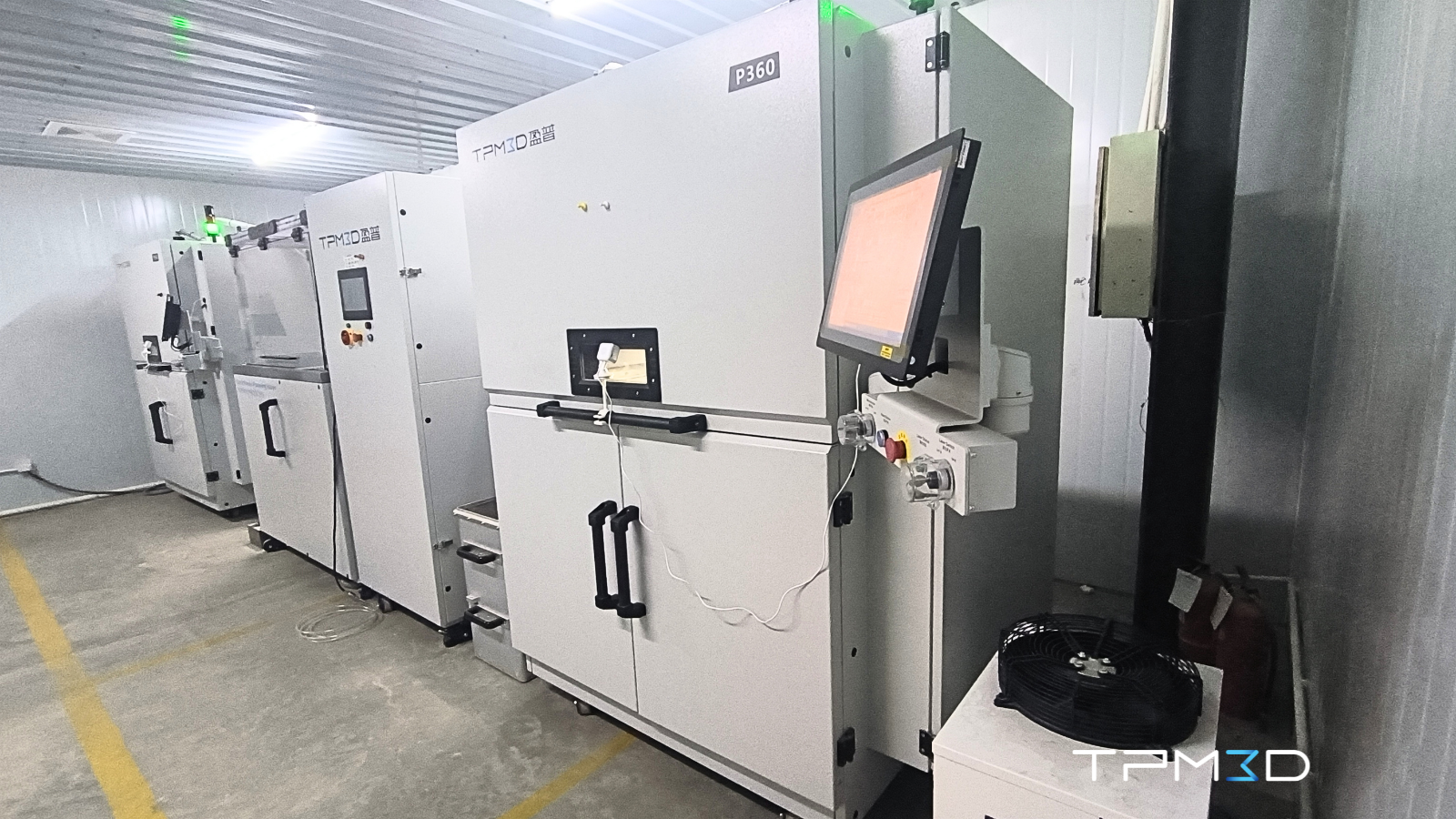
TPM3D P360 printers and PPS installed at Sichuan Yinshidai
The P360 also supports TPM3D’s patented active cooling technology. After printing is completed, the system can automatically enter the cooling stage without manual intervention, helping shorten the overall production cycle and improve delivery capability.
Reducing Operating Costs While Ensuring Stability
For rapid prototyping service providers, overall equipment cost, operating cost, and long-term stability are all critical factors.
The P360 adopts a dual-sided top powder-feeding design, featuring a more compact structure and easier maintenance. With an integrated nitrogen generator, users do not need to purchase additional nitrogen-generation equipment, lowering both the entry barrier and operating costs.
TPM3D polymer powders can be recycled repeatedly, with a powder recovery rate close to 100%. The P360 also has an average power consumption of only 3 kW, further helping Yinshidai reduce day-to-day production costs.
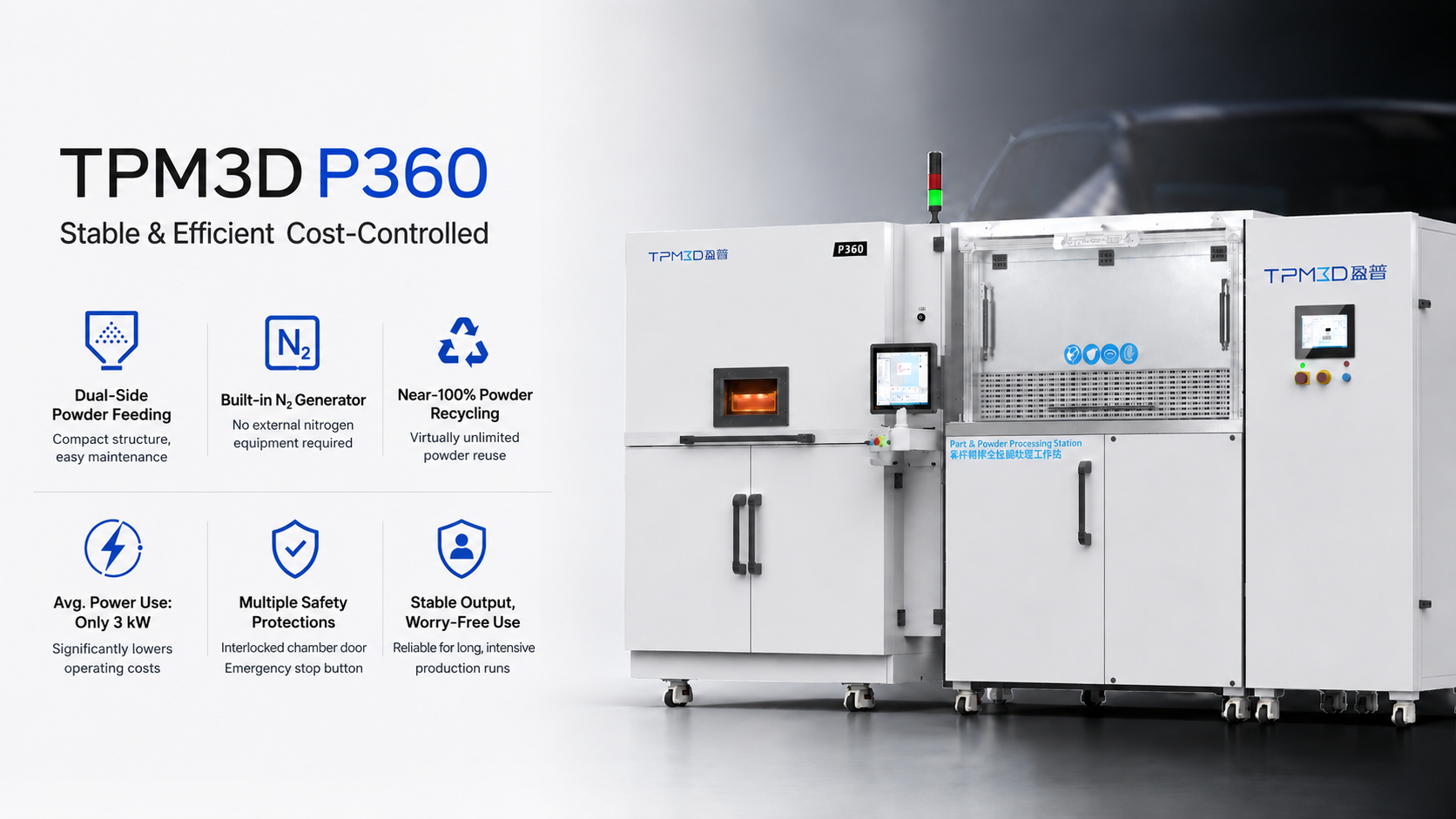
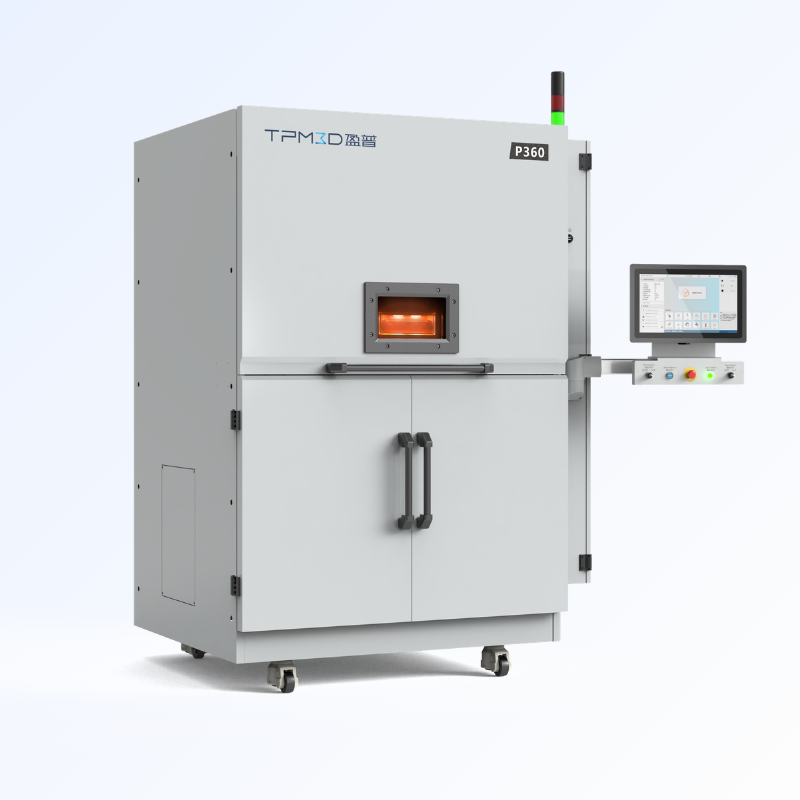
TPM3D P360 high-performance SLS 3D printer
Stability is another key advantage. The P360 is equipped with a comprehensive safety control system, including build-chamber door interlocks, emergency stop buttons, and multiple protection mechanisms. These features support safe and reliable operation during long and intensive production runs, enabling stable output and confident daily use.
Improving Depowdering and Powder Management Efficiency
In SLS rapid prototyping, depowdering and powder management are often underestimated, but they are essential to production efficiency, material utilization, and workplace cleanliness.
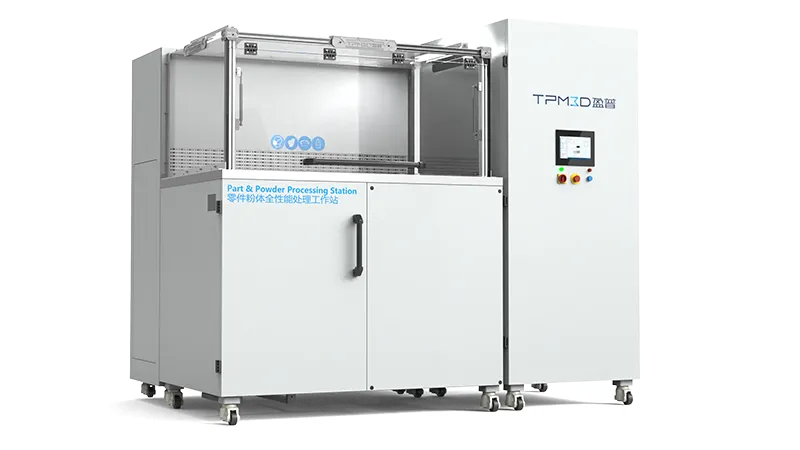
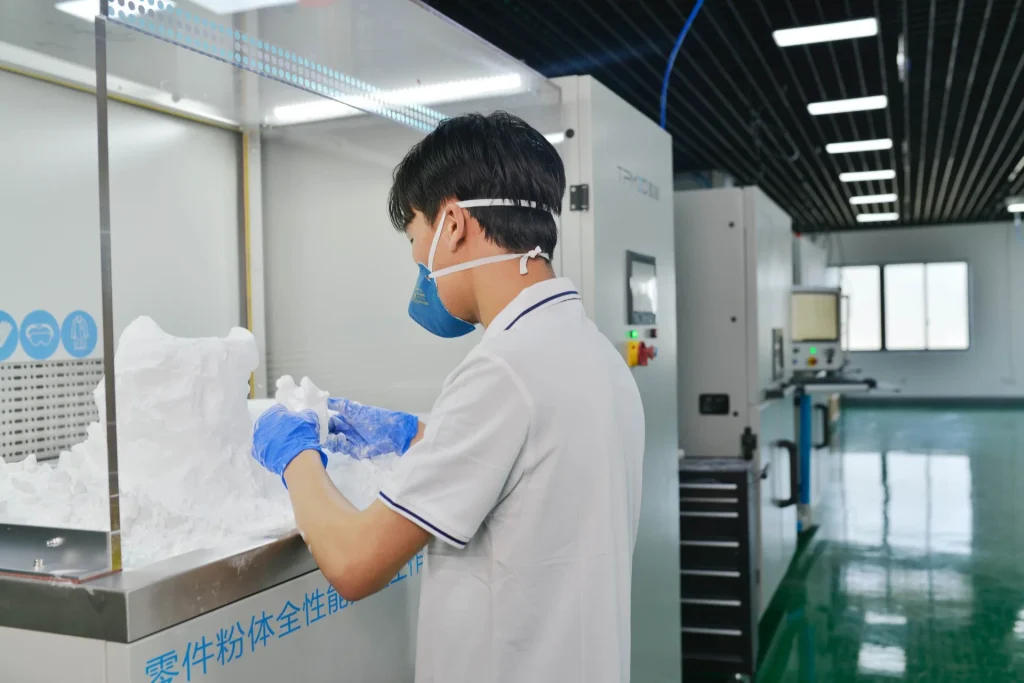
The PPS powder processing station purchased by Yinshidai supports a one-station-for-two-printers configuration, serving both P360 systems. The PPS integrates part unpacking, powder sieving, mixing of used and fresh powder, and automatic powder feeding, significantly improving powder handling efficiency while helping prevent powder leakage that may affect the working environment or operator health.
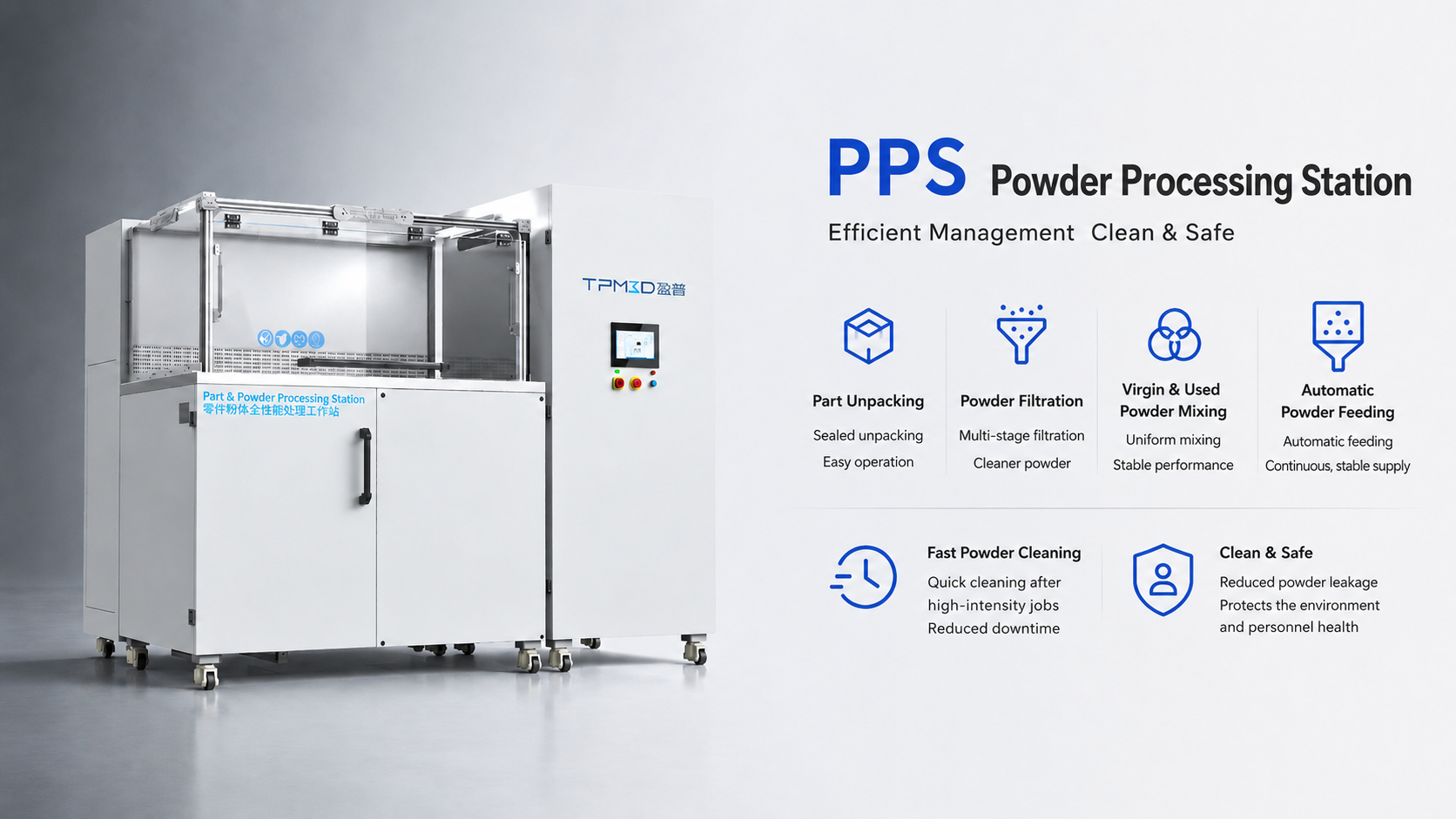
TPM3D PPS powder processing station
With this integrated system, Yinshidai can complete depowdering and powder preparation quickly and cleanly after high-intensity printing tasks. The result is reduced manual intervention, shorter post-processing time, and smoother workflow across the SLS production line.
Customer Testimonial: TPM3D as a Trusted Partner
Yinshidai chose TPM3D not only because of the technical advantages of the equipment itself, but also because TPM3D provides a complete SLS solution covering printing, depowdering, powder recycling, and powder management. This integrated workflow helps reduce operating costs while addressing common pain points faced by rapid prototyping service providers.
“TPM3D equipment performs well in both printing accuracy and stability. The PPS, in particular, has helped us improve efficiency and save a significant amount of manual labor. TPM3D’s technical support team is comprehensive and responsive, and our cooperation has been very smooth.”
— Liu Jianjun, General Manager, Sichuan Yinshidai Additive Manufacturing Co., Ltd.
Supporting the Growth of SLS Rapid Prototyping Services
Looking ahead, TPM3D will continue working with Yinshidai to support its expansion in the rapid prototyping market across Southwest China and beyond. By providing high-quality SLS printing systems, integrated powder processing, and practical application support, TPM3D aims to help service providers deliver faster, more stable, and more cost-effective 3D printing services.
TPM3D also looks forward to working with more users and partners to promote the broader adoption of SLS technology in the 3D printing service industry.
Read more: